
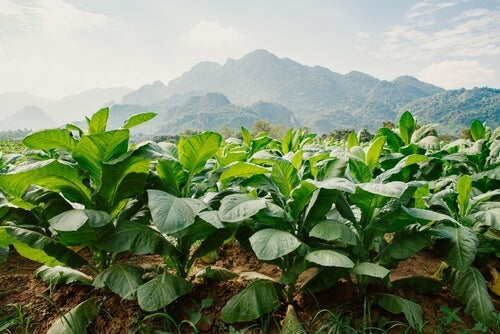
When lighting up a handcrafted cigar, you taste the direct result of months spent weathering tropical rainstorms, baking under heavy sunshine, and pulling minerals out of raw volcanic dirt. Plenty of folks wonder why modern agriculture hasn't shifted these delicate crops into sealed, climate-controlled warehouses packed with high-tech grow lights and automated misting systems. The simple reality comes down to how tobacco plants react when they have to fight the open elements to survive. Indoor farming might work wonders for microgreens or crisp hydroponic butterhead lettuce, but premium smoking leaf requires a savage blend of natural stresses to build its body and oil. Out in the open breeze, nature forces these leaves to pack on dense veins, thick cell walls, and potent chemical compounds you just can't manufacture inside four concrete walls.
The Agronomy Behind Cigar Tobacco
To grasp why open-air farming rules this industry, you have to realize that cigar tobacco is an entirely different beast from the mass-market leaf processed for other tobacco types.
For instance, commercial cigarette tobacco is predominantly flue-cured Brightleaf or burley, bred specifically for uniform mechanical harvesting, high chemical sugar retention, and rapid post-harvest drying. Those crops are often treated with artificial combustion chemicals, shred-cut into tiny slivers, and stuffed inside bleached paper tubes.
Because the leaf remains whole, its physical condition is paramount. A single tear, an off-color blotch, or a lack of elasticity ruins its utility on the rolling bench. Agronomists treat every single plant as an individual, monitoring its posture from the day a seedling leaves the germination greenhouse until the final harvesting crew clears the field.
Anatomy of a Balanced Blend
Every cigar relies on three structural components, each demanding specific physical and chemical traits from the harvest:
-
The Wrapper: The outermost visible leaf that coats the cigar. It has to look silky, feel supple, resist cracking under thumb pressure, and carry a tight, smooth vein structure.
-
The Binder: The muscular leaf seated right below the wrapper. Its primary purpose is mechanical tension, locking the interior bunch together while providing an even, predictable burn rate.
-
The Filler: The flavor engine tucked in the center. Blenders combine several leaves here to craft complexity, body, and strength.
A master blender can't just pick random leaves to build these sections. The harvest must yield a spectrum of textures, burn speeds, and oil concentrations, all coming off the exact same farm.
Stalk Position and Natural Priming
Tobacco plants don't mature all at once; they ripen slowly from the dirt upward over several weeks. Field workers move through the rows in stages called primings, harvesting two to three leaves at a time as each tier hits peak maturity.
The lowest foliage on the stalk, known as Volado or Libre de Pie, receives the least direct sunlight because the broader leaves above cast heavy shadows over it. Because it misses out on direct solar rays, Volado develops very thin cell walls, minimal nicotine, and almost zero heavy oils. What it does possess is unmatched combustibility. Blenders use Volado in the filler core specifically to help a cigar stay lit without needing a torch every two minutes.
Moving up to the middle tiers, you encounter the Seco and Viso primings. These leaves capture moderate sunlight and a steady breeze, striking an exceptional middle ground. They bring subtle floral sweetness, nutty aromas, and dependable burning qualities, forming the aromatic backbone of most classic blends.
At the very top of the stalk sits the Ligero. These crown leaves bake directly under the blistering midday sun day after day. In self-defense, the plant funnels maximum nutrients, thick waxes, and high nicotine concentrations straight to the top. Ligero leaves are dark, thick, leathery, and loaded with oily resins. When harvested, cured, and aged, Ligero provides the deep pepper, dark chocolate, leather notes, and raw strength that make a full-bodied cigar memorable. In rare instances, an heirloom plant sprouts tiny additional crown leaves above the Ligero called Medio Tiempo. These scarce leaves receive unchecked solar radiation, producing some of the most intense, prized tobacco in the world.
This natural division of labor along a six-foot stalk happens purely because of open-air exposure. The top leaves shield the lower leaves, creating an organic gradient of flavor and power that automated indoor lights simply cannot duplicate along a single stem.
Sunlight, Solar Radiation, and Flavor Chemistry
The sun is far more than a simple light bulb in the sky. Natural solar radiation provides an unbroken spectrum running from infrared all the way down into harsh ultraviolet bands.
When tobacco leaves bake under unfiltered UVA and UVB rays, the plant mounts a natural defense mechanism—it ramps up the production of protective resins, polyphenols, and secondary metabolites to shield its inner cellular machinery from sun damage. These protective compounds are concentrated inside microscopic, hair-like structures on the leaf surface called glandular trichomes.
When you walk an open field in Estelí or the Jamastran Valley during the heat of the afternoon, brushing your arms against mature plants leaves your skin coated in a sticky, fragrant gum. That resinous sap is where the soul of the leaf lives. Those natural oils contain the volatile aromatic compounds that deliver rich flavor when ignited years later.
If you try to grow those same heirloom plants under artificial indoor grow lights, the plants relax. Without the broad UV spectrum and intense thermal spikes of natural sunshine, the plant has no reason to pump out heavy defensive resins. The resulting leaves end up thin, papery, and flavorless. They might look green and healthy to an untrained eye, but when rolled into a smoke, they burn with a flat, hollow character devoid of spice, sweetness, or lingering body.
Midday sunlight also drives rapid cuticle development. The cuticle is the waxy outer layer protecting the leaf epidermis. In outdoor fields, a hearty cuticle prevents the leaf from drying out under strong tropical winds, creating a flexible, leather-like texture. That natural elasticity is what allows a factory worker to stretch a wrapper leaf smoothly around a bunch without snapping the delicate veins.
Furthermore, outdoor light angles constantly shift. From sunrise to sunset, the sun sweeps across the horizon, hitting the crop from changing angles and penetrating deep into the foliage canopy. Stationary indoor lamps, even those on mechanical light movers, struggle to deliver that dynamic, penetrating energy across every square inch of a towering, broadleaf plant.
Deep Dirt and the Power of Unrestricted Roots
Look past the vibrant green foliage and consider what's happening beneath the surface. Tobacco plants are aggressive, fast-growing feeders. A tiny seedling barely an inch tall can surge into a seven-foot giant in roughly sixty to seventy days if conditions are right.
To fuel that incredible growth rate, the plant shoots a thick, sturdy taproot straight down into the earth, quickly anchoring itself before casting out a vast network of lateral feeder roots. A fully grown tobacco plant's root web easily extends three to four feet deep and spreads several feet outward in search of moisture and food.
Attempting to contain that root system inside indoor plastic containers, rockwool cubes, or hydroponic troughs creates immediate problems. Tobacco roots hate being bound. The moment root tips touch an artificial barrier and start circling the container, the plant triggers a stress response that stunts vertical growth, yellows the bottom foliage, and halts leaf expansion.
Even if you built massive indoor soil beds, you'd still miss out on the distinct mineral composition found in natural agricultural basins:
-
The Jalapa Valley (Nicaragua): Blessed with soft, sandy-red clay soils rich in organic matter, this region yields silky, sweet, and aromatic leaves prized for elegant wrappers.
-
The Estelí Basin (Nicaragua): A rugged landscape built on dense, dark, heavy volcanic dirt packed with iron and magnesium, producing leaves that burn with an unmistakable spicy punch.
-
The San Andrés Valley (Mexico): Ringed by dormant volcanoes that showered the river basin with mineral-rich volcanic ash over millennia, creating rich, heavy dirt that produces dark, earthy, naturally sweet Maduro leaves.
-
The Connecticut River Valley (United States): Shaped by retreating glaciers that left deep beds of fertile river silt, offering superior drainage and potassium deposits that yield elastic, sweet Broadleaf and shade wrappers.
Living outdoor earth is an active biological ecosystem filled with native microbes, beneficial mycorrhizal fungi, and decaying plant matter. These microscopic organisms work directly alongside root hairs, solubilizing stubborn minerals and feeding them to the plant in balanced, bioavailable ratios. Synthetic nutrient solutions fed through indoor drip lines can feed nitrogen, phosphorus, and potassium, but they lack the regional dirt chemistry that blenders rely on to give a specific blend its geographic signature.
The Invisible Hand of Wind and Weather
Wind is another element that novice growers often overlook. In an enclosed indoor environment, air is pushed by mechanical fans, creating steady, monotonous drafts. In an open field, weather is turbulent, gusty, and unpredictable.
When wind sweeps across a tobacco plantation, the plants bend, twist, and sway. Botanists refer to a plant's physical adaptation to mechanical wind stress as thigmomorphogenesis. In response to being pushed around by the breeze, the tobacco plant strengthens its internal architecture. It deposits dense layers of cellulose and lignin along the stalks and throughout the primary leaf veins.
That structural reinforcement is what gives wrapper and binder leaves their physical toughness. Without wind exposure, leaves remain fragile and brittle, tearing the second a roller tries to wrap them around a dense core of filler.
Wind also performs an essential sanitary function. Mature tobacco fields are dense jungles of broad, overlapping foliage. In stagnant conditions, moisture from morning dew or tropical downpours settles between the leaves, creating an ideal breeding environment for devastating fungal diseases like blue mold, black shank, and frogeye leaf spot.
Natural outdoor air currents continually sweep through the rows, evaporating standing droplets, regulating leaf temperature, and replenishing the carbon dioxide boundary layer around the plant's stomata. The fluctuating temperatures between sunny afternoons and cool tropical nights give the plant a natural resting period. During those cooler night hours, the plant pauses photosynthesis and redistributes synthesized sugars from the leaves down through the main stalk, refining the internal chemistry of the foliage.
The Brutal Math of Indoor Farming
Even if indoor technology could somehow recreate the complex UV spectrum, living soil microbiology, and dynamic wind stresses of an open valley, the sheer economics of scale would crush the venture before the first crop finished curing.
Consider the volume required to keep a standard factory running. A mid-sized operation might produce ten to twenty million cigars every year. Because each smoke requires multiple cured whole leaves, that single factory needs hundreds of thousands of pounds of raw, processed leaf annually.
To yield that quantity of finished leaf, farmers cultivate hundreds, often thousands, of acres of farmland simultaneously. Translating that kind of acreage into an indoor commercial facility borders on the impossible:
-
Real Estate Footprint: One acre equals 43,560 square feet. A modest three-hundred-acre tobacco farm would require over thirteen million square feet of enclosed warehouse space.
-
Power Consumption: Running commercial-grade, full-spectrum fixtures over millions of square feet for sixteen hours a day would pull staggering amounts of electricity. The power bill alone would outstrip the retail value of the crop.
-
HVAC Demands: A single acre of mature, broadleaf tobacco transpires thousands of gallons of water into the air every single day. Industrial dehumidification systems capable of pulling millions of gallons of water vapor out of a sealed warehouse would require massive capital outlays and continuous maintenance.
-
Labor Logistics: In an open field, tractors can prepare fields, bury cover crops, and assist hauling teams. Indoors, maneuvering heavy equipment through tight, multi-tier racking systems dramatically increases labor hours and operational headaches.
Indoor vertical farming finds commercial success with crops like microgreens, culinary herbs, and gourmet head lettuce for very specific reasons. Those leafy greens have rapid growth cycles of twenty to thirty days, consist of over ninety percent water by weight, and sell directly to consumers at premium grocery prices within forty-eight hours of cutting.
Cigar tobacco operates on an entirely different timeline. After spending two to three months in the dirt, the leaves must hang in a curing barn for up to eight weeks. From there, they undergo slow, natural pilón fermentation for six months to a year, followed by two to five years of resting in burlap-wrapped cedar bales before anyone even dreams of rolling them.
Tying up millions of dollars in indoor real estate, HVAC machinery, and electrical bills for an agricultural product that won't yield a finished cigar for four years is a fast track to bankruptcy. The sun, the sky, and the open dirt provide all that energy and space for free.
Demystifying Shade-Grown Tobacco
When discussing outdoor tobacco farming, seasoned smokers often bring up shade-grown leaf, wondering if that somehow counts as an indoor cultivation method.
Shade-grown tobacco—referred to across the Caribbean and Central America as cultivo tapado—is still one hundred percent outdoor agriculture. You'll find these striking fields across the Connecticut River Valley, Cuba's Pinar del Río province, and throughout the volcanic valleys of Nicaragua and Honduras.
Instead of moving plants inside a glass greenhouse or solid building, farmers drive tall wooden posts into the open earth across dozens of acres. They string heavy support wires between the poles and drape vast sheets of breathable cheesecloth or porous synthetic netting about eight to ten feet above the dirt.
The Microclimate Beneath the Cloth
The cloth doesn't shut out the outdoor world; it simply softens it. The fabric filters harsh, direct midday sunlight, scattering the rays into a soft, diffuse glow that bathes the plants evenly from top to bottom.
Under the netting, ambient humidity stays slightly higher than in the open sun, creating a warm, tropical terrarium effect. Because the intense direct glare is filtered, the plant doesn't feel the need to defend itself by producing heavy, waxy cuticles or thick, raised veins.
Instead, the leaves expand wide, thin, and exceptionally supple as they reach up toward the filtered light. The resulting harvest produces wrapper leaves with a delicate, silky texture, microscopic veins, and an even, golden-tan color profile.
Still Tied to the Natural Elements
Even beneath this canopy of cheesecloth, the crop remains entirely exposed to the broader natural environment. The plants drive their deep roots into native dirt, drink natural rainwater that falls through the open weave, and sway with the outdoor breeze that flows freely through the open sides of the fields.
Ecuador offers the ultimate example of this dynamic. In the foothills of the Ecuadorian Andes, farmers grow world-class shade wrapper without ever hanging a single yard of cloth. The region experiences persistent, high-altitude cloud cover that blankets the valleys in a natural, misty haze almost every day of the growing season. The clouds diffuse the intense equatorial sun naturally, allowing farmers to cultivate silky, elastic wrapper leaves out in the open air. Whether nature provides the clouds or the farmer strings the cloth, the crop is firmly tied to the outdoors.
The Barn, the Breeze, and the Curing Cycle
The relationship between tobacco and the outdoor environment doesn't end when the harvesting crew snaps the mature leaves off the stalk. In fact, the post-harvest curing process is just as reliant on outdoor weather patterns as the growing phase itself.
Once leaves are brought in from the field, workers pair them up and sew them onto long wooden poles called cujes. These loaded poles are hoisted high into the rafters of traditional curing barns, known throughout the trade as casas de tabaco.
Walk into an authentic curing barn in the Dominican Republic or Nicaragua, and you won't see automated electric heaters, computerized fans, or commercial misting systems. These massive structures are traditionally built from rough-hewn timber and roofed with natural palm thatch or corrugated metal, designed to breathe directly alongside the surrounding countryside.
Natural Respiration in the Barn
Curing isn’t simply dehydrating the leaf. If you apply quick, dry heat to fresh green tobacco, the moisture evaporates too fast. The leaf dies prematurely, locking in bright green chlorophyll and harsh, bitter starches that taste dreadful when burned.
True curing is a slow, living biological respiration that takes anywhere from forty-five to sixty-five days. As the leaves hang in the barn, they slowly consume their remaining internal sap and convert complex starches into natural sugars. Chlorophyll gradually breaks down, causing the leaf to shift from vibrant green to bright yellow, then rich amber, and finally a deep, uniform chestnut brown.
For this biochemical transformation to work, the barn needs an exact balance of airflow and moisture. If the air gets too dry, the cure halts before the starches break down. If the air stays too damp and stagnant, destructive molds quickly rot the entire hanging crop.
Modulating the Barn Slats
Instead of relying on digital sensors, an experienced barn master manages this delicate dance by hand, reading the outdoor weather day and night.
Curing barns feature rows of hinged wooden ventilation slats running along their exterior walls. When crisp, dry breezes sweep across the valley in the early morning, the barn master opens the slats to circulate fresh air through the hanging poles, carrying away moisture transpired by the drying leaves.
When the midday heat climbs too high or a sudden afternoon rainstorm rolls across the mountain ridges, the crew hurries to latch the slats shut. This seals the barn, trapping the ambient humidity inside and protecting the curing leaf from being battered by driving rain or dried out by scorching winds.
This rhythmic interaction between the outdoor climate and the interior of the barn allows the tobacco to cure naturally. It preserves the vital essential oils and leaf elasticity that define a memorable smoke, proving that from the day a seed germinates until the cured leaf enters the fermentation pilón, the hand of nature remains completely irreplaceable.
Soil, Sky, and the Soul of the Leaf
A great handmade stogie is ultimately an honest reflection of the wild weather, solar heat, and mineral-rich dirt that shaped it from a tiny seedling. Trying to recreate that raw outdoor environment inside a sterile indoor warehouse strips away the very natural struggles that force the plant to develop thick veins, defensive resins, and deep regional flavor. The endless energy of unfiltered sunlight, the unrestricted depth of living volcanic soil, and the steady breath of open-air breezes create a level of complexity that artificial lamps and synthetic nutrients can't replicate. When you cut the cap, strike a match, and savor that rich, aromatic smoke, you're enjoying the authentic reward of patient agricultural craft carried out under an open sky.
Share:
What Can Cause Two (or More) Cigars in the Same Box or Tin to Actually End Up Slightly Different From One Another?