
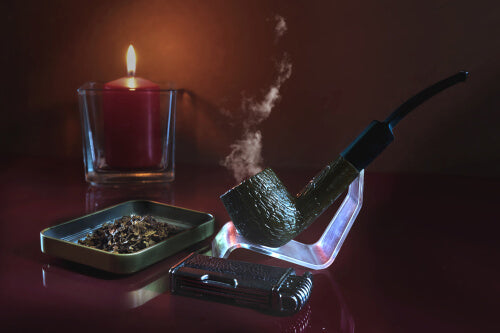
When the sun dips below the tree line and the house finally quiets down, reaching for a pipe shifts from a quick midday pause into a serious nighttime wind-down. You aren't checking the clock, dodging work calls, or fighting off a brisk afternoon wind anymore. Instead, the cool evening air invites you to settle into a porch chair with a substantial bowl that burns slowly, smells rich, and demands your undivided attention. Grabbing a light, grassy morning blend right now just won't cut it, because your evening palate craves the heavier, savory punches of dark-fired leaf, rich woodsmoke, and deep fermentation. Finding the right pipe and tobacco pairing for the twilight hours is really about matching the quiet cadence of the night with a blend that delivers real depth down to the bottom of the bowl.
The Craft of the Briar: Anatomy, Materials, and Chamber Physics
A good smoking pipe looks like a simple wooden vessel resting on your side table, but it functions as a finely tuned thermodynamic heat sink and fluid-draft conduit. When you settle in for a long smoke after dinner, you're asking a lot more from your briar than you do during a twenty-minute morning break. You're packing a larger charge of dense, oily tobacco that produces sustained thermal energy, continuous moisture vapor, and thick organic tars over an hour or more.
If the stummel can't dissipate that heat or the internal draft isn't drilled true, what should've been a relaxing session quickly devolves into an overheated, tongue-scorching chore. How a pipe is carved, the raw stock it's cut from, and the internal geometry of its smoke channel dictate whether your nighttime leaf burns down to fine white powder or drowns in a soupy puddle of bitter moisture.
The Natural Materials: Briar, Mineral, and Cob
Not every substance can withstand the sustained thermal punishment of an hour-long burn without charring, warping, or throwing off foul, bitter flavors. Over generations of trial, pipe makers narrowed the field down to a handful of proven mineral and botanical foundations, each managing heat transfer, internal condensation, and flavor retention under its own physical rules.
Briar stands as the unchallenged foundation of pipe making, yet it isn't ordinary lumber cut from a forest trunk. It's harvested from the root swelling, or lignotuber, of the white heath shrub (Erica arborea), a rugged bush that clings to the dry, rocky hillsides of the Mediterranean coast. Surviving decades of severe droughts and sweeping brushfires forces the underground burl to pack itself with fire-resistant silica and minerals, forming a dense, swirling grain structure that laughs at open flame.
Transforming that raw root knot into a smoking instrument is a grueling, labor-heavy trade:
-
Harvesting and Boiling: Diggers unearth root bolls that have aged underground anywhere from fifty to a hundred years. Once cleared of soil, workers saw away the outer bark and immediately boil the raw blocks in large copper vats for twelve to twenty-four hours. This marathon boiling step isn't cosmetic; it neutralizes living sap flow, leaches out bitter natural tannins, kills fungal spores, and relieves internal grain tension so the dense wood won't crack as it cools.
-
Air-Curing and Grain Grades: After boiling, the blocks—divided into standard rectangular ebauchons or high-grade outer-edge plateaux sporting raw bark caps—rest in climate-controlled drying sheds for months or even years. This patient seasoning allows trapped moisture to evaporate slowly without checking the grain.
-
Cellular Porosity and Cake Maintenance: Under magnification, cured briar reveals thousands of open, microscopic pores that act like capillary straws. As tobacco burns, these pores pull excess moisture and steam away from the chamber and radiate it out through the bowl walls. Unlike mineral pipes, briar relies on a slow break-in to form a protective carbon cake along the chamber walls. A dime-thin cake of carbonized sugars and ash acts as a thermal buffer, protecting the wood fibers from direct combustion while keeping bowl temperatures balanced.
If you want complete flavor purity without the commitment of seasoning raw wood, genuine block meerschaum is the ultimate alternative. Mined hundreds of feet underground near Eskişehir, Turkey, meerschaum is a hydrous magnesium silicate mineral known geologically as sepiolite. It's an extraordinarily light, chalky stone that actually floats on water once cured.
True performance relies on using genuine block meerschaum carved straight from a solid natural nodule. Cheap imitations often use pressed meerschaum, which combines leftover mineral dust with synthetic glues pressed into a mold. Pressed meerschaum cannot breathe, smokes soupy and hot, and cracks easily under heat. Solid block meerschaum, however, handles thermal stress brilliantly:
-
Zero Cake and Burnout Immunity: Because it's pure mineral stone, block meerschaum cannot burn out. You should never let a thick carbon cake build up inside a meerschaum chamber. As carbon heats up, it expands at a much faster rate than the surrounding mineral, which can crack a meerschaum bowl right down the seam. A soft cloth should wipe the bowl clean after every single session.
-
The Beeswax Bath and Color Evolution: Freshly carved meerschaum is submerged into vats of molten, clarified beeswax. The hot wax penetrates deep into the mineral pores. As you smoke through the evening, the heat thins the wax, drawing natural tobacco oils through the stone. Over years of steady puffing, the bone-white bowl slowly transforms into a stunning spectrum of rich amber, mahogany, and deep cherry-red.
-
Zero Flavor Ghosting: Meerschaum doesn't hold onto previous blends like porous timber can. You can load a heavy, peat-smoked Latakia mixture on a Friday night, swab the bowl clean, and immediately pack a delicate, sugary Virginia on Saturday without tasting a single trace of the previous smoke.
The corncob remains an honest American workhorse that punches way above its price tag. Authentic cob pipes aren't made from soft sweet corn bought at the supermarket; they're fashioned from specially developed, proprietary white maize hybrids grown specifically for their thick, woody core.
After harvest, these cobs season in ventilated barns for two full years until they cure into rock-solid wooden cylinders. Workers then turn them on high-speed lathes, bore the chambers, and coat the exterior in plaster of Paris before adding a protective coat of lacquer. To protect the soft pith at the bottom of the bowl, makers press a hardwood plug made of birch or pine into the heel. This plug keeps your pipe cleaner or metal tamp from punching through the floor. Corncobs are bone-dry and open-celled from the first light, soaking up condensation like a sponge and delivering a sweet, toasty smoke with zero break-in needed.
For smokers hunting for other flavors, morta and clay offer unique alternatives. Morta is semi-fossilized bog oak pulled from acidic peat bogs where fallen timber lay buried without oxygen for thousands of years. The timber absorbs peat minerals and iron, turning pitch-black and delivering extreme heat resistance with an earthy, neutral draw. Traditional ball-clay pipes, shaped from fine kaolin clay and kiln-fired, deliver a dry smoke, though their thin ceramic walls run blisteringly hot to the touch and snap easily if dropped.
Physical Anatomy and Airflow Mechanics
While a pipe looks like a simple wooden vessel resting on your side table, it's actually a finely tuned thermodynamic heat sink and fluid-draft conduit. The heat, steam, and combusted oils moving through the airway must glide along without cooling down too fast or hitting sudden physical obstacles. When an internal airway is drilled off-center by even a millimeter, turbulent air currents will quickly turn an otherwise smooth evening smoke into a hot, gurgling puddle of bitter liquid. Keeping your draw clean, dry, and cool when settling in for an hour-long session comes down to how every anatomical section aligns to direct that steady stream of vapor:
-
The Chamber Floor and Draft Hole Alignment: The tobacco chamber holds your leaf, but the draft hole at the heel determines how the bowl breathes. That opening must meet the chamber dead-center and sit flush with the heel floor. If the drill bit stops a millimeter too high, unburned leaf scraps and moisture pool in the dead space below the draft line, turning the bottom third of your pack into a sour, unburnable plug of soggy dottle.
-
The Shank Airway and Bore Caliber: From the heel, smoke enters the shank through an internal channel typically bored to four millimeters (5/32 of an inch). This caliber provides a wide, effortless draw without choking your puff, while leaving plenty of wood thickness on the shank walls so the briar doesn't radiate excessive heat. A smooth, clean bore prevents drag, allowing smoke to pass without catching on rough wood fibers.
-
The Mortise and Tenon Junction: Where the mouthpiece connects to the wood shank is the most critical friction point in the entire pipe. The tenon, an engineered pin turned from vulcanite, acrylic, or Delrin, slides into the mortise with a snug mechanical fit. If an open pocket exists between the face of the tenon and the base of the mortise, the moving vapor hits an expansion chamber, abruptly slows down, and drops condensation instantly, creating an annoying, wet gurgle right in the middle of a smoke.
-
The Stem Taper and Thermal Condensation: Once past the tenon, smoke travels through the stem, shaped from vulcanized rubber (ebonite) or cast acrylic (lucite). Because the stem material stays cooler than the burning briar stummel, the internal draft acts as a mild heat condenser. Quality mouthpieces taper the airway smoothly from a round bore into a wide, flat draft, allowing the vapor to decompress naturally rather than bottlenecking before reaching your mouth.
-
The Button, Lip, and Slotted Airflow: The final stop is the button, the raised ridge that sits behind your teeth, and the exit slot that delivers smoke onto your tongue. A well-cut fishtail bit uses a wide, thin fan slot that disperses the smoke gently across your palate, softening the heat on your taste buds. If an airway terminates as a narrow, round hole at the lip, it fires a concentrated jet of hot moisture right onto the tip of your tongue, causing immediate bite.
Classic Shapes and Bowl Geometries
Pipe shapes aren't just styling exercises; their physical proportions directly govern how long a tobacco burns and how much physical effort it takes to enjoy your session.
When you're settling in for the night, bowl size becomes your primary consideration. Daylight smokes often lean toward compact Group 2 or 3 chambers that burn through in half an hour. Evening bowls, by contrast, call for generous Group 4, 5, or even Group 6 capacities. A tall, deep chamber holds enough leaf to sustain a quiet, uninterrupted sixty-to-ninety-minute smoke, letting you lose yourself in a book or conversation without constantly stopping to knock out ash and reload.
Chamber width plays an equally huge role in how complex blends behave:
-
Wide Chambers for Complex Mixtures: Broad bowls, found on classic shapes like the Pot, Author, or Rhodesian, feature chamber diameters measuring 0.8 inches (20 millimeters) or wider. This expansive surface area allows multifaceted English, Balkan, and Scottish blends—packed with varied ribbons of Latakia, Orientals, and Virginias—to ignite across a wide combustion front so you taste all the component leaves simultaneously.
-
Narrow Chambers for Flakes: Tall, narrow chambers, typical of classic Billiards or Chimneys, concentrate the combustion coal into a compact circle. This layout excels at burning dense, pressed flakes and spun-cut coins, where you want the heat focused downward layer by layer to caramelize the natural sugars without scorching the perimeter.
-
Bent Ergonomics for Hands-Free Relaxing: A straight Billiard looks handsome, but holding it between your teeth acts as a direct physical lever against your jaw. If you want to relax in a deep armchair, read a book, or sip a drink, a bent pipe like an Apple, Bent Dublin, or Oom Paul drops the center of gravity downward toward your chest. This reduced leverage allows the pipe to hang effortlessly from your teeth with almost zero bite force, leaving your hands completely free.
-
Conical Dublin Bowls: Shapes like the Dublin feature a chamber that tapers inward toward the heel. As the fire moves downward, the surface area shrinks, concentrating heat and natural oils into an increasingly compact area. This geometry builds a progressive crescendo of flavor, turning the final third of a stout evening blend into a bold, concentrated finish.
The Tobacco Spectrum: Leaf Profiles, Cuts, and Combustion Chemistry
A briar stummel gives you the physical foundation, but the true character of your evening smoke depends entirely on the tobacco packed inside the chamber. Nighttime smoking shifts the rules of combustion and flavor. Under the midday sun, your palate gravitates toward light, sugary, and citrus-forward varietals that smoke breezy and clean. Once the stars come out, however, that grassy Bright Virginia can taste thin or bite your tongue if you're puffing alongside a strong drink.
Evening is when the heavier, darker, and more chemically complex varietals take the spotlight. These leaves undergo intense thermal curing, extended barrel fermentation, or prolonged aging that breaks down harsh starches into rich, savory compounds. Understanding how these heavy-hitting leaves are cured, sliced, and blended allows you to build a bowl that burns cool, satisfies your cravings, and matches the calm pace of the late hours.
The Core Varietals and Curing Traditions
Master blenders rely on an established palette of cured leaves to give evening mixtures their muscle, smoke density, and lingering aftertaste. Each varietal brings its own chemical profile and burning temperature to the blend:
-
Cyprian Latakia: The undisputed backbone of heavy night mixtures, Latakia is an Oriental leaf that undergoes an intense secondary curing process over smoldering pits of aromatic Mediterranean hardwoods, including oak, pine, mastic, and myrtle. The leaf absorbs this heavy smoke for months until it turns oily, jet-black, and pungent. Despite its intimidating campfire aroma and rich peat flavor, the smoking process strips the leaf of much of its natural nicotine, meaning Latakia delivers massive body and an exceptionally cool, bite-free burn without knocking you flat.
-
Louisiana Perique: Produced exclusively in the mineral-dense soils of Saint James Parish, Louisiana, Perique is the wildest condiment leaf in tobacco craft. Workers take air-cured Red Burley, pack it into charred oak whiskey barrels under hydraulic jacks, and ferment it in its own juices under anaerobic pressure for months. This intense processing yields an acidic, savory leaf packed with flavors of dark stewed plums, sour figs, and pungent black pepper that cuts through dense smoke and lifts an evening blend.
-
Dark Fired Kentucky: If Latakia is cool, aromatic woodsmoke, Kentucky leaf is hot, savory barbecue. Sourced from stout Burley plants, Kentucky is cured directly over smoldering hardwood fires of oak and hickory inside closed barns. The direct heat and smoke cook the leaf, caramelizing its natural compounds while locking in heavy doses of natural nicotine. It burns slow and dry, throwing off bold, rustic notes of charred meat, cured leather, and rich wood resin.
-
Red Virginia: Unlike grassy Bright Virginia, Red Virginia undergoes extended hot-air curing and deep fermentation that darkens the leaf into a reddish-brown hue. This process mellows out the sharp citrus oils, turning natural plant sugars into dense flavors of fresh-baked sourdough bread, tangy molasses, and dried dark fruits. It burns significantly cooler than bright leaf, offering a sturdy, reliable foundation for evening blends.
-
Dark and White Burley: Burley is air-cured in open barns over several months, a patient process where the leaf consumes its own natural sugars. What remains is a tobacco with high nicotine content, an earthy, cocoa-like profile, and a porous cellular wall that absorbs natural casings with ease. In an evening mixture, dark Burley provides the rich body, cigar-like earthiness, and slow burn that makes every puff feel substantial in the mouth.
-
Steamed Black Cavendish: Rather than a distinct plant type, Cavendish is a processing method applied to whole Virginia or Burley leaf. The tobacco is seasoned, sealed under steam pressure, and baked until the heat turns the leaf glossy black. This caramelizes the sugars, eliminates any residual tongue bite, and creates a soft, cushiony tobacco that moderates the burn pace of spicier leaves while boosting room aroma.
Leaf Cuts and Chamber Packing Dynamics
The physical cut of your tobacco isn't just about how it looks in your palm; it directly governs how oxygen moves through the chamber and how slowly the combustion ember travels down the bowl.
When you're settling in for an evening smoke, dense, pressed cuts provide a clear advantage over loose ribbons:
-
Pressed Flakes: Created by stacking whole cured leaves under hydraulic presses that exert hundreds of tons of force, flakes are baked into dense cakes before being sliced into thin strips. This heavy compression forces the leaves together, drastically slowing the burn rate. You can rub a flake out into broken ribbons or fold the strip in half and slip it straight into the chamber. Flakes burn exceptionally cool, resist stray evening breezes on the patio, and allow complex leaf oils to caramelize slowly across an hour-long session.
-
Crumble Cakes (Krumble Kake): A favorite among traditional American blenders, crumble cakes take loose ribbons of varied tobaccos and press them into firm, dense bricks without cooking them. The tobacco melds together under pressure, but easily breaks apart when you pinch a piece off between your fingers. It packs into a bowl with the burning behavior of a flake, but takes to a flame with the ease of a loose ribbon cut.
-
Plugs and Ropes: Plugs are solid, uncut bricks of pressed leaf, while ropes are whole leaves twisted into thick cords. These traditional formats require a sharp pocket knife to shave thin flakes or cube-cut pieces from the block. They offer the highest moisture retention and the slowest, most concentrated burn in the pipe world, making them unmatched for patient, quiet smoking sessions on a back porch.
-
Spun-Cut Coins: Made by rolling layered leaves around a dark core of Perique or Cavendish and slicing the resulting rope into thin wheels, coins offer a changing flavor profile. As the ember moves across the outer ring of Virginia into the spicy center, the flavor deepens and shifts naturally from start to finish.
Blending Traditions Built for the Dark
Every tobacco mixture falls into a distinct blending tradition, and several styles are tuned specifically for the quiet pace of the evening hours:
-
Full English Mixtures: These mixtures put Cyprian Latakia right at the front of the recipe, backed by spicy Orientals and deep Red Virginias. They smell like autumn leaves and woodsmoke, delivering a rich, leathery taste that never bites your tongue, making them the classic choice for late-night reading sessions.
-
Balkan Blends: Balkans give center stage to sun-cured Orientals like Basma and Yenidje, supported by a heavy dose of Latakia and a touch of Virginia. They offer an exotic, savory, and incense-like aroma, packing layers of dry spice and butter that stay interesting right down to the heel of the bowl.
-
Dark-Fired Mixtures: Blends built around Kentucky Dark Fired combine deep woodsmoke with heavy nicotine muscle. They deliver a bold, savory, and rustic profile that holds up against rich food and dark spirits, rewarding a patient, slow sipping cadence.
-
Stout Virginia and Perique (VaPer): While daytime VaPers lean bright and zesty, evening versions use dark, matured Red Virginias loaded with a generous percentage of Louisiana Perique. The heavy dose of Perique adds dark fruit sweetness, wine-like acidity, and a sharp peppery retrohale that keeps your senses fully awake.
-
Rich Evening Aromatics: Top-shelf evening aromatics ditch thin, sticky syrups in favor of steamed Black Cavendish and Burley kissed with dark chocolate, aged rum, or warm vanilla. They burn cool, satisfy a sweet tooth after dinner, and fill the space with a rich, nostalgic aroma that everyone in the house can appreciate.
The Twilight Ember: Why Smokers Unwind After Dark
There's a distinct peace that settles in once the daylight fades and the daily hustle finally grinds to a halt. Lighting up a pipe in the evening gives you the chance to stretch out on the back porch or sink into your favorite chair without worrying about unfinished tasks or racing against the clock. The cooler night air and quiet surroundings create the ideal setting for rich, smoky blends that demand patient sipping and real concentration. Smokers naturally gravitate toward packing a bowl after dark for several practical and sensory reasons that elevate the entire experience:
-
Handling Heavier Nicotine Strength: Once dinner is cleared and your obligations are wrapped up, your body can handle the richer, full-bodied leaf varietals that pack a noticeable punch. Heavy Burleys, dark-fired leaves, and stout Louisiana Perique deliver a deep, calming physical sensation that slows your pulse and eases tension in your shoulders. You aren't fighting to stay sharp for a meeting; you're letting that soothing weight help you shift into a restful headspace before calling it a night.
-
Palate Power After a Heavy Dinner: A light, grassy Virginia ribbon or a mild honey-cased blend tastes fantastic on an empty stomach at sunrise, but it gets completely washed out after an evening meal. A hearty dinner loaded with roasted meats, garlic, savory fats, and rich spices coats your tongue and temporarily dulls your taste receptors. An evening smoke needs plenty of backbone to cut right through that barrier. Dense, smoky Cyprian Latakia, fermented Perique, and charred Kentucky leaf bring bold, savory flavors that wake up your palate without needing you to puff faster or scorch the tobacco to taste it.
-
Pairing with Evening Drinks and Digestifs: Evening opens the door to richer, more complex beverage pairings. The smoky, peaty aroma of an English mixture melds seamlessly with the vanilla, oak, and caramel notes found in a neat pour of bourbon or single malt scotch. If you lean toward dark-fired blends, the roasted malt and chocolate sweetness of a heavy stout or porter balances the rustic hickory char of the leaf. Even if you don't drink alcohol, a hot mug of spiced chai, dark hot cocoa, or strong black tea provides a warm, sweet liquid base that soothes your mouth between slow, flavorful draws.
-
Still Night Air and Controlled Combustion: One of the biggest challenges of smoking outdoors during the day is dealing with shifting gusts of wind. A sudden breeze acts like a blacksmith's bellows against the open rim of your bowl, fanning the combustion coal into an aggressive inferno that bites your tongue and overheats the stummel. As dusk settles, outdoor breezes usually die down, leaving behind still, calm night air. That peaceful atmosphere lets you maintain a steady, whisper-quiet smolder with minimal effort. You can set the pipe down on a tray for a minute without it immediately going cold, while the cool night air helps keep the exterior wood walls comfortable to touch.
-
The Unrushed Clock and Deep Meditation: Pipe smoking rewards patience above everything else, and patience is hard to come by when the sun is up. A generous Group 5 or Group 6 chamber packed with dense flake or crumble cake easily burns for seventy to ninety minutes. Trying to squeeze that kind of bowl into a tight schedule turns a relaxing smoke into a rushed, frustrating chore. Sitting down with an evening bowl creates a deliberate, uninterrupted window where you can listen to music, read a good book, or simply watch smoke drift into the darkness. It forces you to find a steady, rhythmic cadence that melts away the noise of the day.
10 Evening Pipe Tobacco Blends That Earn Their Place in the Bowl
Finding the right blend to pack as darkness falls means looking for leaves that bring substance, depth, and a calm, slow burn to your chamber. You want a smoke that can stand up against a hearty dinner and a stout nightcap without torching your palate or demanding your constant attention. The best evening bowls put the spotlight on rich Latakia woodsmoke, dark-fired Kentucky hickory, peppery Louisiana Perique, or deeply toasted Cavendish that fills the cool air with aroma. Whether you prefer a heavy English mixture by an open fire or a rich dessert aromatic out on the porch, these ten proven evening blends deliver dependable comfort in the dark:
-
Peterson Nightcap: Setting the gold standard for late-night pipe smoking for generations, this legendary English mixture doesn't pull any punches. It features a heavy foundation of smoky Cyprian Latakia balanced by Turkish Orientals, sweet flue-cured Virginias, and an invigorating dose of spicy Louisiana Perique. The thin, springy ribbon cut packs with an easy, uniform density and lights on the first match. In the bowl, it produces thick, leathery plumes of woodsmoke, roasted walnuts, and a sharp peppery pop on the retrohale, backed by a stout nicotine presence that helps you sink straight into your chair after a long day.
-
Peterson My Mixture 965: A world-renowned Scottish-style English blend, this mixture delivers rich complexity without the aggressive bite found in lesser recipes. It brings together fragrant sun-cured Orientals, sweet Virginia ribbons, and a measured portion of Latakia, anchored by a rich core of brown Cavendish. The cut is a clean, medium ribbon that burns exceptionally cool and dry from top to heel. You'll taste an earthy, comforting profile of toasted hazelnuts, damp oak, and creamy leather, making it a natural companion alongside a neat pour of bourbon or a roasted dark stout.
-
G.L. Pease Gaslight: Sold in compact tins holding dense, one-ounce pressed bars, this dark English plug is purpose-built for an unhurried night by the fire. The recipe layers smoky Cyprian Latakia over rich Red Virginias and a balanced touch of exotic, sun-cured Orientals, aging the leaf in solid cakes before slicing. Shaving a thin sliver off the brick with a pocket knife and rubbing it into coarse ribbons gives you total control over the pack. Once it catches an ember, it smolders at an ultra-slow, cool pace that won't overheat your briar, delivering heavy notes of smoked campfire logs, oiled leather, and sweet charred toast that linger long into the night.
-
Cornell & Diehl Haunted Bookshop: Developed by legendary blender Bob Runowski, this rugged, Burley-heavy mixture is an unpretentious powerhouse. It packs a generous measure of earthy White and Dark Burleys, smoothed out by sweet Red Virginia and accented with a sharp pinch of Louisiana Perique. The coarse cut drops straight into a wide briar bowl and catches the spark effortlessly. The profile is dry, rustic, and woodsy, offering notes of roasted pecans, weathered leather, and cracked black pepper that cut right through the lingering aftertaste of a heavy steak dinner.
-
Balkan Sasieni: Recreating one of the most celebrated old-world recipes, this iconic tin is a masterclass in exotic, savory leaf balance. Instead of letting Latakia overpower the entire profile, it pushes fragrant, sun-cured Macedonian Orientals right to the front, supported by sweet matured Virginias and a measured portion of smoky Cyprian Latakia. The fine ribbon cut packs effortlessly with light thumb pressure and catches a spark on the first match. You'll experience waves of roasted butter, damp oak, dried herbs, and incense-like woodsmoke, offering an intricate, savory smoke that keeps your taste buds engaged without fatiguing your palate as the night winds down.
-
Peter Stokkebye Proper English (PS 52): Sourced in generous bulk bags, this time-tested mixture delivers a robust, traditional English profile without forcing you into expensive specialty packaging. It carries the highest Latakia concentration of any recipe in the Stokkebye catalog, balanced by mature Old Belt Virginias and fragrant, sun-cured Orientals. The loose ribbon cut packs cleanly with light finger pressure and burns with exceptional consistency down to the bottom of the chamber. You get a rich, full-bodied smoke loaded with charred oak, leather, damp earth, and dark walnut notes, making it a reliable, unpretentious staple to load up when the night settles in
-
Ashton Artisan's Blend: Crafted specifically for experienced smokers who want a full-bodied, traditional English profile, this mixture doesn't hold back on the Latakia. It layers a hefty percentage of smoky Cyprian leaf with spicy Orientals, sweet matured Virginia, and a dash of Louisiana Perique to give the finish an extra kick. The fine ribbon cut packs with an even, springy resistance and burns at a steady, moderate pace. It delivers an intense, savory profile dominated by peat moss, leather, charred campfire logs, and tangy dark fruit, pairing effortlessly with a peaty single malt scotch.
-
Captain Black Dark: Readily available in pocket pouches and sturdy cans, this pure Black Cavendish offering provides an easy, low-maintenance dessert bowl after dinner. It uses pure air-cured Burley that has been steam-cured and toasted, giving the leaf a silky texture and an exceptionally cool combustion rate. The blend carries a gentle, nostalgic casing of sweet vanilla and dark fruit syrup that enhances the leaf rather than turning it soggy. It generates rich, creamy clouds of smoke with low nicotine strength, making it an ideal choice when you just want to sit back, watch the smoke drift, and enjoy a mellow, bite-free burn.
-
Cornell & Diehl Autumn Evening: Widely regarded as one of the finest evening aromatics ever blended, this mixture turns any cool twilight patio into an autumn retreat. It starts with a quality foundation of sweet Red and Bright Virginia ribbons, treated with an infusion of pure maple and warm brown sugar. Unlike cheap aromatics that leave your chamber soaking wet with chemical goop, this leaf burns remarkably dry and clean down to the heel. You're treated to honest flavors of warm maple syrup, toasted griddle cakes, and sweet hay that fill the night air with an intoxicating pancake-house aroma.
-
Samuel Gawith Commonwealth Mixture: Straight out of Kendal, England, this historic Lake District blending house has been pressing and slicing leaf since 1792, and this tin is an unapologetic heavyweight built for late-night puffing. The recipe strips away all distractions, blending exactly fifty percent smoky Cyprian Latakia with fifty percent steamed, flue-cured Virginia ribbons. Because there are no Orientals or Cavendish leaves to cushion the profile, you get an intense, direct dialogue between bold campfire peat and deep, caramelized plant sugars. The ribbon cut packs with an honest, springy feel and burns remarkably cool, throwing off thick, leathery plumes that leave a rich, savory finish on your palate as the night winds down.
Where the Dark Leaf Finally Makes Sense
You don't reach for a stout, smoky plug just to burn up an hour before turning off the porch light. A dense evening bowl works because the still air, a hearty meal, and an open schedule strip away every distraction that normally ruins a slow combustion ember. When there isn't a single clock ticking over your shoulder, you can finally sip a heavy flake the way it was pressed to be smoked without scorching the briar or biting your palate. It turns out the best bowl of the day doesn't depend on chasing complicated flavor notes, but on choosing a sturdy leaf that can hold its own long after the house goes quiet.
Share:
A Roll of the Dice: How Cigars and Gambling Go Together