
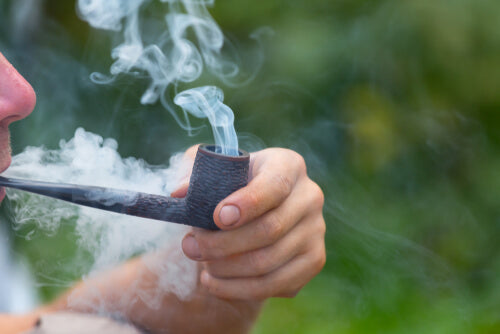
Stepping outside into the mid-morning sun with a freshly packed pipe turns an ordinary break into a deliberate ritual. Most folks associate pipe smoking with late-night studies, heavy leather armchairs, and room-filling clouds, but smoking under an open sky brings an entirely unique rhythm. The bright sun and a moving breeze change how an ember smolders, punishing blends that burn too hot while rewarding leaves that deliver clean, crisp flavors. If you load up the wrong mixture, you'll end up with a scorched tongue and an overpowering head rush before lunchtime rolls around. Finding the right pipe and tobacco pairing for the daylight hours is all about choosing balanced blends that burn easily and leave your palate refreshed while you get on with your day.
The Craft of the Briar: Anatomy, Materials, and Chamber Physics
A smoking pipe looks simple at first glance, just a carved wooden bowl connected to a hollow stem, yet it's a surprisingly tuned instrument of thermal regulation and fluid dynamics. You aren't burning tobacco in open air; you're cultivating a controlled, self-sustaining smolder inside a miniature furnace. That little chamber has to handle combustion temperatures reaching several hundred degrees while keeping the outer bowl comfortable to hold, all while channeling hot, moisture-laden vapor into a cool, dry draft.
Before you can appreciate why certain blends sing in the midday breeze, you have to look at the vehicle delivering that smoke. The pipe itself acts as the first filter, heat sink, and combustion governor. From the cellular makeup of the bowl's raw material to the exact caliber of the internal airway, every millimeter of the pipe influences how tobacco burns, how moisture condenses, and how clean the flavors taste on your tongue.
The Natural Materials: Briar, Mineral, and Cob
Not every material can handle the punishing heat of burning tobacco without charring, cracking, or dumping acrid, bitter flavors into the smoke. Over centuries of trial and error, pipe makers whittled down the options to a select few natural and mineral foundations. Each one manages thermal transfer, condensation, and flavor retention in a completely different way, dictating how a blend behaves from the initial charring light down to the fine ash at the bottom.
Briar stands as the undisputed benchmark of the pipe world, and for good reason. It isn't ordinary wood cut from a tree trunk; it’s harvested from the root swelling, or lignotuber, of the white heath shrub (Erica arborea), which grows wild across the rocky, arid hillsides of the Mediterranean basin. To survive seasonal droughts and sweeping brushfires, this underground burl packs itself with fire-resistant minerals and silica, creating a dense, swirling grain structure that resists direct flame.
Harvesting and prepping briar is a grueling, multi-step process:
-
Digging and Boiling: Harvesters dig up root bolls that are often fifty to a hundred years old. Once dug, mill workers cut away the outer bark and immediately boil the rough wood blocks in large copper vats for twelve to twenty-four hours. This boiling isn't just about cleaning the wood; it kills fungal spores, arrests residual sap flow, leaches out bitter natural tannins, and prevents the dense timber from checking or splitting as it cools.
-
Air-Curing: After boiling, the rough-cut blocks—split into rectangular ebauchons for standard shapes or wedge-shaped plateaux cut from the burl's outer edge for high-end grains—rest in drying sheds for months, and sometimes years. This slow curing lets trapped water evaporate naturally without warping the grain.
-
Pores and the Carbon Cake: Under a microscope, cured briar is packed with thousands of tiny, open cellular tubes. As you smoke, these pores pull excess moisture and condensation away from the tobacco chamber and disperse it through the walls of the stummel. Unlike mineral pipes, briar requires a slow break-in to build a thin layer of carbonized tobacco sugar and ash—known as cake—along the chamber walls. A dime-thin cake acts as a heat shield, protecting the raw wood grain from scorching while evening out the internal temperature of the bowl.
If you want absolute purity of flavor without breaking in a wooden bowl, block meerschaum takes the crown. Sourced almost entirely from subterranean deposits near Eskişehir, Turkey, meerschaum is a hydrous magnesium silicate mineral known scientifically as sepiolite. It's an exceptionally soft, chalky mineral mined hundreds of feet underground, and it's light enough to float on water once dried.
True quality here depends entirely on using genuine block meerschaum carved directly from a solid mineral nodule. Cheaper knockoffs often use pressed meerschaum, which is made by taking scrap mineral dust, blending it with synthetic binders, and pressing it into a mold. Pressed meerschaum can't breathe, cracks easily under heat, and smokes hot and soupy.
Block meerschaum, on the other hand, is a masterclass in thermal handling:
-
Zero Burnout and No Cake: Because it’s pure mineral stone, meerschaum cannot burn. You never build a carbon cake inside a meerschaum bowl; in fact, allowing a thick cake to form will ruin the pipe. As carbon heats up, it expands much faster than the surrounding mineral stone, which can split a meerschaum bowl clean down the middle. Any carbon buildup should be wiped clean with a folded cloth after every bowl.
-
The Beeswax Dip and the Color Change: Raw carved meerschaum is dipped into vats of molten, clarified beeswax. This hot wax penetrates the mineral pores. As you smoke, the heat from the burning tobacco thins the wax, allowing natural tobacco oils and tars to be drawn out through the stone. Over years of regular smoking, the chalk-white bowl slowly transforms into deep shades of amber, orange, and reddish-brown.
-
True Flavor Transmission: Meerschaum doesn't absorb flavors or ghost previous blends like wood does. You can smoke a pungent, smoky Latakia blend at breakfast, wipe the bowl clean, and immediately pack a delicate, grassy Virginia for lunch without tasting a trace of the morning smoke.
Then there's the corncob, an American tradition that punches way above its price point. Genuine corn pipes aren't made from the sweet corn you buy at the grocery store, which produces soft, puny cobs that would burn through on the second puff. They're built from specially bred, proprietary white maize hybrids grown specifically for thick, dense, woody cobs.
Processing these cobs takes patience. After harvest, the cobs sit in ventilated barns for two full years to cure into rock-hard wooden cylinders. Once seasoned, the cobs are cut into bowl blanks, bored out, turned smooth on high-speed lathes, and coated on the exterior with plaster of Paris before receiving a protective lacquer.
At the bottom of the chamber, makers press a small hardwood plug—usually birch or pine—into the heel. This wooden insert covers the soft, porous pith at the center of the cob, stopping the pipe cleaner or a tamp from punching straight through the floor of the bowl. Corncobs are open-celled and bone-dry right out of the box, soaking up moisture like a sponge. They impart a faint, toasty sweetness during their first few bowls and smoke completely dry without needing a resting period between daylight smokes.
For smokers who want alternatives to briar and cob, morta and clay round out the collection. Morta is semi-fossilized bog oak pulled from acidic, oxygen-starved peat bogs where fallen trees sat buried for thousands of years. The wood absorbs iron, silica, and peat minerals, turning pitch black or charcoal gray. It's incredibly heat-resistant, doesn't impart any wood flavor to the tobacco, and handles heavy moisture with ease.
Traditional ball-clay pipes, made from slip-cast or pressed kaolin clay and fired in a kiln, represent the oldest smoking instruments in the West. Clay gives you a pure, dry smoke, but the thin ceramic walls conduct heat instantly, meaning the outside of the bowl gets blisteringly hot to the touch while the brittle stem demands careful handling.
Physical Anatomy and Airflow Mechanics
A pipe might look like a straightforward piece of carved timber on your desk, but inside it functions as an exact airflow system tuned for heat control and fluid dynamics. Burning tobacco creates a mixture of heat, carbon dioxide, and dense moisture that must pass through a narrow channel without cooling off too fast. If the internal drilling drifts off-center by even a fraction of an inch, turbulent air currents will quickly turn a sweet burn into a bitter, gurgling mess. Keeping your bowl dry and bite-free comes down to how each anatomical section lines up to direct that steady stream of vapor:
-
The Chamber and Draft Hole Alignment: The tobacco chamber holds the pack, but the exit opening at the bottom governs the entire draw. The draft hole must meet the chamber dead-center and sit flush with the heel floor. If the drill bit stops even a millimeter too high, unburned leaf scraps and moisture pool in the dead space below the draft line, turning the bottom third of the bowl into sour, soggy dottle that won't ever light.
-
The Shank Airway and Bore Diameter: From the bowl, smoke moves through the shank along an internal airway typically bored to around four millimeters (5/32 of an inch). This caliber gives the vapor room to travel without choking your puff, while leaving enough wood on the shank walls so the briar doesn't overheat. A smooth, clean bore prevents drag, letting the air glide through without snagging on rough, unpolished wood fibers.
-
The Mortise and Tenon Junction: Where the stem fits into the wood shank is the most common trouble spot for bad airflow. The tenon, an engineered peg made of vulcanite, acrylic, or Delrin, slides into the mortise socket with a snug friction fit. If there's an open gap between the flat face of the tenon and the base of the mortise, the moving smoke hits an expansion chamber, abruptly slows down, and drops condensation instantly, producing an annoying, wet gurgle right in the middle of a smoke.
-
The Stem Taper and Thermal Cooling: Once past the tenon, smoke enters the mouthpiece, carved from hard vulcanized rubber (ebonite) or cast acrylic (lucite). Because the stem material runs cooler than the burning briar stummel, the internal draft acts as a mild heat condenser. Quality stems taper the airway gradually from a round bore into a wide, flat passage, letting the smoke decompress evenly rather than bottlenecking before reaching your mouth.
-
The Button, Lip, and Exit Slot: The final stop is the button, the raised lip that sits behind your teeth, and the exit slot that directs smoke into your mouth. A classic fishtail bit uses a wide, thin fan slot that spreads the smoke gently across your palate, softening the heat on your taste buds. If a pipe maker leaves the draft as a narrow, round hole at the lip, it fires a concentrated jet of hot steam directly onto the tip of your tongue, causing instant bite.
Classic Shapes and Bowl Geometries
Pipe shapes aren't just cosmetic choices; their physical geometry dictates how the leaf burns and how comfortably the pipe fits into an active day.
The straight Billiard remains the classic benchmark: a cylindrical bowl with vertical walls paired with a straight shank. Its uniform chamber diameter allows the combustion ember to burn downward at an even, predictable pace from top to bottom. The Dublin, by contrast, features a conical chamber that narrows toward the heel. As the ember travels downward in a Dublin, the volume of leaf decreases, concentrating heat and natural oils into a smaller area, which intensifies flavors toward the finish.
For outdoor and daytime activities, pipe ergonomics become a big deal:
-
Bent vs. Straight Profiles: A straight pipe acts as a physical lever against your jaw. If you're raking leaves, working at your desk, or walking a trail, clenching a long, heavy straight billiard strains your jaw muscles. A bent pipe, like an Apple, Bent Dublin, or Oom Paul, curves downward, shifting the center of gravity closer to your chin. This reduces leverage, allowing the bowl to hang effortlessly from your teeth with minimal bite pressure.
-
Chamber Proportions and Leaf Pairings: Narrow, tall chambers excel at burning dense, pressed flakes and coins. The concentrated ember burns downward slowly, layer by layer, preserving the subtle sugars of the leaf. Wide, shallow bowls, such as a Pot or an Author, give loose ribbon cuts plenty of breathing room, allowing complex English blends with multiple components to ignite across a broad surface area so all the leaves burn simultaneously.
-
Bowl Sizing for the Clock: Sizing is often measured against classic group scales, running from small Group 2 bowls up to massive Group 6 cauldrons. A giant chamber packing enough leaf for a two-hour marathon session is impractical when you've got a busy afternoon. Compact to medium-sized bowls, providing around 45 minutes of steady, manageable burn, fit the active rhythm of daylight hours without forcing you to abandon half a bowl of charred dottle.
The Tobacco Spectrum: Leaf Profiles, Cuts, and Combustion Chemistry
You can pack your favorite pipe with total care, but the bowl will only perform as well as the leaf burning inside it. Pipe tobacco is not just chopped raw foliage thrown into a pouch; it is a blend of botanical genetics, curing traditions, and physical preparations designed to manage fire. Raw tobacco leaves contain water, natural starches, mineral salts, and nicotine. How those leaves are cured, fermented, and sliced dictates whether a blend smokes cool and dry or scorches your mouth with sharp steam.
Understanding how individual varietals react to daylight smoking makes all the difference. When you are out in the sun, natural air currents supply extra oxygen to the bowl, which accelerates combustion. If your blend is packed with delicate, high-sugar leaves that ignite easily, a passing breeze can quickly run the bowl temperature through the roof. Matching the leaf composition and the physical cut to your daytime environment lets you enjoy a clean, steady smoke that stays cool from the first match to the final pinch of ash.
The Core Varietals and Curing Methods
Every tin or pouch on your shelf is built from a handful of core varietals. Master blenders treat these tobaccos like spices in a kitchen, balancing sweetness, body, strength, and burn characteristics to achieve a specific outcome:
-
Bright and Red Virginias: Virginia leaf forms the backbone of the pipe world. Bright Virginias are flue-cured, hung in heated barns where hot air circulates through flues to rapidly dry the leaf. This fast heat halts natural respiration and locks in high concentrations of natural plant sugars, often topping twenty percent. When smoked, Bright Virginia yields crisp notes of fresh hay, citrus, and sweet grass. Because sugar combusts quickly, it requires a slow, gentle sipping cadence to prevent tongue bite. Red Virginias undergo longer curing and gentle fermentation, which darkens the leaf, mellows the sharp citrus, and unlocks deeper, tangy flavors of toasted bread, dried fruit, and stewed plums with a cooler, more forgiving burn.
-
White Burley: Brings body, nutty flavor, and mechanical reliability. White Burley is air-cured in open-sided barns over several months, relying on ambient wind and humidity. During this slow dry, the leaf metabolizes nearly all its natural sugars, leaving behind a tobacco rich in natural nicotine with an earthy, cocoa-like profile. Burley has thick, absorbent cell walls that drink in natural casings, and it burns remarkably cool, slow, and dry, making it a dependable blending base for active daytime sessions.
-
Sun-Cured Orientals: Grown in the dry, rocky soils of Greece, Turkey, and Bulgaria, varietals like Basma, Yenidje, and Smyrna produce small, thick leaves harvested by hand. Farmers lay these leaves out on outdoor burlap racks to cure under the direct Mediterranean sun. Sun-curing preserves volatile essential oils while yielding low sugar and modest nicotine. Orientals deliver an unmistakable aromatic punch, packed with sour, herbal, buttery, and floral notes that burn exceptionally dry, adding complexity to a midday bowl without loading it down with heavy nicotine.
-
Latakia: This an Oriental leaf processed through an intense second curing stage. Primarily produced in Cyprus from sun-cured Smyrna or Carina tobacco, the leaves are hung inside tightly sealed curing barns over smoldering pits of aromatic hardwoods, including oak, pine, mastic, and myrtle. The leaves absorb heavy smoke for months, turning pitch-black and oily. Latakia brings pungent aromas of campfire smoke, damp earth, and worn leather, yet surprisingly, the smoking process strips the leaf of nicotine, leaving a smooth, cool-burning component that is much gentler on the palate than its dark appearance suggests.
-
Perique: Produced exclusively in Saint James Parish, Louisiana, Perique is a rare, labor-intensive condiment leaf. Local farmers take air-cured Red Burley leaf, pack it tightly into charred oak whiskey barrels, and place the barrels under extreme hydraulic pressure using massive screw jacks. The tobacco sits in its own fermenting juices in an anaerobic environment for months, building rich, complex flavors of sour plums, figs, and sharp black pepper. A little Perique goes a long way, and blenders add small percentages to lift a mix with fruity acidity and spicy zest.
-
Dark Fired Kentucky: A stout Burley varietal cured over smoldering hardwood fires of oak and hickory. Unlike Latakia, which cures in cool, aromatic smoke, Kentucky is smoked with direct heat, cooking the leaf while infusing it with deep hickory barbecue and roasted wood flavors. It packs a heavy punch of nicotine and a bold, savory profile that holds up against strong breezes.
-
Black Cavendish: Not a distinct plant varietal, but a processing method applied to Virginia or Burley leaf. Processors steam, press, and gently heat the tobacco under pressure, often applying a light syrup of natural sugars or molasses. The heat caramelizes the sugars, turning the leaf deep black while eliminating any natural bite. Cavendish adds volume, moisture retention, and a smooth, mellow sweetness that softens sharper blending components.
Leaf Cuts and Chamber Packing Dynamics
How the tobacco leaves are sliced and prepared alters how air moves through your pipe and dictates how fast the combustion ember travels down the chamber.
Ribbon cut consists of long, thin, uniform strands of loose leaf. It is the most forgiving cut to load into a bowl, needing only a light, three-stage pack to get an even draw. Ribbon takes to the flame immediately and burns with predictable uniformity. The tradeoff comes down to air sensitivity; because ribbon has plenty of air space between the loose shreds, an outdoor gust can fan the cherry into an inferno if you are not careful with your tamping.
Flake cut offers the ultimate solution for outdoor and daytime smoking. To create flake, whole cured leaves are layered, placed under hydraulic presses exerting hundreds of tons of pressure, and baked into dense, solid cakes known as blocks. Once aged, these cakes are sliced into thin, neat strips. The dense compression locks in moisture and slows the burn rate down to a crawl. You can rub a flake between your palms to produce a broken flake, or use the fold-and-stuff method, bending the strip in half and sliding it straight into the chamber. Flakes burn cool, resist outdoor breezes, and deliver rich, concentrated flavors over a long, slow session.
Coin and spun cuts are traditional artisanal preparations. Tobacco workers layer whole leaves around a core of Perique or Cavendish, rolling them into tight, rope-like spirals. Once cured, these ropes are fed into a rotary slicer, producing circular coins that look like miniature wheels. Packing coins whole gives you an evolving burn, where the fire starts on the sweet Virginia rim before igniting the spicy Perique center.
Plugs and ropes represent the uncut ancestors of flakes and coins. These are dense bricks or tightly twisted cords of whole leaf that demand a sharp pocket knife to shave off thin ribbons or small cubes. While they require extra prep time, they offer the highest moisture retention and a dense, smoldering burn that laughs at stiff daylight winds.
Blending Traditions from English to Virginia
Every pipe blend falls into a traditional blending family, each offering a distinct personality in the bowl:
-
English Blends: Anchored by smoky Latakia, spicy Orientals, and sweet Virginias, classic English mixtures are savory, leathery, and incense-like. While heavy evening mixtures use high Latakia ratios that can overwhelm your senses before dinner, daylight English blends dial back the campfire smoke, using just enough Latakia to cool the burn while allowing the nutty Virginias and tangy Orientals to take center stage.
-
Balkan Blends: Often confused with English mixtures, Balkans flip the recipe by making sun-cured Orientals the dominant player, backed by a supporting cast of Virginia and Latakia. Balkans sparkle in the sunlight, offering dry, herbal, and buttery flavors that stay crisp and light without leaving a heavy, oily coating on your palate.
-
Virginia and Perique (VaPer): Clean, bright, and naturally sweet, VaPer blends are a daylight favorite. The high natural sugars of Bright and Red Virginias pair with the peppery, stewed-fruit punch of Louisiana Perique, creating a lively smoke that tastes like freshly baked sourdough bread topped with fig jam. They burn clean and leave your palate refreshed, though they require a measured puffing cadence to avoid running hot.
-
Burley-Forward Mixtures: Unpretentious and dependable, Burley blends are the workhorses of daytime smoking. Offering toasted oats, dark cocoa, and earthy walnut notes, these mixtures burn cool, stay lit with minimal fuss, and provide enough body to satisfy your cravings while you are walking around or working in the yard.
-
Subtle Aromatics: High-grade aromatics take top-shelf Virginia and Burley leaf and kiss them with delicate top-notes of warm vanilla, cocoa, or dark rum. A well-crafted daytime aromatic leaves a pleasant, clean room note that will not offend people nearby, while still letting you taste real, honest tobacco with every draw.
The Midday Ember: Why Smokers Light Up Before Dark
Lighting up under the open sun brings an active, refreshing pace that stands apart from an evening session by the fire. Instead of sprawling out in an armchair for a two-hour trance, daylight puffs leave your hands occupied and your head clear while you tackle chores, head out on a walk, or step away from your desk. An outdoor breeze and natural sunlight highlight the bright, grassy sweetness of cured leaf, pairing cleanly with a fresh mug of black coffee or iced tea. Stepping outside with a loaded bowl gives you a deliberate pause in the middle of a bustling schedule, driven by several practical reasons that make smoking before sunset so appealing:
-
Fresh Palate Sensitivity and Morning Pairings: When you wake up and step into the morning, your taste buds are completely rested. You haven't spent the day deadening your tongue with spicy foods, sugary sodas, or heavy alcoholic drinks, which means your palate picks up the delicate floral notes, toasted grains, and subtle citrus sugars of light-bodied leaf with razor-sharp clarity. A mild-to-medium bowl blends naturally with morning and midday drinks, too. A bright Virginia or a nutty Burley cuts right through the rich crema of a double espresso, complements the roasted malt of a drip brew, or pairs seamlessly with an unsweetened iced black tea on a warm afternoon without leaving your mouth feeling dry or coated in thick grime.
-
Controlling the Nicotine Threshold: Nobody wants to catch a heavy dose of tobacco sickness at eleven in the morning when there's still a full slate of work to finish. High-powered nighttime blends packed with dark-fired leaf and stout Perique can hit like a freight train, inducing lethargy, dizziness, and that heavy couch-lock sensation that ruins your productivity. Daytime smokers lean toward mixtures with low-to-moderate nicotine profiles, prioritizing clean flavor delivery over raw muscle. You get that soothing, focused mental clarity that pipe tobacco is famous for, without having to fight off an energy crash an hour later.
-
Outdoor Air Circulation and Breeze Management: Smoking out on a patio, in a garage workshop, or down a walking trail changes the physics of how smoke behaves around you. Indoors, heavy Latakia or thick aromatic smoke hangs suspended in the air, slowly building into a stagnant fog that clings to clothing and furniture. Outside, ambient breezes carry the exhaust away immediately, surrounding you with a light, pleasant slipstream of sweet tobacco aroma rather than a suffocating cloud. While outdoor air helps keep the air clear, it also demands a disciplined puffing tempo, so the wind doesn't fan your chamber into a blowtorch.
-
A Built-In Physical Pacing Break: Life moves fast during daylight hours, and it's easy to get sucked into hours of continuous screen time or frantic multitasking. Packing a bowl forces you to downshift for thirty or forty minutes. You can't rush a pipe; if you puff like a steam engine, the bowl will bite your tongue and overheat immediately. That physical demand forces you to settle into a steady, rhythmic cadence. Whether you're clenching a bent billiard while pruning the garden, tinkering at a workbench, or sitting on a tailgate watching the clouds roll by, holding that quiet ember carves out a pocket of calm that recharges your battery.
-
Unobtrusive Room Notes in Shared Spaces: If you're out and about in the neighborhood or enjoying an open park bench, being courteous to folks around you matters. Heavy Balkan and English blends smell like burning peat and pungent campfires, which can easily draw wrinkled noses and complaints from nearby passersby. Daytime blends, especially Virginia-forward mixtures, clean Burleys, and light vanilla aromatics, give off a nostalgic, toasty aroma that reminds people of autumn leaves, fresh pastries, or their grandfather's study. It lets you enjoy your bowl in public or semi-shared outdoor spaces without feeling like a walking nuisance.
10 Daytime Pipe Tobacco Blends That Earn Their Place in the Bowl
Finding the right tin to crack when the sun is high comes down to balancing bright flavor with an easy burn. You want leaves that treat your palate gently, skip the heavy nicotine wallop, and stay lit without demanding constant relights while you're busy moving around. The best morning and afternoon smokes highlight crisp citrus, toasted nuts, delicate wood notes, and just enough spice to keep things interesting. Whether you prefer a clean Virginia flake with your morning brew or a light English mixture for a sunny stroll, these ten classic daytime blends deliver dependable satisfaction in the bowl:
-
Peterson Early Morning Pipe: Designed from the ground up for the first smoke of the day, this legendary mixture proves that Latakia doesn't have to be a dark, heavy punch in the mouth. It blends sweet, flue-cured Bright Virginias with fragrant, sun-cured Orientals, seasoned with just a delicate pinch of Cyprian Latakia. Cut into an airy, fluffy ribbon, it packs effortlessly into any medium billiard and takes to a flame on the first match. The flavor delivers crisp toasted bread, mild cedar, and a whisper of woodsmoke that cuts cleanly through a morning cup of black coffee without fouling your mouth or leaving you dizzy before your day even starts.
-
Orlik Golden Sliced: If sunshine could be pressed into a tobacco tin, it would look like this iconic flake. Sourced from high-grade golden Virginias grown in the United States and blended with a trace of Perique, it’s pressed into neat, paper-thin strips carrying a light, natural hint of citrus oil. You can fold a strip straight into a narrow chamber or rub it out into broken ribbons between your palms. In the bowl, it produces bright, tangy flavors of fresh hay, clover honey, and lemon peel that stay refreshingly clean all afternoon, burning down to a bone-dry white ash with zero tongue bite.
-
Carter Hall: Available in traditional pocket pouches and cans, this legendary American mixture is built for effortless, reliable smoking while you are on the move. It relies on air-cured White Burley leaf blended with a touch of Virginia, treated with a very light casing of cocoa and bourbon spirits. The broad crimp cut loads smoothly, resists outdoor breezes, and burns remarkably dry down to the heel. It offers a mellow, comforting profile of roasted pecans and mild cocoa that never bites, even if your puffing cadence picks up while you work with your hands.
-
Sir Walter Raleigh Regular Pipe Tobacco: A fixture in cans and pouches for generations, this straightforward blend is pure comfort tobacco. The recipe centers on well-aged Kentucky and Tennessee Burleys, lightly enhanced with a classic wash of molasses and chocolate. The coarse cut drops straight into a corncob or briar without fuss and burns at a steady, cool pace from the top of the chamber down to a clean gray ash. The aroma gives off a warm, nutty room note reminiscent of toasted walnuts that smells pleasant in the open air and won't draw scowls from neighbors.
-
Escudo Navy De Luxe: An absolute royalty among Virginia and Perique blends, Escudo uses a traditional spun-cut coin format that has stood the test of time for over a century. High-sugar whole Virginia leaves are wrapped around a dense core of dark, fermented Louisiana Perique, tied into ropes, and sliced into small circular discs. Packing two or three coins whole into a tall, narrow bowl gives you an evolving smoke where sweet bready notes and fig jams mingle with a sharp, peppery pop on the retrohale. The tight compression of the coins slows down the combustion speed, letting the bowl sip cool and relaxed during a long afternoon break.
-
Half & Half: Known for its bright packaging and long heritage in pouches and tubs, this classic mixture is a dependable daylight companion. The recipe balances loose-cut Bright Virginia with crimp-cut White Burley, accented by a mild topping of cardamom and dried fruit. The tobacco takes to the flame immediately and burns cool without collecting excess moisture at the bottom of the shank. The flavor profile leads with crisp toasted oats and a faint, spicy sweetness that holds up well against outdoor wind currents..
-
Captain Black Original: Readily found in white pouches and large cans, this iconic aromatic mixture provides a velvety, crowd-pleasing smoke. It blends steamed, jet-black Cavendish with rich Burley leaf, carrying an unmistakable top-dressing of warm Madagascar vanilla. The moist, wide-cut ribbon burns slow and cool, generating rich, creamy plumes of white smoke with very low nicotine strength. It’s an easy-going daylight option for front porches and outdoor gatherings, thanks to a sweet, bakery-fresh aroma that everyone nearby enjoys.
-
G.L. Pease Chelsea Morning: Crafted specifically to accompany a morning breakfast and a fresh newspaper, this modern classic layers sweet Red and Bright Virginias with fragrant Orientals, a measured hand of smoky Latakia, and a lively splash of Acadian Perique. The broken flake cut gives you complete control over how fine you rub the leaf before loading your chamber. On the light, it reveals a sparkling, multifaceted character featuring zesty citrus, leathery smoke, and buttered toast, providing enough body to satisfy experienced smokers while staying airy enough for an early start.
-
Prince Albert: Packaged in classic pouches and sturdy cans, this no-frills American Burley remains the ultimate low-maintenance smoke. The crimp-cut leaf is air-cured and given an extremely subtle touch of cocoa and fruit extract to smooth out the edges. It drops right into the pipe, lights with a single spark, and stays lit with almost zero attention needed. Delivering honest, earthy notes of dry cocoa, toasted walnuts, and weathered oak, it offers a dependable, bite-free session while tinkering in the garage or running errands.
-
Borkum Riff Original: Sourced in handy pouches and cans, this popular mixture blends flue-cured Virginia leaf with rich, dark Black Cavendish. The tobacco receives a light, aromatic casing inspired by bourbon whiskey and subtle vanilla, enhancing the natural tobacco notes rather than covering them up. The fine ribbon cut packs with an even, springy resistance and burns cleanly across the chamber. You get a pleasant balance of toasted bread, oak barrel char, and mellow caramel that pairs naturally with an afternoon iced tea.
Finding Your Daylight Pipe Smoking Stride
Stepping into the daytime with a well-packed pipe is all about matching the leaf to your day rather than letting a heavy smoke slow you down. By picking mixtures that favor crisp acidity, gentle combustion, and clean room notes, you give yourself a genuine moment of relaxation that sharpens your focus instead of muddying your senses. The magic of an outdoor bowl isn't found in chasing thick, room-filling clouds, but in tasting the clean sweetness of cured leaf while the sun warms your shoulders. Pack a blend that respects your pace, strike the match with intention, and let every cool, steady puff carry you smoothly through the hours ahead.
Share:
A Premium Cigar Packaging Choice: Cigars in a Box vs. Cigars in a Tin
A Brief History of Plasencia Cigars