
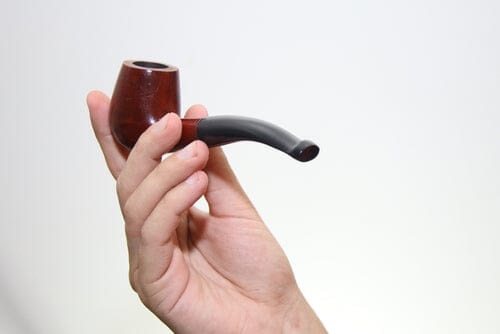
Most people pick up a new smoking pipe and spend the first ten minutes admiring the grain of the briar or the curve of the bowl. It is the visual centerpiece, the star of the show that sits heavy in the palm and draws the eye. However, once that first match is struck, the relationship shifts entirely from the hand to the mouth. You spend the next hour in intimate contact not with the wood, but with the mouthpiece that rests against your teeth and tongue. This small, often underappreciated component dictates whether your experience is a blissful retreat or a constant struggle with discomfort.
The Mouthfeel Revolution: Why the Stem is Your True Partner
When we talk about the art of pipe smoking, we often wax poetic about the curing of the wood or the secret recipes of the tobacco blenders. We focus on the fire and the ash, yet we frequently overlook the conduit that delivers that sensory delight to our palates. The stem is the primary ergonomic interface of the pipe. While the bowl stays in your hand, the stem stays in your mouth, making it the most personal part of the entire apparatus. If a stem is poorly constructed, too heavy, or made of a material that feels "off" against your teeth, the most expensive briar in the world will eventually end up gathering dust on a shelf.
The physics of a pipe stem are more complex than they appear at a glance. It isn't just a hollow tube; it is a precision-engineered tool designed to cool smoke, trap moisture, and provide a comfortable "hang" for the smoker. A well-designed stem allows you to "clench" the pipe—holding it in your teeth without using your hands—for long periods without jaw fatigue. This requires a delicate balance of weight distribution and bit thickness. When the geometry is right, the pipe feels like a natural extension of your body. When it is wrong, you find yourself constantly adjusting, wiping away moisture, or dealing with a sore jaw.
Beyond the physical comfort, the stem influences the flavor profile of the tobacco. The internal diameter of the airway, the way the smoke expands as it hits the "slot" at the end, and the cleanliness of the material all play a role in how those tasting notes land on your tongue. A turbulent airflow caused by a rough internal finish can lead to a "hot" smoke, which bites the tongue and masks the subtle sweetness of a quality Virginia or the smoky depth of a Latakia. Thus, appreciating the stem is about more than just aesthetics; it is about maximizing the pleasure of every bowl you pack.
The Great Material Debate: Vulcanite vs. Acrylic
For the vast majority of modern pipes, you are going to encounter two dominant materials: Vulcanite (also known as Ebonite) and Acrylic (often called Lucite). These two substances offer vastly diverse experiences, and most seasoned enthusiasts eventually find themselves firmly in one camp or the other. Choosing between them is not about finding a "better" material, but rather about deciding which set of trade-offs you are willing to live with.
Vulcanite: The Classic Soft Touch
Vulcanite is a hardened rubber created by treating natural rubber with sulfur. It has been the industry standard for over a century, and for good reason. The primary draw of Vulcanite is its "give." Because it is a rubber-based product, it is significantly softer than acrylic. When you bite down on a Vulcanite stem, there is a microscopic amount of cushion that feels very natural against the teeth. This makes it the preferred choice for those who like to clench their pipes for hours while reading or working in the garden. It is gentle on the dental work and provides a secure, non-slip grip.
However, the sulfur content that makes Vulcanite so comfortable is also its greatest weakness. Over time, when exposed to UV light and oxygen, the sulfur begins to migrate to the surface. This results in oxidation, a process where the once-shiny black stem turns a sickly shade of greenish-brown. Not only does this look unattractive, but it also tastes terrible—bitter and chemically. Maintaining a Vulcanite stem requires regular polishing and the application of protective oils to delay this inevitable decay. For many, the high-maintenance nature of the material is a fair price to pay for the unmatched comfort it provides during a long smoking session.
Acrylic: The Maintenance-Free Modernist
Acrylic stems entered the scene as a solution to the oxidation woes of the traditional smoker. These are made from a hard plastic that is entirely stable. An acrylic stem that is polished today will look exactly the same twenty years from now, provided you don't drop it on a concrete floor. They do not turn green, they do not taste like sulfur, and they require nothing more than a quick wipe with a cloth to stay looking brand new. Furthermore, because acrylic is a synthetic resin, it can be produced in a stunning array of colors and patterns—everything from swirling "pearl" finishes to vibrant ambers and deep reds.
The trade-off here is the "hardness" of the material. Acrylic has no "give" whatsoever. When you bite down on an acrylic bit, it feels like biting into a piece of glass or hard stone. Some smokers find this "clacky" sensation unpleasant, as it can send vibrations directly into the jaw. It is also more slippery than rubber, which can make it harder to clench a heavy pipe without it sliding out of position. While many modern carvers have learned to thin out acrylic stems to make them more comfortable, they will never truly mimic the soft feel of Ebonite. It is the choice for the smoker who values aesthetics and low maintenance over pure ergonomic "softness."
The Geometry of Comfort: Taper, Saddle, and Beyond
The silhouette of the stem does more than just complement the shape of the bowl; it defines the weight distribution of the pipe. There are two primary styles of stem shapes that you will encounter: the taper and the saddle. Each has its own distinct profile and functional benefits that change how the pipe sits in your mouth and how it looks on a rack.
The Saddle Stem: Function Meets Form
A saddle stem features a sudden, sharp "step down" from the diameter of the shank to a flat, thin section that leads to the mouthpiece. This design is incredibly popular for larger, heavier pipes. By thinning out the stem abruptly, the maker reduces the overall weight of the mouthpiece and provides a very thin "bit" area for the smoker to hold. This thinness is a godsend for comfort, as it allows your lips to close more naturally around the pipe. From a visual standpoint, the saddle stem adds a bit of architectural interest to the pipe, creating a sleek, masculine line that transitions beautifully from a thick shank.
The Tapered Stem: Sleek and Traditional
The tapered stem is exactly what it sounds like—a smooth, gradual narrowing from the shank all the way to the bit. This is the most classic look in the world of pipes, frequently seen on Billiards, Dublins, and Apple shapes. Because the transition is gradual, the stem often feels more robust and sturdy. However, if the taper is not executed well, the bit can end up being too thick, making it feel like you have a mouthful of plastic. A high-quality tapered stem requires the maker to carefully thin the material internally while maintaining the external curve, a feat of craftsmanship that separates a budget pipe from a masterpiece.
Navigating the Bit: P-Lip vs. Fishtail
The very end of the stem, the part that actually enters your mouth, is known as the bit or the button. This is where the smoke is finally delivered to your senses, and there are two main philosophies on how this should happen. Most pipes use a "Fishtail" bit, but there is a vocal and loyal following for the "P-Lip" design.
The Logic of the P-Lip
The P-Lip (or Peterson-Lip) is a unique design where the airway hole is located on the top of the stem rather than at the very end. The idea is to direct the smoke upward toward the roof of the mouth instead of directly onto the tongue. Proponents of this style claim it virtually eliminates "tongue bite" and allows the palate to pick up more nuanced flavors. The shape of the button is also more rounded and bulbous, designed to fit into the natural contour of the roof of the mouth. While it takes some getting used to, many people find it to be the most comfortable way to enjoy a long, cool smoke without irritating the sensitive tissues of the tongue.
The Ubiquity of the Fishtail
The Fishtail bit is the standard for a reason. It features a wide, flat end with a horizontal slot that spreads the smoke out in a "fan" shape across the tongue. This provides a more immediate and robust flavor hit. The button on a fishtail is usually a raised ridge that gives your teeth something to hook onto, which is vital for secure clenching. Because the smoke is delivered straight back, it feels more natural to most smokers. The key to a good fishtail is the "internal funnel"—the way the circular airway opens up into the wide slot. If this transition is smooth, the smoke stays cool; if it is abrupt or rough, you get turbulence and heat.
The Internal Architecture: Engineering a Dry Smoke
While we spend a lot of time looking at the outside of the stem, the true magic happens on the inside. A pipe stem is not just a tube; it is a series of chambers and channels that must be perfectly aligned to provide a dry, effortless draw. If the internal engineering is sloppy, you will find yourself fighting "gurgle"—the annoying sound of moisture trapped in the airway—throughout your smoke.
The Tenon and Mortise Connection
The tenon is the "plug" at the end of the stem that fits into the "hole" (the mortise) of the pipe's shank. This is the most critical junction of the pipe. A perfect fit is mandatory; it should be snug enough to hold the pipe together securely but loose enough to be removed for cleaning. If there is a gap between the end of the tenon and the bottom of the mortise, moisture will collect in that dead space, leading to a sour taste and a gurgling draw. High-end pipes often feature a "cyclone" or "filter" chamber, but even a standard push-tenon must be executed with mathematical precision to guarantee a smooth transition for the smoke.
Airflow and the Funneling Effect
As the smoke travels from the large bowl into the narrow airway of the stem, it undergoes a change in pressure and temperature. A master pipe maker will "step-drill" the stem, meaning the airway isn't just one size all the way through. It might start wider at the tenon and gradually narrow before widening again into a funnel shape just before the slot. This helps to manage the velocity of the smoke. If the smoke moves too fast, it gets hot; if it moves too slow, it cools too much and leaves moisture behind. The goal is a consistent, laminar flow that carries the flavor to your mouth without the "weather" of condensation getting in the way.
The Long Reach: Why Churchwardens Change the Game
We cannot discuss stems without mentioning the Churchwarden. These are the pipes with exceptionally long stems, often reaching ten to twelve inches in length. While they are often associated with fantasy literature and historical dramas, they serve a very practical purpose. The extra distance the smoke has to travel provides a significant amount of cooling time. By the time the vapor reaches your lips, it has lost its aggressive heat, resulting in an incredibly mellow experience.
Churchwardens also change the ergonomics of smoking. You don't hold a Churchwarden the same way you hold a standard pipe; usually, your hand is rested lower, perhaps on your lap or the arm of a chair. This makes it a "sitting" pipe, perfect for long periods of contemplation. The stems are almost always made of thin Vulcanite or acrylic to keep the weight manageable, but because of the length, they act as a lever. You wouldn't want to clench a Churchwarden—unless you want a very sore jaw—but for a relaxed, stationary session, the long stem offers a degree of coolness that a short "nosewarmer" pipe simply cannot match.
Fighting the Fade: The Battle Against Oxidation
If you choose the path of the traditionalist and opt for Vulcanite, you must accept your role as a guardian of the gloss. Oxidation is the enemy, and it is relentless. It begins the moment the pipe leaves the factory. The good news is that with a bit of diligence, you can preserve the "factory-fresh" look of your stems for years. The first line of defense is simply wiping the stem down after every use. Saliva is surprisingly acidic and will accelerate the oxidation process if left to sit on the surface.
For deeper maintenance, many enthusiasts use specialized "stem polishes" or even high-grit micromesh sanding pads to remove the thin layer of oxidation that builds up over time. If a stem has already turned quite green, it can often be rescued with a soak in a mild bleach solution or a specialized cleaning agent designed to pull the sulfur back out. Once the black luster is restored, applying a thin coat of carnauba wax or a food-grade mineral oil can create a barrier against the air. It is a labor of love, but there is something fundamentally satisfying about taking a dull, neglected pipe and bringing that deep, piano-black shine back to life.
The Aesthetic of the Custom Stem
In the modern era of pipe collecting, the stem has become a canvas for artistic expression. We are no longer limited to black rubber. Today, you can find stems made of Cumberland (a mottled brown and black Vulcanite), brindle, or even hand-cast resins that look like nebula clouds or molten lava. The choice of stem color can completely change the personality of a pipe. A classic sandblasted Dublin looks conservative and "old world" with a black stem, but swap that out for a bright "cinnamon" acrylic saddle stem, and suddenly it looks like a piece of modern art.
Custom makers often go a step further by adding "accents" to the stem—bands of silver, exotic woods, or even mammoth ivory at the junction where the stem meets the shank. These flourishes don't necessarily change how the pipe smokes, but they elevate it from a tool to an heirloom. When you are looking for a new addition to your collection, pay attention to how the stem color interacts with the stain of the briar. A well-matched stem should feel like the "punctuation mark" at the end of a beautiful sentence.
Final Reflections on the Bridge of Briar
Selecting a pipe is a deeply personal endeavor that involves far more than just picking a bowl shape that looks good in the mirror. While the briar provides the vessel for the fire, it is the stem that defines the physical reality of your smoking session from the first light to the final tamper. By paying close attention to the materials, the internal engineering, and the subtle geometry of the bit, you move beyond being a casual smoker and become a true student of the craft. Whether you prefer the soft, forgiving grip of a well-maintained Vulcanite classic or the vibrant, worry-free shine of a modern acrylic masterpiece, the stem is your constant companion in this ancient hobby. Grasping the intricacies of this humble component allows you to refine your preferences and find the gear that feels less like an object and more like a natural part of your relaxation ritual. More than just a simple delivery system, the stem remains the definitive bridge between the smoldering embers and the quiet satisfaction of a perfect draw.
Share:
12 Common Mistakes a Pipe Smoker Can Make (and How to Fix and Prevent Them)
The Evolution of Cigar Cutters