
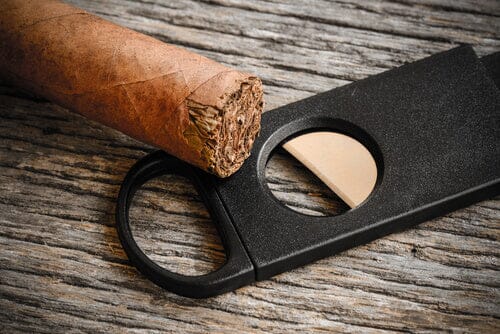
Imagine sitting in a high-backed leather chair, the weight of a cigar resting in your palm, knowing the next 30 seconds will dictate the quality of your entire hour. The crisp, clean snap of a blade meeting a leaf signifies the true beginning of a relaxation ritual that has endured for centuries. It is not merely about making a hole in a roll of tobacco, but rather about showing respect for the immense craftsmanship that went into the construction of the object itself. While the flame provides the heat, the initial preparation provides the soul, acting as the primary gateway to the intricate flavors hidden within the tightly packed leaves. This specific moment of contact between steel and tobacco serves as the vital bridge between raw product and refined experience, setting the stage for everything that follows in the session. You're not just preparing a smoke, but are actually initiating a dialogue with a product that has been years in the making.
What is a Cigar Cutter?
A cigar cutter is a precision-engineered instrument designed specifically to remove a portion of the cap to facilitate airflow without compromising the structural integrity of the leaf. Essentially, it acts as a gatekeeper for the draw, guaranteeing that the enthusiast can pull air through the length of the tobacco with exactly the right amount of resistance. These devices range from simple, utilitarian blades to complex mechanical marvels that incorporate high-speed springs and surgical-grade stainless steel components. Without a clean incision, the tightly wound filler leaves would remain trapped behind a sealed cap, making the act of smoking impossible or, at the very least, incredibly frustrating. The tool must be sharp enough to slice through multiple layers of delicate wrapper leaf without crushing the internal structure underneath. By creating a controlled opening, the cutter allows the complex oils and aromas to translate from the heat of the foot to the palate of the user.
Beyond its mechanical function, this instrument represents the intersection of engineering and luxury, often serving as a personal statement piece for those who appreciate the finer details of the hobby. It is the one tool that directly affects the physics of the smoke, determining the temperature, velocity, and density of every single puff taken. A poorly executed incision can lead to a lopsided burn or even cause the entire wrapper to unravel, turning a premium experience into a messy and unmanageable disaster.
Consequently, the design of these tools has become a point of obsession for creators who seek to perfect the combo of form and function in a compact package. They are crafted to be tactile, satisfying to operate, and durable enough to withstand thousands of uses while maintaining a razor-edged sharpness. In the hands of a knowledgeable individual, the cutter is not just a peripheral accessory but an essential partner in the pursuit of a flawless draw. Every variation in design offers a distinct profile of air intake, catering to the highly subjective preferences of the global tobacco community.
What is a Cigar and Why Do They Need to Be Cut Anyways?
A premium cigar is a hand-crafted work of art, typically composed of three distinct types of tobacco leaves: the filler, the binder, and the wrapper. These are often referred to as "long-filler" sticks because the leaves used for the internal structure run the full length of the product, providing a consistent and evolving flavor profile. The construction process is incredibly labor-intensive, involving the careful selection, fermentation, and aging of leaves to achieve a specific balance of strength and aroma. Master rollers, often with decades of experience, apply exactly the right amount of tension to the leaves to ensure the finished product is neither too tight nor too loose. The entire assembly is then sealed at the head with a small piece of tobacco leaf known as the cap, which holds everything together and prevents the wrapper from peeling away. This level of craftsmanship is what separates a true luxury item from a mass-produced alternative, requiring a high level of respect from the end-user during the preparation phase. Because these are natural products, their behavior is influenced by humidity and temperature, making the role of the cutter even more significant in maintaining their physical balance.
In contrast to the long-filler varieties, machine-made cigars are often constructed using "short-filler" tobacco, which consists of chopped leaves and stems rather than whole, intact sheets. These products are manufactured on a massive scale, emphasizing consistency and affordability over the nuanced artistry found in hand-rolled options. Because they are assembled by machines, they often lack the delicate "head and cap" structure that defines a premium stick, sometimes even coming pre-cut or featuring a simple hole. The tobacco used is frequently homogenized or treated to ensure a uniform burn regardless of environmental conditions, which can lead to a more one-dimensional flavor experience. While they serve a purpose for casual or quick sessions, they do not require the same level of preparatory finesse as their premium counterparts. The lack of a true cap means that the mechanical physics of the draw are largely predetermined by the manufacturing process rather than the user's technique. For this reason, the history of cutting tools is most closely tied to the premium market where the user has total control over the initial incision.
The distinction between these two categories is fundamental to the culture, as one represents a fast-paced commodity while the other embodies a slow, contemplative tradition. Premium options are intended to be savored over a long period, allowing the various layers of tobacco to interact and change as the burn progresses toward the head. The integrity of the wrapper leaf on a hand-rolled stick is much more fragile, requiring a sharp tool to avoid damaging the outer aesthetics of the construction. Machine-made versions are often sturdier and less prone to unraveling, but they rarely offer the complex transitions of flavor that make the hobby so captivating. When an enthusiast selects a long-filler product, they are participating in a historical legacy that spans generations of farmers, curers, and rollers. This legacy is protected by the cap, which serves as a protective seal until the moment the user decides to initiate the session. The choice to cut a premium cigar is therefore an intentional act of opening a time-capsule of flavor that has been carefully preserved for years. This deliberate approach demonstrates that the smoker honors the work of the torcedor who crafted the stick by hand.
The primary reason a cigar must be cut is that the cap acts as a structural anchor that keeps the outer wrapper leaf from expanding or peeling away during storage. If the head were left open during the aging and shipping process, the leaves would be much more susceptible to physical damage and moisture fluctuations. By sealing the end, the maker preserves the internal environment of the tobacco, allowing the oils to meld together in a controlled fashion. When it comes time to smoke, the user must create an opening that is large enough for air to flow through the filler without removing so much of the cap that the leaf loses its grip. A proper cut creates a pathway for the smoke to travel from the lit end to the mouth with minimal effort, which is essential for a cool and flavorful burn. If the opening is too small, the draw will be restricted, causing the tobacco to burn too hot and potentially ruining the delicate taste profile. Conversely, a cut that is too deep can cause the wrapper to fall apart, leading to a frustrating experience filled with loose bits of tobacco on the lips.
Beyond structural preservation, the cut is the single most influential factor in determining the "draw," which is the amount of effort required to pull smoke through the device. This airflow dictates the temperature at which the tobacco burns, which in turn influences which flavor notes are most prominent on the palate. A tighter draw often results in a slower, more intense experience, while a more open draw allows for larger volumes of smoke and a cooler temperature. The geometry of the cut—whether it is a straight slice, a wedge, or a small circular hole—changes how the smoke hits the tongue and how the flavors are perceived. This level of customization is a key part of the enjoyment, as individuals can tailor the physics of the smoke to their own personal liking. Without a clean and deliberate cut, the air would struggle to move through the tightly packed long-filler leaves, resulting in a "plugged" sensation that prevents the session from even starting. Therefore, the cutting tool is the bridge that translates the potential energy of the tobacco into the kinetic experience of the smoke.
How Have Cigar Cutters Evolved Over Time?
The progression of cigar cutters mirrors the broader history of manufacturing and human ingenuity, moving from crude manual methods to surgical levels of precision. In the earliest days of tobacco consumption, smokers relied on whatever means were available to create a path for airflow, often with little regard for the aesthetics of the leaf. As the industry grew more refined and cigars became symbols of status and leisure, the demand for dedicated instruments began to rise. This led to a creative explosion in design, where engineers and artisans competed to develop the cleanest, most efficient way to open a cap. Each era brought its own technological advancements, influenced by the materials and manufacturing techniques of the time. Matter of fact, it is this timeline of innovation highlights a constant search for the perfect balance between mechanical simplicity and refined performance.
Cigar Cutter Evolutionary Change #1: The Raw Utility of the Primitive Era
Long before the existence of specialized stainless steel blades, enthusiasts were forced to rely on their own anatomy to prepare their tobacco for lighting. This usually involved using the fingernails to pick away at the cap or, more commonly, using the teeth to bite off the end of the stick. While this method was undoubtedly convenient and cost-effective, it was also incredibly imprecise and often led to a damaged or jagged wrapper. The moisture from the mouth could cause the leaves to swell or soften, making it difficult to achieve a clean break without the tobacco tearing. Biting into a premium product also ran the risk of getting loose bits of leaf in the mouth, which distracted from the actual flavor profile of the tobacco. Despite these drawbacks, this was the standard approach for generations of field workers and casual smokers who lacked access to refined tools. It represents a time when the focus was purely on the utilitarian consumption of tobacco rather than the ceremony surrounding it.
As the culture of smoking began to migrate from the fields to the lounges and social clubs of the elite, this "tooth-and-nail" approach quickly became seen as uncouth and wasteful. Wealthy aficionados sought ways to protect their expensive purchases from the jagged edges and structural damage caused by biting. This shift in social perception created a market for a more sophisticated solution, even if the first steps were relatively simple in their execution. People began to realize that a clean incision led to a significantly better experience, both in terms of flavor and physical comfort. The realization that the cap was a technical component rather than just an obstacle was a pivotal moment in the history of the hobby. It set the stage for the transition from using body parts to using external tools, marking the birth of the cigar accessory industry. This period of transition was characterized by a growing awareness that the quality of the cut was directly proportional to the quality of the session.
Cigar Cutter Evolutionary Change #2: The Adaptation of General Purpose Blades
The first real "tool" used for this task was not a specialized device at all, but rather the ubiquitous pocket knife that many men carried as a matter of course. A small, sharp blade could provide a much cleaner slice than a pair of teeth, allowing for a level of control that was previously unattainable. However, using a standard knife required a high degree of manual dexterity and a very steady hand to avoid cutting too deep or slipping. If the blade was not perfectly sharp, it would push against the tobacco rather than slicing through it, often crushing the internal structure of the head. Smokers would typically lay the stick on a flat surface or hold it firmly in one hand while making a careful circular incision around the cap. This was a slow process that demanded intense focus, turning the preparation into a more deliberate and mindful activity. While it was an improvement over biting, the lack of a specialized guide or guard meant that mistakes were still common and often costly to the smoker.
This era of adaptation showed that there was a clear need for an instrument that could provide a standardized cut with less risk of user error. The pocket knife was a jack-of-all-trades that lacked the specific geometry required to perfectly match the rounded head of a premium stick. As metalworking techniques improved, some knives began to feature smaller, more specialized blades specifically designed for precision work on delicate leaves. These early iterations were the precursors to the dedicated cutters we see today, bridging the gap between general-purpose utility and specialized luxury. The move toward using a blade also emphasized the importance of sharpness, as a dull edge was the primary enemy of a successful preparation. People started to value the ritual of maintaining their blades, recognizing that a well-cared-for tool was a prerequisite for a top-tier experience. This phase of evolution solidified the idea that the preparation phase was just as important as the act of lighting the tobacco itself.
Cigar Cutter Evolutionary Change #3: The Architectural Depth of the Wedge
One of the first major structural innovations in the field was the development of the V-cut, an instrument that creates a deep, wedge-shaped incision into the cap. Instead of removing the entire top layer of tobacco, this tool carves out a valley that increases the surface area for the draw while leaving the outer edges of the cap intact. This design was particularly popular in the early twentieth century because it offered a way to get a very open draw without the risk of the wrapper unraveling. The unique "cat's eye" shape of the resulting opening was seen as both aesthetically pleasing and technically superior for certain types of large-gauge sticks. Because the blade is angled to penetrate into the filler, it creates a concentrated path for the smoke that some enthusiasts believe intensifies the flavor profile. The mechanical design of these early wedge cutters often involved a heavy, lever-action mechanism that felt substantial and reliable in the hand. It was a departure from the simple sliding blade, introducing a more complex physical interaction between the tool and the tobacco.
While the V-cut fell out of favor for a period as straight cutters became more dominant, it has seen a massive resurgence in the modern era as smokers look for more versatility. The geometry of the wedge allows for a deep penetration that reaches more of the internal filler leaves, providing a unique airflow profile that a flat cut cannot replicate. Early versions of these tools were often built into tabletop units or heavy desk accessories, making them a centerpiece of the smoking room. They required a specific type of movement, where the cigar was pressed into a guide and the blade was brought down with a swift, decisive motion. This provided a level of consistency that was impossible with a free-hand knife, as the tool determined the depth and angle of every single cut. The evolution of the V-cut represents the first time that engineers looked at the physics of the draw and designed a tool to specifically manipulate it. It remains a favorite for those who want a robust airflow without sacrificing the structural security of the cap.
Cigar Cutter Evolutionary Change #4: The Simplistic Efficiency of the Single Blade
The introduction of the guillotine cutter marked a turning point in the industry, offering a simple and highly effective way to achieve a straight, level incision. These tools typically feature a single, sharp blade that slides across a circular aperture where the head of the cigar is placed. The beauty of this design lies in its portability and ease of use, making it the most common choice for smokers on the go. However, the single-blade version requires the user to push the tobacco against a flat surface on the opposite side of the blade, which can sometimes lead to minor crushing. If the motion is not quick and forceful, the blade can snag on the wrapper leaf, causing a jagged edge rather than a clean slice. Despite this potential flaw, the single guillotine was a massive leap forward in making precision cutting accessible to the average consumer. It became the foundational design upon which many subsequent innovations were built, proving that a simple sliding mechanism was the most intuitive solution for most people.
As manufacturing costs decreased, these cutters became widely available in a range of materials from inexpensive plastics to high-end precious metals. The focus during this evolutionary stage was on making the tool as thin and light as possible so that it could easily fit into a vest pocket or a small travel case. This democratization of the tool meant that more people were able to experience a proper cut, which in turn raised the overall standards for what a "good smoke" should feel like. The single-blade design also forced manufacturers to pay closer attention to the quality of the steel being used, as a cheap blade would dull quickly and become useless. Enthusiasts began to look for "surgical grade" materials that could hold an edge through hundreds of sessions without needing to be sharpened. This push for better materials was a key driver of innovation, leading to the use of hardened alloys that could slice through the toughest leaves with minimal resistance. The single guillotine remains a staple of the industry because of its unpretentious functionality and its role in standardizing the straight cut.
Cigar Cutter Evolutionary Change #5: The Symmetrical Perfection of Dual Blades
To address the minor crushing issues associated with single-blade models, engineers developed the double guillotine, which features two blades that meet in the center from opposite sides. This synchronized movement ensures that pressure is applied evenly to both sides of the tobacco simultaneously, resulting in a much cleaner and more symmetrical incision. Because the blades are slicing toward each other, the chance of the wrapper tearing or the head being squashed is significantly reduced. This design became the gold standard for those who demand a perfect straight cut every single time, regardless of the size or shape of the stick. The mechanics of the double guillotine are often more complex, requiring a series of gears or slides to keep the blades in perfect alignment. Operating one provides a tactile satisfaction, as the two edges meet with a distinct sound that signals a job well done. It represents a move toward mechanical perfection, where the tool does the work of stabilizing the tobacco so the user doesn't have to.
This evolutionary step also allowed for the inclusion of safety features and ergonomic improvements that made the tool more comfortable for long-term use. Many double guillotine models incorporate finger loops or contoured grips that allow for a firm, steady hold during the cutting motion. The added stability means that even a novice can achieve professional results with very little practice, which helped to further grow the hobby by lowering the barrier to entry. Some high-end versions even utilize a "butterfly" opening mechanism that feels like a piece of precision machinery rather than a simple accessory. This focus on the user experience was a major theme in the middle of the twentieth century, as creators sought to differentiate themselves through superior build quality and innovative features. The double blade also paved the way for larger apertures, allowing smokers to easily handle the "ring gauges" that were becoming increasingly popular in the market. It remains perhaps the most versatile tool in an enthusiast's collection, capable of handling almost any situation with ease and grace.
Cigar Cutter Evolutionary Change #6: The Focused Extraction of the Plug
A radical departure from the sliding blade was the invention of the cigar punch, a tool that uses a small, circular blade to remove a "plug" from the center of the cap. Instead of slicing across the entire head, the punch is gently twisted into the tobacco to create a focused hole that allows air to pass through while leaving the rest of the cap entirely intact. This method is highly valued by those who want to maximize the structural integrity of the stick, as there is virtually no risk of the wrapper unraveling. The resulting draw is often more concentrated, which can lead to a more intense flavor experience as the smoke is funneled through a smaller opening. Punch cutters are also incredibly compact, often being built into the base of a lighter or attached to a keychain for high portability. They do not require the same amount of physical space as a guillotine, making them an ideal choice for outdoor use or travel. However, they are less effective on pointed or "torpedo" shaped sticks, which limits their utility to more traditional rounded heads.
The development of the punch highlighted a growing interest in the physics of smoke concentration and how a smaller aperture can change the character of a blend. By not removing the shoulders of the cap, the smoker keeps a larger portion of the tobacco in contact with the lips, which some feel provides a more natural sensation. This tool also requires a unique kind of finesse, as pushing too hard or twisting too quickly can crack the delicate wrapper leaf around the hole. As this technology evolved, manufacturers began offering different sizes of punch blades to accommodate varying ring gauges and personal preferences. Some modern versions even feature multiple blades of varying diameters in a single device, giving the user total control over the size of the opening. This focus on "localized" cutting was a major shift in thinking, moving away from the "all or nothing" approach of the guillotine. It caters to a specific segment of the community that prioritizes precision and structural preservation above all else.
Cigar Cutter Evolutionary Change #7: The Surgical Finesse of Manual Shears
While sliding blades are efficient, many traditionalists prefer the control and visibility offered by specialized cigar scissors. Unlike standard household scissors, these are designed with curved, circular blades that cradle the head of the cigar, preventing it from slipping during the cut. The long handles provide a significant amount of leverage, allowing the user to make a very slow and deliberate incision. This level of control is particularly useful for odd-shaped sticks or for those who want to remove only the thinnest sliver of the cap. Because the user can see exactly where the blades are meeting the leaf, the margin for error is much smaller than with an enclosed guillotine. Using a pair of scissors is often seen as a more "ceremonial" act, requiring a steady hand and a bit of patience to get the alignment exactly right. They are frequently found in high-end lounges and private collections, where the aesthetics of the tool are just as important as its practical function.
The evolution of these scissors involved a transition from basic steel to high-carbon alloys that could maintain a razor edge over very long periods of time. The pivot point must be perfectly calibrated to guarantee that the blades do not wobble or gape, which would lead to a jagged and uneven cut. Designers also began experimenting with different handle shapes and finger hole sizes to make the tool more ergonomic for various hand sizes. Some versions are even foldable, combining the precision of scissors with the portability of a pocket-sized accessory. This evolutionary branch shows that for many people, the act of preparation is a performance that benefits from a more open and visible mechanism. It allows the enthusiast to interact with the tobacco on a more tactile level, feeling the resistance of the leaf as the blades slowly close. While they may not be as fast as a spring-loaded guillotine, the sheer level of customization they offer keeps them relevant in the modern market.
Cigar Cutter Evolutionary Change #8: The Weighted Grandeur of Stationary Units
For those who prefer to enjoy their tobacco in a dedicated lounge or home office, the tabletop cutter represents the peak of convenience and stability. These are heavy, stationary devices that often incorporate multiple types of blades—such as a straight cut, a V-cut, and various punch sizes—into a single unit. Because they are weighted, they do not move during the cutting process, allowing the user to focus entirely on the placement of the cigar itself. Most tabletop models use a lever or a large button to activate the blades, providing a powerful and consistent motion that is difficult to achieve with hand-held tools. They are designed to be a centerpiece of a room, often featuring ornate carvings, polished wood, or industrial-style metalwork. This evolutionary step moved the tool from a personal accessory to a shared piece of equipment that serves as a social anchor for a group. Having a variety of options in one place allows guests to choose their preferred method without needing to carry their own specialized equipment.
The internal mechanics of these large units are often quite complex, featuring heavy-duty springs and synchronized blade tracks that ensure a perfect result every time. Because they are not constrained by the need for portability, engineers can use much thicker and more durable materials for the blades and housing. This results in a tool that can last for decades, often being passed down as a family heirloom or a legacy piece within a club. The transition to tabletop designs also allowed for the inclusion of a "catch" for the tobacco clippings, keeping the smoking area clean and organized. This attention to detail reflects a more mature and settled culture, where the hobby is integrated into the home environment. These devices represent the industrialization of the cutting process, where power and stability are used to eliminate the variables of human movement. For the serious collector, the tabletop cutter is the ultimate expression of commitment to the ritual, offering a level of performance that hand-held devices simply cannot match.
Cigar Cutter Evolutionary Change #9: The High-Speed Precision of Spring-Loading
In the late twentieth and early twenty-first centuries, the focus of evolution shifted toward high-tech materials and advanced mechanical assistance. The introduction of spring-loaded triggers allowed for a "light-speed" cut that slices through the leaf before the tobacco even has a chance to compress or move. This rapid motion is key to achieving a clean edge, especially on sticks that are slightly over-humidified or tightly rolled. Ergonomic research led to the development of "tear-drop" shapes and side-mounted triggers that fit the natural contours of the hand better than traditional loops. These tools are often finished with high-performance coatings like titanium or carbon fiber to reduce friction and increase durability. The goal of this era was to make the tool as intuitive as possible, allowing the user to get a perfect result with almost zero effort or thought. This trend toward automation and ease of use reflects a broader cultural move toward convenience and precision in all aspects of luxury goods.
Beyond the mechanics, the use of modern materials like aerospace-grade aluminum has allowed for lighter yet stronger frames that can withstand significant abuse. These cutters are often tested to survive thousands of cycles without any loss in performance, providing a level of reliability that early pioneers could only dream of. The inclusion of locking mechanisms and safety catches also made these tools safer to carry in a pocket along with other items. We also saw the rise of "asymmetrical" designs that allow for better visibility of the blade’s path, helping the user avoid cutting too deep. This era was characterized by a marriage of traditional blade technology with modern manufacturing techniques like CNC machining. The result is a generation of tools that are incredibly consistent, where every single unit produced performs exactly the same as the next. This level of standardized excellence has become the new benchmark for the industry, pushing creators to find even smaller ways to improve an already refined process.
Cigar Cutter Evolutionary Change #10: The Modern Frontier of Laser-Sharpened Tech
The most recent frontier in the evolution of these tools involves the use of specialized deep-wedge geometry and ultra-refined blade edges that approach surgical levels of sharpness. While laser technology is sometimes discussed as a futuristic possibility for cutting tobacco, the current reality focuses on "laser-sharpened" steel that can glide through leaves with almost zero resistance. These modern deep-V cutters are designed to handle the massive ring gauges that have become popular recently, providing a wedge that is deep enough to open up even the thickest cigars. By using computer-aided design, manufacturers can optimize the angle of the blade to ensure it hits the tobacco at the perfect trajectory for a clean slice. This focus on "extreme geometry" allows smokers to experiment with airflow in ways that were previously impossible. It is a time of hyper-specialization, where tools are being designed for very specific types of tobacco and leaf origins. These advancements reflect a community that is no longer satisfied with generic solutions for high-end products.
As we look at the current state of the art, clearly, the cutter has become a high-performance instrument that rivals any other tool in a person’s collection. The integration of high-visibility guides and depth-limiting guards ensures that even the most expensive and rare sticks can be prepared with total confidence. Some modern designs even incorporate specialized coatings that minimize friction-induced heat during the slice, preserving the delicate oils at the head. This obsession with the smallest details shows just how far we’ve come from the days of using a simple pocket knife or a set of teeth. The modern enthusiast has access to a level of precision that was once reserved for specialized manufacturing facilities. This evolutionary peak is not just about the blade itself, but about the entire ecosystem of support, from ergonomic grips to self-sharpening mechanisms. As technology continues to advance, we can expect to see even more integration of digital precision and traditional craftsmanship. The future of the cut is likely to be defined by even greater levels of customization and control.
The Satisfying Snap of a Done Deal
Let’s be real folks, fumbling with a dull blade or a jagged thumbnail isn't just annoying, it's a quick way to ruin a stogie. Hence, why a reliable cigar cutter takes the guesswork out of the draw, letting the airflow do exactly what the roller intended from the start. The heavy mechanical click of a well-made tool provides a level of tactile confidence that no improvised method can match. That small piece of sharpened steel remains the single most important factor in separating a frustrating, tight draw from an hour of perfectly smooth smoke. And so, the transformation of the cigar cutter from a primitive necessity into a sophisticated masterpiece of engineering highlights the deep respect that enthusiasts hold for the tobacco leaf and the hands that roll it.
Share:
Everything You Really Need to Know About Pipe Stems
Can Pipe Tobacco Change Color (and What Does This Mean if So)?