
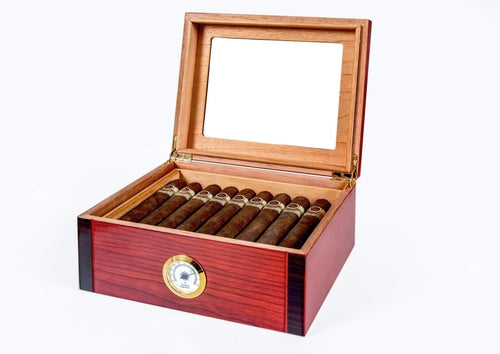
Sitting down with a premium cigar is easily one of the finest simple pleasures a person can enjoy in this modern life. You carefully clip the cap, torch the foot with your favorite lighter, and look forward to an hour of pure, unadulterated relaxation, only to find the burn line angling wildly sideways like a bad highway detour. This frustrating disaster, which ruins the flavor and creates a harsh smoke, often traces right back to how those sticks sit inside your storage box over long stretches of time. Humidity inside any storage setup is rarely identical from the top tray down to the very bottom floor, creating hidden pockets of heavy moisture and stagnant dry air. Shifting your stogies around periodically breaks up these stale zones, equalizes the internal climate, and gives every single leaf an equal shot at aging beautifully for a perfect draw.
Premium Cigars 101
A true ‘premium’ smoke is a completely natural, artisanal product born from years of intense agricultural labor, careful fermentation, and highly skilled human hands working in perfect harmony. Unlike mass-produced, machine-made items created by heavy factory machinery using chopped tobacco scraps and chemical paper binders, these fine sticks rely entirely on whole, intact long-filler leaves carefully bunched together by hand. Master blenders spend decades learning the subtle secrets of the soil, mastering how to combine distinct leaves from various growing regions, microclimates, and harvest years to achieve an exact, complex flavor profile. The outer wrapper leaf gets chosen with extreme care for its pristine visual texture, veins, and rich oil content, while the structural binder leaf holds the complex interior blend of filler leaves firmly in position.
This delicate physical combination requires highly precise, unyielding environmental conditions to preserve the volatile essential oils that simply give each individual tobacco blend its unique character and aroma. When these natural oils dry out due to neglect, the complex flavor profile disappears completely, leaving behind a bitter, hot, acrid smoke that burns far too quickly and ruins the experience. Because of this incredible structural complexity and sensitivity to the air around it, you cannot simply toss these creations on an open shelf or a drawer and expect them to remain smokable for very long.
Think of each handmade cigar as a living, breathing bundle of organic material that constantly reacts to the invisible shifts in the surrounding air. Tobacco leaves naturally absorb and release ambient water vapor depending on the specific environmental conditions where they rest day after day. If the air inside your box gets overly humid, the tightly rolled filler leaves will swell up significantly, choking off the airflow and making the draw incredibly tight. On the flip side, an overly dry environment causes the outer wrapper leaf to shrink rapidly, leading to nasty cracks, splits, and catastrophic unravelling during your smoke session. The natural wrapper, binder, and filler layers all expand and contract at completely distinct rates based on their physical leaf density and original oil levels. This physical reality means a slight imbalance in moisture across the body of a single stick can ruin the combustion dynamics completely, causing one side to burn faster than the other. Achieving a slow, cool, perfectly even burn requires making sure the internal moisture content is evenly distributed throughout every single layer of the rolled tobacco.
Beyond simply staying moist enough to prevent cracking, high-end smokes undergo a continuous, slow fermentation process while resting quietly in your collection box. Over months and years, the distinct traits of the various filler leaves marry together to create a smooth, complex, and refined profile that is highly prized by fans. Residual ammonia and harsh chemical tannins slowly escape from the natural tobacco fibers, replacing bitter notes with rich, smooth flavors of cedar, leather, baking spice, or dark cocoa. For this complex chemical magic to happen smoothly, the leaves need a steady, unchanging environment that lets the natural oils mature without sudden atmospheric disruptions. Sudden, violent shifts in humidity or ambient room heat will shock the sensitive tobacco leaves, halting the aging process and completely ruining the blender’s original flavor vision. Serious collectors recognize that patience is rewarded with an incredibly refined smoking experience that cheap, mass-market items can never hope to replicate. Taking proper care of your collection preserves that rich craftsmanship, honoring the immense physical effort that went into growing, curing, and rolling each individual leaf.
Treating these artisanal creations with the respect they deserve means treating them as highly perishable goods rather than stable, inert consumer products. Standard machine-made products contain preservatives and artificial chemical additives designed to withstand harsh atmospheric conditions and dry store shelves indefinitely. Premium long-filler leaves possess none of those artificial shortcuts, leaving them completely vulnerable to mold outbreaks, beetle infestations, and total drying out if left unmonitored. When you bring a handful of beautiful sticks home from your supplier, you take on the serious role of a temporary caretaker for a piece of agricultural art. Neglecting your collection for even a few weeks can result in a box full of unsmokable, brittle sticks that crack and crumble under the slightest thumb pressure.
Conversely, paying close attention to the delicate climate inside your storage box pays off massively every time you light up a pristine, perfectly preserved stick. Gaining deep insight into the fragile, organic nature of premium tobacco is the very first step toward mastering the fine art of long-term preservation.
Humidors 101
A humidor functions as a specialized climate box designed to shield your tobacco collection from the destructive shifts of everyday room air. While many folks look for unpolished Spanish cedar due to its excellent moisture absorption and natural bug-repelling traits, box makers construct these units out of several other wood types too. Honduran mahogany stands out as a fantastic alternative choice because it handles moisture beautifully without casting a heavy wood aroma onto your favorite sticks. Some builders even utilize American red cedar, though you have to watch out for its pungent scent overwhelming the delicate, natural flavor profiles of milder wrappers.
No matter the interior lining, the setup relies entirely on a tight, crisp physical seal around the lid to lock that moist air inside securely. Without that snug closure, your humidification system drains into the room quickly, leaving your valuable sticks bone-dry and ruined. A solid box balances these elements out perfectly to mimic the lush tropical regions where these fine leaves grow.
Classic desktop boxes made of solid wood or beautiful wood veneers remain the most popular choice for casual collectors and seasoned aficionados worldwide. These traditional wooden models look beautiful sitting on an office desk or a living room shelf while doing a solid job of holding humidity levels. However, because wood is a completely natural, porous material, it is highly susceptible to external temperature shifts and ambient room drafts. The interior wood fibers near the back hinge might absorb far more moisture from a nearby humidification device than the wood near the front latch. This natural variance creates distinct microclimates inside a single small box, meaning sticks resting in the back corners experience distinct conditions than those in the center. Wood also breathes slightly over time, letting minute amounts of external air seep through the grain during heavy seasonal shifts. Managing a traditional wooden box requires a watchful eye, regular monitoring of your hygrometer, and a willingness to step in when levels fluctuate.
In recent years, airtight plastic containers and heavy-duty utility cases have gained immense popularity among savvy cigar fans looking for low-maintenance options. These synthetic setups, frequently referred to as tupperdors or coolerdors, feature thick rubber gaskets and locking latches that create a completely impervious, absolute seal. Because solid plastic does not absorb water vapor like Spanish cedar does, these containers hold their humidity levels incredibly well with minimal effort. The total lack of natural airflow means that moisture from your humidification packs can become stagnant, pooling heavily in specific areas of the container. Acrylic jars offer a similar high-seal experience, giving you a crystal-clear view of your sticks while locking down the internal atmospheric conditions completely. While these modern options are incredibly efficient, tight, and budget-friendly, they lack the natural humidity-buffering capabilities of traditional aromatic cedar walls. As a direct result, localized moisture imbalances can happen quickly in a plastic environment if your humidification source is placed poorly or packed too tight.
For serious collectors with hundreds or thousands of sticks, large electronic cabinets or converted wine cooling units represent the premier tier of tobacco storage. These massive units use built-in electric fans, digital sensors, and automated water reservoirs to regulate temperature and relative humidity levels simultaneously. Holding the internal temperature controlled is incredibly critical because summer heat spikes can trigger dormant tobacco beetle eggs to hatch, ruining thousands of dollars of tobacco. Even with advanced electronic climate controls, the sheer physical size of a large cabinet creates natural challenges for achieving uniform airflow. Cool air naturally sinks toward the floor of the cabinet, while warm air rises to the top shelves, pulling moisture along with it. Trays packed tightly with cedar boxes can completely block the air currents generated by the small internal electronic fans, creating stagnant zones. No matter which specific style of storage you choose for your growing collection, managing internal airflow remains an ongoing, essential task.
Everything You Need to Know About Premium Cigars Rotation
Rotating your collection means manually moving your sticks from one section of the storage box to another over regular, designated intervals. This practice directly addresses the simple physical reality that moisture behaves differently depending on how close it sits to your humidification source. Sticks resting directly beneath a humidification device will inevitably absorb far more water vapor than sticks buried deep at the bottom of a crowded tray. By shifting the physical location of your sticks, you prevent any single cigar from becoming overly soggy or dangerously brittle over time. This simple piece of routine maintenance gives your entire collection an equal opportunity to age in uniform, perfectly balanced conditions.
When to Rotate Your Premium Cigars More or Less Often
Determining the perfect schedule for shifting your sticks depends heavily on your specific storage setup and local weather patterns. There is no single magic calendar date that applies to every collector, as a box in a dry desert behaves in a completely distinct manner than one in a humid coastal region. Tuning in to the subtle environmental shifts around your home will help you decide when to step in or when to leave things alone.
Rotating Your Cigars More Often If/When...
You should consider increasing the frequency of your rotation routine when specific external and internal factors disrupt the balance of your storage environment, such as:
-
Extreme Seasonal Weather Transitions: When brutal winter weather arrives and dry indoor heating systems strip all ambient moisture from your home, the exterior wooden walls of a traditional desktop box lose their humidity rapidly to the dry room air. This causes a sharp environmental gradient inside the box where the outer cedar panels frantically pull water vapor from the closest cigars to replace what was lost to the room. This creates an artificial dry zone along the perimeter while the core of the box remains highly saturated. To combat this uneven distribution, you must shift your sticks every two weeks to prevent structural warping and wrapper splitting. Skipping this maintenance during heavy winter months often means your outer smokes become crisp and unsmokable while your center smokes stay plump and damp.
-
High-Frequency Lid Openings Throughout the Week: Opening your box multiple times a day to select a smoke, check your gauges, or share a blend with friends introduces a sudden, violent wave of dry room air that instantly blankets the top tray. This leaves the deeply buried base layers completely isolated from the fresh air exchange, creating an uneven moisture deficit. The top sticks are constantly drying out from the room exposure, while the bottom sticks remain stagnant and heavy with moisture. Shuffling these layers every few weeks equalizes their moisture exposure before the wrapper leaves begin to lift from the body. This is especially true for collectors who love to show off their sticks to guests regularly, as constant display drains the top-level humidity much faster than you think.
-
Introducing a Sizable Batch of Unseasoned New Arrivals: Dropping a large bundle of newly acquired stogie directly from a shipping box into an established, stable humidor can instantly destabilize the entire microclimate because mail-order tobacco is frequently either parched from transit or over-saturated by wholesale warehouses. These new arrivals act like giant sponges that either aggressively suck water vapor away from their immediate neighbors or dump massive quantities of moisture onto them. This creates localized climate pockets that can only be flattened out by breaking up the batch and spreading them across different shelves on a weekly basis until they acclimate to your baseline levels. Letting a fresh shipment sit in one tight pile will create a localized spike that ruins the surrounding sticks, making an active layout shakeup mandatory during the first month of arrival.
-
Overcrowding Your Storage Shelves Past Safe Limits: Stacking your sticks multiple layers deep and jamming them tightly against the side walls entirely chokes off the natural open air channels that permit moisture to circulate freely via convection. In a packed box, the cigars sitting right next to the humidification element act as a physical wall, absorbing the lion's share of the released moisture and becoming dangerously soft while the sticks trapped at the very bottom are starved of humidity. This issue requires aggressive, bi-weekly hand-shuffling to stop mold from growing on the wet side and cracking from happening on the dry side. When your collection grows to the point where sticks are pinned tight against the wood, manual circulation becomes your only defense against a ruined batch.
-
Relying Strictly on Passive Localized Humidification Devices: Utilizing traditional foam pucks, gel jars, or small static crystals that remain glued to a single fixed location inside your box means that water vapor distribution is entirely unidirectional and restricted by proximity. The air space surrounding the device stays permanently heavy and damp, while the far opposite corners of the cedar tray receive only a fraction of that moisture. This physical reality forces you to rotate your cigars end-for-end and top-for-bottom every single month to prevent lopsided humidification. Without this physical movement, you will find that smokes placed near the humidifier will plug up and refuse to draw, while the far sticks will burn hot and fast due to moisture starvation.
-
Experiencing Unexpected Indoor Temperature Spikes: When summer heat waves cause your indoor spaces to warm up rapidly, the rate at which water vapor evaporates from your humidification source, accelerates dramatically, thus saturating the air faster than the cedar wood can absorb it. This leads to heavy moisture pooling at the top of your container where the air is warmest, leaving the cooler bottom sections relatively dry. This thermal imbalance forces you to increase your manual shuffling routine to protect your premium wrappers from swelling up and bursting under the pressure of the heat. Shifting the sticks from the hot top zone to the cooler bottom shelves counteracts this seasonal distortion and prevents your wrapper leaves from splitting open at the seams.
Rotating Your Cigars Less Often If/When...
There are times when your storage environment achieves a state of steady equilibrium, meaning you can step back and let your collection rest undisturbed for long periods, such as:
-
Deploying an Active Electronic Climate Control System: Storing your premium smokes inside a modern electronic cabinet equipped with automated digital sensors and motorized circulating fans means that air currents are constantly driven through every nook and cranny of the interior space. This continuous mechanical movement completely eliminates stagnant pockets of water vapor and equalizes the moisture level across all trays simultaneously, reducing your manual maintenance duties to a point where you only need to look at shifting your sticks once or twice a year during deep cleanings. The constant breeze created by these mini fans mimics a natural climate, distributing moisture so evenly that manual labor becomes unnecessary for the health of your collection.
-
Living in a Perfectly Stabilized Indoor Environment: Maintaining a home with high-end central climate control that locks the ambient room temperature and relative humidity into a permanent, narrow range shields your wooden box from sudden external atmospheric shocks. Because the outside air never fluctuates, the internal Spanish cedar lining remains in a beautiful, unchanging equilibrium with your humidification source, meaning the internal tobacco leaves never experience moisture shifts and can be left completely alone for months without any fear of uneven aging. This climate stability protects the box from breathing in dry drafts, allowing the cedar wood to act as a perfect, steady shield that preserves your smokes without human interference.
-
Aging Full, Uncut Factory Boxes Over Long Multi-Year Stretches: Placing intact, sealed cedar dress boxes or cabinet bundles of twenty-five sticks deep into a dedicated aging locker creates a self-sustaining microclimate within the dense mass of the tobacco itself. The tightly packed leaves act as an incredible natural buffer against minor environmental shifts, and because the box is never opened and individual sticks are not exposed to open air currents, manual rotation is actually counterproductive. The blend prefers absolute stillness to let the natural oils marry in peace over several years, meaning that moving the sticks around would only disrupt the delicate, slow fermentation occurring inside the closed cedar packaging.
-
Distributing Extensive Two-Way Humidity Regulation Packets: Scattering numerous self-regulating moisture packets uniformly throughout every single layer, corner, and tray of your setup guarantees that humidity is controlled locally across the entire physical space. Because these specialized packets actively absorb excess moisture in damp areas and release water vapor in dry spots, they naturally suppress the formation of localized humidity gradients, allowing you to leave your collection entirely undisturbed for up to six months at a time while maintaining a perfect burn profile. This distributed control system does the balancing work for you, removing the need for manual intervention since every single stick sits right next to its own personal climate regulator.
-
Transitioning into a Stable Moderate Ambient Season: When the extreme weather of winter and summer gives way to the mild, steady climates of spring or autumn, the natural baseline humidity of the outdoor air aligns closely with your ideal storage goals. This causes the seal of your box to experience zero pressure from outside drafts and allows the interior climate to hover perfectly at your target level without requiring you to open the lid or disturb the resting sticks for many weeks at a time. During these sweet spots of the year, nature does the heavy lifting for you, meaning you can step back and let your collection rest in total peace without touching a single wrapper leaf.
How to Properly Rotate Cigars Then Without Overdoing it
Shuffling your cigars doesn’t mean shaking your storage box like a cocktail mixer or creating a chaotic mess on your table. A careful, methodical approach ensures that you protect the delicate wrapper leaves from getting nicked, chipped, or scratched during the process. Following a simple structural path like below turns this chore into a relaxing ritual that brings you closer to your collection:
-
Set Up a Spotless Cushioned Workspace: Before lifting the lid of your humidor, clear off a large, flat surface like a dining table or desk and lay down a clean, thick microfiber towel or a soft leather mat to provide a cushioned landing zone. This step is absolutely critical because dry wood surfaces, stray dust particles, or hard tabletops can instantly scratch, tear, or puncture the fragile, oil-rich wrapper leaves of your premium smokes as you move them around, so creating a safe zone prevents accidental damage before you even begin handling the tobacco. A single rough spot on a bare table can slice through a delicate Connecticut shade wrapper, making this preparation an essential shield for your valuable sticks.
-
Remove and Organize the Upper Layers Carefully: Open the lid and gently lift out the top row of cigars or remove the upper Spanish cedar tray entirely, setting it down onto your cushioned workspace without scrambling the arrangement of the sticks. Maintaining them in their original order enables you to track exactly which cigars have been exposed to the open air at the top of the box, ensuring that you can execute a true geometric shift rather than just blindly mixing them up and losing track of their climate exposure. Taking your time during this step prevents the sticks from rolling against each other, minimizing friction that could bruise the delicate foot of the cigars.
-
Extract the Deeply Buried Bottom Layer: Reach into the lowest depths of the humidor to carefully lift out the bottom layer of cigars, which have been resting furthest away from the main air currents and closest to the dense floor wood. Set these sticks in a separate neat row on your towel, as these deep-dwelling cigars are the ones that are likely holding a distinct moisture profile and are now primed to be moved into the high-airflow zone at the top of the box where they can normalize. Handling them with gentle care ensures that their caps stay perfectly intact while they wait for their new home.
-
Transition the Top Cigars to the Bottom Floor: Take the cigars that originally occupied the top row or upper tray and place them gently into the empty bottom floor of the humidor, ensuring you flip each stick end-for-end as you lay it down. By spinning the cigars 180 degrees horizontally, you make certain that the side of the cigar that was previously facing the back wall or the humidification element is now facing the front, which guarantees an entirely even distribution of moisture across the entire diameter of the tobacco barrel over the coming months. This dual-axis movement ensures that no single side of the wrapper remains pinned against a damp surface for too long.
-
Place the Bottom Cigars into the Top Position: Gather the cigars that you extracted from the bottom floor and arrange them neatly into the top row or the upper cedar tray where they’ll now have direct access to the fresher air circulation near the lid. Once every stick is snugly in place with a small amount of breathing room between them to permit gentle airflow, close the lid firmly and leave the box completely sealed for at least two to three weeks, giving the disturbed microclimate ample time to settle back into a beautiful, uniform equilibrium. Leaving that slight gap between the individual sticks is the secret to letting the air wrap around each wrapper evenly.
-
Log the Maintenance Date for Future Reference: Take a quick second to note the date of your rotation in a small notebook or on a sticky note attached to the underside of the box so you do not lose track of time. Having a physical record prevents you from overdoing the process and handling your tobacco too frequently, ensuring you stay on a healthy, balanced schedule that respects the aging process of the leaves without causing needless stress to the structural integrity of the stogies.
Signs Your Cigars Actually Need Rotating in the First Place
Your collection will give you clear, physical clues when the internal climate of your box has become unbalanced. Developing an eye for these tiny visual and tactile variations enables you to catch moisture issues before they ruin an expensive smoke. Paying attention to these subtle warnings below makes certain that your cigars are always in pristine condition when you decide to light up:
-
Asymmetrical Firmness or Localized Soft Spots: When picking up a cigar from your tray and roll it gently between your thumb and forefinger, noticing that one side feels perfectly firm while the opposite side feels soft, spongy, or overly squishy is a clear indication of a localized moisture pocket. This physical asymmetry happens when a stick rests too close to a passive humidification element or a damp cedar wall without being turned, causing one half of the tobacco bundle to drown in water vapor while the other half dries out, a structural defect that will completely ruin the draw if it is not corrected through a prompt rotation. Balancing this out immediately prevents the filler leaves from rotting or developing a permanent plug that makes smoking impossible.
-
Recurrent Canoeing or Tunneling During Your Cigar Smoking Sessions: If lighting up several cigars from the same section of your box over a few weeks and notice that they repeatedly develop a lopsided burn line where one side burns down rapidly while the other side lags behind, or if the fire burns a hole straight down the center filler while leaving the outer wrapper cold, your tobacco is suffering from uneven moisture distribution. This frustrating performance defect proves that the outer wrapper leaf was resting in a completely distinct humidity microclimate than the interior filler leaves, confirming that your sticks have been sitting stagnant for far too long and desperately need a thorough shuffle to equalize their internal moisture levels. Shuffling them breaks up this thermal resistance, guaranteeing a crisp, straight burn line on your next smoke.
-
A Heavy Stale or Musty Odor Upon Opening the Lid: Opening your humidor and being hit by a thick, swampy, or overly damp aroma rather than the clean, spicy, sweet scent of Spanish cedar is a major warning sign that the air inside has become completely stagnant. This heavy smell indicates that water vapor is pooling heavily around your humidification source and oversaturating the closest cigars, creating a perfect breeding ground for destructive white mold to form on the caps and wrappers, which means you must immediately rotate those sticks to the drier sections of the box to let them breathe. Catching this early protects your valuable collection from a total loss before the mold spreads to other trays.
-
Flaking or Hairline Cracks Appearing on Wrapper Edges: Finding that the delicate outer leaves of the cigars resting in the far corners or near the front latch of your box are starting to split, lifting at the seams, or showing brittle hairline cracks while the sticks in the center remain perfectly smooth is a certain sign of a failing seal or localized dryness. This uneven physical degradation shows that dry air currents are sneaking into the perimeter of your humidor and stripping moisture from the edge sticks, requiring you to immediately shuffle those vulnerable smokes into the protected center of the box while moving the humid center sticks out to the edges to distribute the stress. This movement saves those edge wrappers from splitting completely open when you clip them.
-
Delayed Lighting and Difficult Draw Performance: Struggling to get a cigar to take a flame evenly or noticing that it goes out repeatedly within minutes of lighting up, despite proper cutting and puffing, means that the foot of the cigar has absorbed an excess amount of moisture compared to the head. This localized saturation typically occurs when cigars sit vertically or horizontally with one specific end jammed against a moisture source, a performance bottleneck that can easily be cured by turning your sticks around to give the damp ends a chance to dry out in the open air sections of your box. Equalizing the moisture end-for-end ensures that the flame can travel smoothly through the entire length of the tobacco without drowning out.
Why Cigar Rotation Helps in Some Humidors But Not Others
Shuffling your collection is highly effective in traditional wooden boxes because wood constantly interacts with external room conditions and ambient humidity shifts. These classic setups rely on passive humidification elements that simply emit water vapor into stagnant air without any mechanical assistance or active fan circulation. Because water vapor naturally settles into specific zones based on gravity and proximity, the sticks closest to the source always get a larger dose of moisture over time. When you crowd a desktop box to its maximum capacity, you cut off the tiny remaining gaps that would naturally allow water vapor to move freely through the shelves. In these tight, traditional spaces, manual movement is the only real way to break up the heavy moisture pockets and maintain perfect balance for your tobacco. Without human intervention, a passive box will inevitably develop permanent damp spots and dry zones that ruin your favorite premium smokes.
Conversely, modern electronic cabinets and tightly sealed acrylic setups rarely require you to shift your sticks around manually because of their advanced engineering. Automated cabinets utilize electric fans that turn on at set intervals to actively push air through every single tray, shelf, and cedar box inside. This continuous forced airflow maintains the internal humidity completely uniform from the top ceiling down to the water reservoir at the very bottom of the unit.
Similarly, a small plastic container using distributed two-way moisture packs maintains an even equilibrium because the chemical packets regulate moisture locally across the entire sealed space. The total lack of natural wood fibers means there are no hungry surfaces stealing moisture from the perimeter sticks or creating localized structural gradients.
Spending your time on manual rotation becomes completely redundant when your storage hardware is engineered to handle airflow perfectly on its own without assistance.
Don’t Confuse Premium Cigar Rotation with Constant Reorganizing
It’s incredibly vital to separate the beneficial practice of moisture rotation from the compulsive habit of constantly touching, moving, and sorting your smokes. Shuffling your sticks for climate balance is a deliberate, occasional maintenance task performed every few months to equalize water vapor distribution across your tray system. Constantly digging through your trays every single weekend just to sort your cigars by country of origin, wrapper shade, or brand flavor profile does far more harm than good.
Every single time you handle a delicate premium cigar, you risk tearing the fragile cap, cracking the foot, or stripping away the natural wrapper oils with your fingertips. Tobacco leaves prefer a peaceful, undisturbed environment where they can slowly ferment and mature without constant physical friction and restless movement. Introducing your hands into the box too frequently also releases large volumes of stabilized internal humidity, forcing your humidification system to work twice as hard to recover.
Set a strict schedule for your climate shuffles, stick to it firmly, and leave your smokes completely alone in between those designated maintenance dates. True patience is what helps a great blend settle down, develop its full flavor potential, and truly shine when the time comes to fire it up.
Share:
Post-Harvest Techniques For Some Premium Cigars: Barrel-Aged Tobacco vs. Barrel Fermentation
A Brief History of Bolivar Cigars