
Watching a pristine cigar wrapper pull apart right after you try to open the cap can ruin an entire evening of relaxation before the tobacco even touches a flame. Many folks blame the humidity or the roller when a smoke burns crookedly, but the real culprit is frequently sitting right inside their pocket. A slicing tool that has lost its sharp edge behaves more like a pair of blunt pliers than a precision instrument, crushing the delicate tobacco leaves rather than parting them cleanly. Over months of handling various wrapper varieties, even the sturdiest metal construction slowly degrades beneath the constant friction of natural plant fibers and sticky resins. Knowing exactly when to retire your trusted slicing accessory means you can protect your favorite stogies from messy tears and preserve a smooth, effortless draw every time.
Some Quick Insights into Cigars
High-end tobacco rolls represent a completely natural luxury built from years of field labor and specialized curing techniques. These premium cigars rely on intact whole long-filler leaves sourced from diverse farms, stacked together by hand to create complex flavor blends. The outer wrapper requires pristine conditions to retain its natural oils, which provide the bulk of the flavor notes when you smoke. Because they contain zero artificial chemicals, paper binders, or preservatives, these handmade creations are highly sensitive to their storage environment. They react continuously to moisture and temperature shifts, expanding or contracting as the ambient air moves around them. A smoker must handle them with physical care to avoid tearing the delicate wrapper seams during preparation. Appreciating this fragility helps you see why the physical preparation of the tobacco cylinder requires an exact tool.
On the completely opposite side of the spectrum, mass-produced machine-made options focus entirely on speed and consistency. These items use chopped tobacco scraps, leftover trim, and homogenized paper binders to create a uniform product that stands up to rough handling. They don’t possess the delicate long-filler structure or fragile whole-leaf wrappers that define premium creations. Many times, these convenient factory products arrive with a pre-punched hole or a pre-cut cap so you can light them instantly without an accessory. They lack the volatile essential oils and subtle flavor transitions that draw enthusiasts to handmade stogies. Because they use stable, processed materials, they do not require precise environmental monitoring or specialized care. However, smoking them offers a completely distinct experience from savoring a true handcrafted roll.
The head of a premium handcrafted stogie is sealed with a specific piece of tobacco known as the cap. Rollers use a small dab of vegetable paste to secure this natural tobacco disc over the end of the cylinder, holding the wrapper secure. This structural cap prevents the outer leaf from unravelling while the tobacco sits in a humidor or rests in your fingers. Slicing too far below this delicate shoulder line can cause the entire outer leaf to unwind catastrophically during your smoke. The air pathways inside the long-filler core rely on this cap staying stable to guide the draw uniformly. If you crush this zone with a bad tool, the airflow collapses, rendering the stogie unsmokable. This critical anatomy demonstrates why a clean, crisp separation of the tobacco tip is absolutely mandatory.
Savoring a handmade stogie requires a deliberate approach that starts long before you strike a match or click a torch. Machine-made items do not demand this ritualistic care, as their rigid structures can withstand blunt force or simple tearing. A premium blend, however, rewards careful handling with a cool burn and clean, evolving flavor notes. If a smoker attempts to bite off the cap or use a dull pocket knife, the fragile structure shatters instantly. This destructive move ruins the airflow, causes loose flakes to coat your tongue, and spoils the master blender's balance. Paying close attention to proper preparation means your stogies perform exactly as the craftsman intended them to. A pristine slicing accessory acts as the gatekeeper to this entire premium smoking experience.
What is a Cigar Cutter?
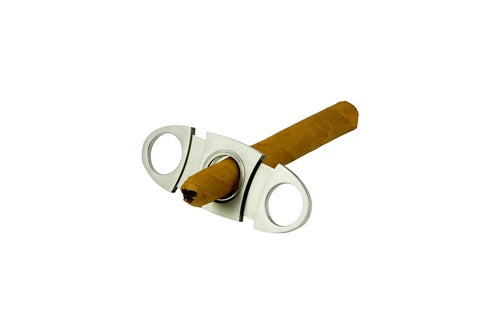
A cigar cutter is a specialized slicing device explicitly engineered to open the premium handcrafted cigar’s sealed cap. Because stogies are rolled with an intact, closed head, a smoker must create an opening to permit air to flow through the tobacco column freely upon ignition. This tool utilizes ultra-sharp hardened steel blades to slice through the natural wrapper leaf without crushing the delicate internal filler arrangement. It acts as a precision instrument that handles the exact physical boundaries of the stogie shoulder, making certain that the structural integrity of the outer wrap stays secure. A proper tool leaves a crisp, razor-sharp edge that facilitates an optimal draw while keeping loose tobacco particles out of your mouth. Without this essential accessory, enjoying a handmade stogie would result in a messy, unravelling disaster that completely compromises the smoke quality.
The mechanical shell of your cigar cutter dictates how much control and stability you have when opening a stogie cap. Manufacturers construct these devices in several distinct form factors to match specific lifestyles, preferences, and smoking environments:
-
Tabletop Cutters: These heavy, stationary devices rest firmly on a lounge desk or home bar, utilizing a large lever or mechanical button to drive a massive blade through the tobacco with absolute stability.
-
Pocket/Handheld Cutters: The most common choice among mobile smokers, these compact units use dual thumb loops or spring-loaded side triggers to slide sharp blades together inside a slim frame.
-
Scissor Cutters: This design features long, curved handles that provide incredible mechanical leverage, letting you trim the cap with the familiar, sweeping motion of specialized shears.
-
Keychain/Bullet Cutters: A highly portable option that hides a small circular punch blade inside a compact metal capsule, perfect for attaching to a ring for spontaneous sessions.
The shape and movement of the metal edge define the exact geometry of the opening you create on your stogie. Selecting a specific blade profile changes the velocity of the smoke draw and alters how the flavor hits your palate:
-
Flat Straight Edge: A completely straight blade profile typically found in basic single-guillotine styles, requiring a swift, decisive motion to pass through the wrapper.
-
Concave/Curved Edge: Dual-guillotine units feature these crescent-shaped blades that wrap around the circular body of the stogie, slicing from both sides simultaneously to minimize crushing.
-
Inverted V-Blade: This specialized profile carves a deep, wedge-shaped notch into the center of the cap, maximizing the surface area of the opening while leaving the outer shoulder walls completely untouched.
-
Circular/Chisel Blade: A razor-sharp circular ring that punches a neat hole into the top of the cap, or a slanted edge that creates an angled slot for targeted airflow.
The physical aperture of your tool determines the maximum thickness of the stogie it can safely accept without pinching the sides. Matching the internal ring gauge capacity of the accessory to your preferred smoke shape prevents structural jamming:
-
Small (48 to 52 Ring Gauge): Designed specifically for slender classic shapes like coronas, lanceros, and panatelas, offering tight clearances for highly precise trims.
-
Medium (54 to 58 Ring Gauge): The modern standard size that handles robustos and toros with ease, serving as a versatile workhorse for the majority of mainstream tobacco blends.
-
Large (60 to 70+ Ring Gauge): Massive, wide-bore openings engineered to accommodate monster gordos and giant specialty shapes without scraping or crimping the outer wrapper leaf.
Using a dedicated tool is not about showing off fancy gear; it’s an absolute functional requirement for preserving the airflow dynamics of high-end tobacco. When you light a stogie, the air you draw through the cylinder must move uniformly across the entire face of the filler bundle to guarantee an even burn. A rough, jagged opening caused by a blunt instrument creates erratic air currents, causing one side of the roll to burn far faster than the opposite side. It also destroys the master blender's intended flavor progression by forcing the hot smoke through a distorted, clogged passage. Using a proper tool ensures that the physical structure of the stogie remains flawless, protecting the hard work that went into creating the blend.
How Long is a Cigar Cutter Good/Effective For Usually?
A quality cigar cutter typically maintains its peak performance for anywhere from one to three years depending on how frequently you enjoy your stogies. Hardened stainless steel blades can slice through hundreds of caps cleanly before the microscopic edge begins to roll or dull from use. However, natural tobacco leaves carry sticky resins, plant juices, and tiny grit particles that build up on the metal surfaces over time. This invisible residue increases friction during the mechanical slide, forcing you to exert more physical pressure to complete a cut. If you regularly smoke thicker wrappers or oily maduros, this buildup happens much faster, accelerating the natural wear on the moving parts. Cheap, promotional steel units may dull just after just a few dozen uses, while premium hardened metals endure far longer.
The lifespan of this accessory also depends heavily on how well you maintain the housing and protect the blades from external damage. Dropping a pocket unit onto a hard floor can misalign the internal tracks, causing the blades to nick each other rather than passing smoothly. Tossing the tool into a loose pocket with metal keys or coins scratches the cutting edges, dulling the razor sharpness before it ever touches tobacco. Wiping the blades down with rubbing alcohol after every few sessions helps dissolve the sticky tars that slow down the mechanism. When you notice the slide getting stiff or sticky, it means the internal springs and guides are reaching their operational limit. Regular care preserves the tool, but eventually, every steel edge yields to the law of physics and requires replacement.
5 Signs it’s Time to Replace Your Cigar Cutter
Recognizing the subtle warning signs of a failing cigar cutter will save you from ruining an expensive stogie down the track. Again, even high-grade steel components slowly lose their factory sharpness under the quiet assault of natural tobacco fibers and ambient moisture. When your accessory begins to struggle, it leaves behind a trail of physical clues that point directly to structural fatigue. Paying close attention to how the blade interacts with the cap makes certain you upgrade your tool before an avoidable disaster occurs.
Sign #1: The Blade Crushes the Cap Instead of Slicing It
When placing a stogie into the aperture and compress the handles, the blade should glide through the tobacco layers like a hot razor passing through soft butter. If you notice that you must squeeze with excessive hand force and the tool visibly pinches or flattens the stick before it breaks through, the edge is completely dead. A dull blade lacks the keen sharpness needed to part the outer wrapper leaf instantly, resulting in a blunt crushing force that collapses the internal air channels. This structural deformation splits the delicate wrapper seams right around the shoulder line, causing the leaf to fray and lift away immediately. The crushed filler leaves will bundle up tightly inside the head, choking off the airflow and making your draw feel like you are sucking air through a thick milkshake. When a tool shifts from clean slicing to brute-force pinching, it has been transformed into a hazard that will consistently destroy your favorite blends.
Sign #2: The Wrapper Leaf Tears or Frays Along the Cut Line
A pristine slicing accessory leaves behind a perfectly smooth, surgical ring around the head of your stogie without any loose threads. If you look closely at the freshly opened cap and spot jagged edges, loose flaps, or long strings of tobacco trailing off the side, your blade is nicked. Microscopic chips along the steel edge act like a serrated saw, grabbing the fragile wrapper leaf and tearing it away from the binder rather than cutting it cleanly. This tearing action breaks the seal of the vegetable paste used by the roller, allowing the outer wrapper to unravel slowly as the stogie warms up from the flame. You will find yourself constantly picking annoying flakes of loose tobacco off your lips and tongue throughout your entire smoking session. A clean smoke requires a clean boundary line, and a tool that leaves a frayed mess belongs in the trash bin.
Sign #3: The Mechanism Sticks, Rallies, or Feels Loose on the Slide
The mechanical movement of a premium guillotine or scissor tool should feel completely fluid, steady, and predictable from start to finish. If the blades hitch, rattle inside their tracks, or require you to wiggle the frame to get them to close properly, the housing is structurally warped. Loose tolerances inside the metal frame permit the cutting edges to twist slightly away from each other during compression, creating an uneven gap. This physical play allows the thin tobacco wrapper to slide right between the blades rather than getting sliced, resulting in a jammed mechanism and a mangled stogie. Accumulations of ancient tobacco tar and pocket lint deep inside the tracks can also freeze the spring-loaded release buttons entirely. Forcing a sticky, loose mechanism to close over a valuable stogie is a recipe for a sloppy, angled cut that ruins the combustion balance.
Sign #4: Visible Rust, Pitting, or Discoloration on the Metal Edges
High-end tobacco tools spend a lot of time inside humidors, pockets, and outdoor environments where moisture is constantly present in the air. Over time, this exposure to ambient humidity and natural plant acids can cause lower-grade steel or worn platings to develop visible rust spots. Pitting along the cutting edge destroys the uniform sharpness of the blade, replacing a keen slicing surface with a rough, abrasive texture. Pressing a rusted metal edge against a damp stogie cap can transfer ugly orange oxidization and metallic flavors directly onto the tobacco wrapper. This contamination spoils the clean, natural taste of the blend while introducing harmful particles into your smoking pathway. If you spot any orange discoloration or rough pitting on the blades, the accessory is no longer safe or effective for handling premium stogies.
Sign #5: You Repeatedly Experience Bad Burns and Plugs From the Same Tool
When multiple distinct stogies in a row develop identical performance issues like severe canoeing, tunneling, or total airflow plugs, the common denominator is usually your tool. A failing cutter often leaves microscopic structural damage inside the head that you cannot easily spot with the naked eye. By pinching the internal filler leaves together during the cut, a dull blade welds the tobacco strands into a solid, air-impermeable block. This forced restriction blocks the heat from moving uniformly through the cylinder, causing one half of the roll to extinguish while the other half burns wildly. You end up wasting half your session frantically relighting the stogie and torching the edges to fix a problem that your tool created. Retiring that old accessory instantly isolates the issue and restores the effortless performance you expect from a premium blend.
What to Know About Buying a Replacement or Totally New Cigar Cutter Then
Selecting a replacement or entirely new cigar cutter requires looking closely at the specific materials and design features that guarantee long-term performance. Moving away from cheap, disposable metal units toward hardened components will completely transform your preparation routine. Keeping a few core buying factors in mind helps you pick an accessory that handles your collection perfectly:
-
Hardened Stainless Steel Blades: Look specifically for high-grade surgical stainless steel with a Rockwell scale rating above fifty-six, as this premium metal retains its razor-sharp edge far longer than basic alloy alternatives.
-
Double-Guillotine Synchronized Action: Opt for designs where both blades move simultaneously via an internal gear system, which applies equal pressure from both sides to prevent the stogie from shifting or pinching during the cut.
-
Ergonomic Grip and Weight: Choose a tool that feels substantial and comfortable in your palm, offering textured thumb loops or a solid chassis that prevents slipping when you apply physical pressure.
-
Proper Ring Gauge Clearances: Verify that the internal aperture matches the thickest stogies in your collection, leaving a comfortable boundary gap so you do not scrape the outer wrapper leaf when positioning the tool.
Retiring the Blade for a Clean Burn
Clinging to a dull cigar cutter out of simple habit compromises the physical integrity of every premium stogie you light up. Upgrading to a sharp, high-grade replacement prevents the crushing force that shatters wrappers and chokes off natural airflow pathways. Choosing an accessory that delivers clean, precise cuts makes certain that the master blender's careful craftsmanship performs exactly as intended on your palate. Your slicing accessory is the absolute gatekeeper to a nice cigar smoking session, so let a fresh steel edge guarantee the perfect draw your collection deserves.
Share:
What is "Sweet Gum" and Why's It Frequently Used to Finish the Cap on a Cigar?
Post-Harvest Techniques For Some Premium Cigars: Barrel-Aged Tobacco vs. Barrel Fermentation