
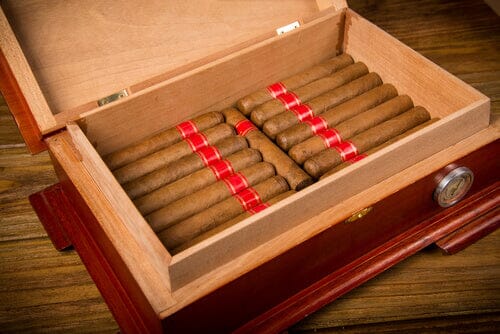
Walking into a room and catching the silhouette of a masterfully crafted humidor provides a specific kind of thrill that only a dedicated enthusiast can truly appreciate. It sits there like a silent guardian, a sophisticated vault tasked with the heavy responsibility of preserving a collection that likely took years, if not decades, to curate. Choosing the right exterior is far more than a simple matter of matching the mahogany desk or the leather armchair in your study. You are effectively selecting the first line of defense against the fluctuating whims of your local climate and the invasive dry air that seeks to turn your prized possessions into brittle kindling. This decision balances the vanity of a beautiful display against the cold, hard physics of moisture retention and structural integrity. While the interior does the heavy lifting of hydration, the shell determines whether that internal environment remains a sanctuary or a leaky sieve.
The Invisible Architecture: Why the Core Matters More Than the Skin
Before we can even debate the merits of a glossy ebony finish versus a rugged metal chassis, we have to look at what lies beneath the surface. In the world of high-quality cabinetry, there is a common misconception that "solid wood" is always the superior choice for everything. While a solid oak dining table is a marvel, using solid hardwood for the entire thickness of a humidor wall can actually be a recipe for disaster. Wood is a living, breathing material that reacts violently to changes in moisture levels. If the exterior is solid cherry and the interior is Spanish cedar, those two layers will expand and contract at disparate rates as the humidity fluctuates. This internal tug-of-war often leads to warping, cracking, or a lid that suddenly refuses to sit flush, destroying the airtight environment required for long-term storage.
This is where Medium Density Fibreboard, or MDF, enters the conversation as an unsung hero of the industry. MDF is a composite material made by breaking down hardwood or softwood residuals into wood fibers, combining it with wax and a resin binder, and forming it into panels by applying high temperature and pressure. Because it is engineered, it lacks a natural grain direction, which means it is incredibly stable. It doesn't twist or bow when the air gets damp. Most top-tier humidors utilize a thick MDF core and then apply a high-quality wood veneer or other material over the top. This construction allows for the breathtaking beauty of exotic hardwoods on the outside while providing a rock-solid, warp-resistant foundation that safeguards the delicate seal. By utilizing an engineered core, craftsmen can provide the look of a solid block of walnut without the risk of the box literally pulling itself apart over time.
The Timeless Prestige of Hardwood Exteriors
For many, a humidor is not a humidor unless it showcases the rich, deep grains of a fine hardwood. This is the traditional choice, evoking the atmosphere of old-world social clubs and private libraries. When we talk about wood as an exterior material, we are usually discussing a veneer of rosewood, bubinga, walnut, or mahogany. These woods are selected primarily for their visual impact—the way the light catches the "chatoyancy" or shimmer of the grain. A well-applied hardwood exterior offers a sense of permanence and weight that other materials struggle to replicate. It feels substantial in the hand, and the natural insulating properties of wood help to buffer the internal temperature against minor spikes in the room's ambient heat.
Beyond the aesthetics, the choice of wood species can subtly influence the durability of the exterior. Denser woods like ebony or macassar are naturally more resistant to dings and scratches than softer options like cedar or pine. However, these exotic veneers require a level of care that matches their price tag. They often feature high-gloss "piano" finishes that are stunning to look at but act as magnets for fingerprints and dust. Owners of these pieces often find themselves engaging in a secondary hobby of polishing and buffing to maintain that mirror-like sheen. If you value the ritual of the craft and want a piece that doubles as a legitimate work of furniture art, hardwood remains the gold standard, provided you are willing to commit to the maintenance and the initial investment of a stabilized MDF-core build.
Navigating the World of Veneers and Finishes
Not all wood exteriors are created equal, and the type of finish applied to the veneer can drastically alter how the humidor performs as a protective barrier. A matte finish, for instance, is far more forgiving when it comes to daily handling. It masks the oils from your skin and doesn't show the micro-scratches that inevitable "wear and tear" brings. On the other end of the spectrum, a high-lacquer finish provides a nearly impenetrable shell that seals the wood fibers away from the air entirely. This adds an extra layer of moisture protection, as the lacquer acts as a secondary gasket, preventing any humidity from leaching out through the pores of the wood itself.
The Transparency of Acrylic: A Modern Masterpiece
In recent years, a shift has occurred in the community, with many moving away from the "hidden vault" look of wood toward the total transparency of acrylic. An acrylic humidor is fundamentally a different beast. It is constructed from thick, industrial-grade plastic resins that are polished to a crystal-clear finish. The primary appeal here is obvious: you can see your entire collection without ever lifting the lid. For the enthusiast who takes pride in the organization and visual variety of their stock, this is an irresistible feature. It turns the collection into a dynamic piece of decor, where the colors and bands of the contents provide the visual interest rather than the grain of a tree.
From a protection standpoint, acrylic is nearly flawless. Unlike wood, acrylic is completely non-porous. It does not absorb moisture, it does not require seasoning, and it will never warp, regardless of how dry your house gets in the winter. Because the walls of the humidor are not "fighting" you for humidity, maintaining a rock-steady 70% level is incredibly easy. Often, these units utilize magnetic closures or heavy-duty rubber gaskets that provide a seal so tight it creates a literal vacuum effect. This makes acrylic an excellent choice for those who live in extreme climates or for those who simply want a "set it and forget it" solution that doesn't involve the traditional learning curve of wooden box maintenance.
The Trade-Off Being Light and Heat Sensitivity
However, the very transparency that makes acrylic so appealing is also its greatest liability. Cigars are organic products that are sensitive to light, particularly ultraviolet rays. Constant exposure to sunlight or even harsh indoor lighting can cause the wrappers to fade and the oils within the leaf to break down, leading to a loss of flavor and a "flat" smoking experience. If you opt for an acrylic humidor, you must be careful about where you place it. It cannot sit on a sunny windowsill or under a bright desk lamp. Additionally, acrylic does not offer much in the way of thermal insulation. If the room gets hot, the inside of that plastic box will get hot almost instantly, potentially leading to issues with mold or beetle outbreaks if the temperature climbs too high.
Bridging the Gap with Glass Top Humidors
If you love the look of wood but crave the visibility of acrylic, the glass-top humidor seems like the perfect compromise. These units typically feature a hardwood frame with a large glass pane inset into the lid. This allows you to check your hygrometer and admire your top shelf without breaking the seal. It offers the "furniture" feel of a traditional box while providing a window into your world. For many, this is the most popular style on the market because it hits that sweet spot between utility and vanity.
But as with many compromises, the glass-top design introduces a specific set of engineering challenges. The most common point of failure in a humidor is the seal, and in a glass-top unit, you have two seals to worry about: the lid-to-base seal and the glass-to-wood seal. Over time, as the wood frame expands and contracts, the adhesive holding the glass in place can dry out or pull away, creating microscopic leaks. Enthusiasts often find themselves having to "re-seal" their glass tops with food-grade silicone to maintain their humidity levels. Furthermore, like acrylic, the glass allows light to enter, so placement remains a critical factor in the health of your collection. If you choose this route, look for units where the glass is thick and double-paned, as this provides better insulation and a more robust structure.
The Industrial Strength of Metal and Carbon Fiber
For the smoker who travels frequently or perhaps lives a more rugged, outdoorsy lifestyle, wood and glass are far too fragile. This has led to the rise of metal and carbon fiber exteriors. Often seen in "travel" sizes, these humidors are built like tanks. An aluminum or stainless steel exterior is virtually indestructible. You can toss it in a suitcase, bring it on a boat, or leave it in a humid locker without a second thought. Metal offers a level of physical protection that no other material can match; it won't crack if dropped, and it provides a definitive barrier against pests.
Carbon fiber, while technically a composite, falls into this same "performance" category. It is incredibly light yet stronger than steel, making it the ultimate material for the tech-forward enthusiast. These materials usually feature a powder-coated or brushed finish that is resistant to scratches and looks strikingly modern. The internal environment is typically managed with foam or rubber inserts, creating a hermetic seal that is almost impossible to break. While they lack the warm, organic soul of a wooden box, they offer a level of reliability and "crush-proof" security that is invaluable for those who take their cigars on the move.
Thermal Conductivity Considerations
The main concern with metal exteriors is their thermal conductivity. Metal is an excellent conductor of heat and cold. If you leave a metal humidor in a cold car, the interior temperature will plummet almost immediately. Conversely, if it sits in the sun, it can become a miniature oven. While the airtight seal will keep the humidity in, the temperature can fluctuate wildly. For long-term home storage, metal is rarely used for large cabinets for this reason, but for smaller "desktop" vaults or travel kits, the trade-off for physical durability is often worth the extra attention to temperature control.
The Tactile Luxury of Leather-Wrapped Exteriors
Leather is a material that speaks to a certain heritage of luxury. A leather-wrapped humidor feels incredible to the touch—soft, warm, and sophisticated. Often used on travel cases or high-end desktop units, the leather is stretched over a sturdy wood or metal frame. This provides a unique aesthetic that changes over time; as the leather ages, it develops a patina that reflects the owner's use. It is a material that rewards those who appreciate the finer details of craftsmanship, from the stitching patterns to the aroma of the hide itself.
From a protective standpoint, leather acts as an excellent shock absorber. If you bump the box against a wall, the leather will cushion the impact, preventing the underlying frame from cracking. It also provides a surprising amount of thermal insulation, helping to keep the internal temperature stable. However, leather is a "living" material in its own right. It can dry out and crack if not conditioned, and it is susceptible to staining if you spill a drink nearby. It is perhaps the most high-maintenance exterior option, but for the person who treats their humidor like a piece of fine luggage or a bespoke suit, nothing else quite compares to the tactile experience of a leather-bound vault.
The Heart of the Matter: Why the Interior Lining is the Real Boss
We have spent a lot of time discussing the "face" of the humidor, but we must acknowledge that the exterior material's primary job is to support and protect the interior lining. No matter what the outside is made of, the performance of the unit is fundamentally tied to what is on the inside. The interior lining acts as the lungs of the humidor, breathing moisture back into the air when it gets dry and soaking it up when it gets too damp.
The Supremacy of Spanish Cedar
Spanish Cedar (Cedrela odorata) is not actually cedar at all; it is a member of the mahogany family, and it is the undisputed king of humidor linings. Its popularity stems from a trio of unique properties. First, it has an incredible capacity for moisture. It can hold a vast amount of water without warping or rotting. Second, it has a distinct, spicy aroma that is believed to enhance the aging process of tobacco, adding a subtle depth to the flavor profile over time. Third, and perhaps most importantly, the oils in Spanish cedar are a natural deterrent for tobacco beetles. These tiny pests can ruin an entire collection in days, and the scent of Spanish cedar acts as a chemical "keep out" sign for them.
When looking at a humidor's exterior, you must confirm that it is paired with a thick, high-quality Spanish cedar lining. Some lower-end models use a "cedar veneer," which is essentially a paper-thin layer of wood glued to MDF. This is not enough. You want solid planks of cedar that are at least a quarter-inch thick. This provides the thermal and moisture mass necessary to keep your cigars in peak condition. The exterior material—whether it be metal, wood, or acrylic—is essentially just the "armor" for this vital internal organ.
Alternatives: Honduran Mahogany and American Red Cedar
While Spanish cedar is the favorite, it isn't the only option. Honduran Mahogany is a stellar alternative for those who find the scent of Spanish cedar too aggressive. Mahogany is incredibly stable and does an excellent job of regulating moisture, but it lacks the beetle-repelling properties and the aromatic contribution of its more famous cousin. It is often used in very large walk-in humidors or cabinets where the sheer volume of wood makes the scent of cedar overwhelming.
American Red Cedar, on the other hand, is the "aggressive" option. It has a very strong, pungent aroma that most people recognize from "cedar chests" used to store blankets. While it is fantastic at repelling bugs, its scent is so powerful that it can actually "ghost" your cigars, making everything you smoke taste like a cedar closet. It is rarely used in high-end humidors for this reason, though it remains a viable choice for those who are purely concerned with pest prevention and aren't as bothered by the flavor alteration.
The Engineering of the Perfect Seal
The best exterior material in the world is useless if the lid doesn't close properly. The "seal" is where the physics of the humidor truly come to life. When you close a high-quality humidor, you should hear a distinctive "whoosh" sound—the sound of air being displaced as the lid seats into place. This is often achieved through a "sure-seal" technology, which is essentially a lip of Spanish cedar that extends up from the base and fits snugly into a corresponding groove in the lid.
In modern humidors, especially those made of acrylic or metal, this mechanical wood-to-wood fit is often supplemented with rubber gaskets or foam seals. While purists may scoff at the use of "synthetic" seals, they are undeniably effective. A rubber gasket can create an airtight environment that is far more reliable than wood, which might shift slightly with the seasons. When evaluating an exterior material, look at the hinges and the closure mechanism. Are the hinges heavy-duty and quadrant-style, or are they cheap "piano" hinges that might sag over time? A heavy lid made of solid wood or metal helps to compress the seal under its own weight, which is a major advantage for long-term stability.
The Ritual of Seasoning: Preparing the Wood for Battle
If you choose a humidor with a wooden exterior and a Spanish cedar interior, you cannot simply throw your cigars in the day it arrives. The wood is naturally thirsty. If you put dry wood in a box with moist cigars, the wood will literally "suck" the moisture out of the tobacco, leaving you with dry, flavorless sticks. Seasoning is the process of slowly hydrating the wood until it reaches an equilibrium with the desired humidity level.
This process usually takes several days to a week. It involves placing a source of distilled water or high-humidity packs inside the empty box and waiting for the wood to absorb its fill. Some people advocate for "wiping down" the interior with a damp cloth, but this is a risky move; it can cause the wood grain to "raise" or even cause the planks to warp if they get too wet too fast. A slow, steady approach is always better. The exterior material plays a role here too; a lacquered wood or acrylic exterior will season much faster because the moisture isn't escaping through the walls, whereas a porous matte wood finish might take a bit longer to stabilize.
Which Material Wins the Crown?
So, after examining the disparate options, which exterior material is actually "best"? The answer, predictably, depends on your specific needs as a collector.
If your priority is the absolute highest level of protection with the least amount of work, Acrylic is the winner. Its non-porous nature and perfect visibility make it a scientific marvel for the modern smoker. It removes the variables of warping and seasoning, allowing you to focus entirely on the tobacco itself.
However, if you view your humidor as a piece of legacy furniture—something to be displayed with pride and handed down to the next generation—Hardwood over an MDF core is the clear choice. There is a soul to wood that plastic simply cannot replicate. The way a heavy walnut lid feels when it closes, the smell of the grain, and the classic aesthetic are all part of the "ceremony" of smoking. It requires more knowledge and more maintenance, but for many, that effort is part of the reward.
For the traveler, Metal is the only logical choice. For the person who wants to see their collection but keep the "classic" look, a Glass Top is the way to go, provided they are willing to keep an eye on the seals.
Each material offers a unique balance of protection and appearance. The "best" one is the one that fits into your lifestyle and makes you smile every time you reach for a smoke.
Share:
The Finishing Pipe Choice: Rustic vs. Sandblast vs. Smooth
12 Common Mistakes a Pipe Smoker Can Make (and How to Fix and Prevent Them)