
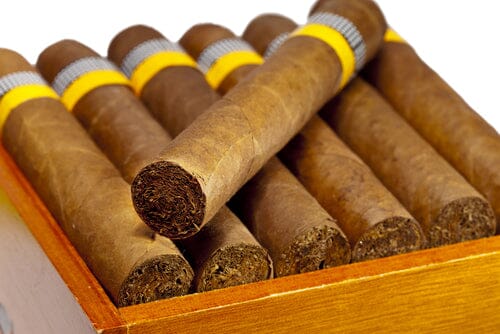
Walking into a well-stocked humidor offers a sensory experience that is distinct from almost any other retail environment, characterized by the rich aroma of cedar and fermented leaf that hangs heavy in the air. Amidst the rows of familiar, standard-production boxes that serve as the reliable backbones of our daily rotation, there are always those specific items that seem to demand a different level of reverence and attention. These are the cigars often tucked away on a high shelf or locked behind a glass display, adorned with secondary bands, intricate foil wraps, or packaging that looks more like a jewelry box than a tobacco container. The eye is naturally drawn to them, not just because of their aesthetic presentation, but because of the unspoken promise that they contain something fleeting, exceptional, and unrepeatable. It is here that the aficionado faces a conundrum that goes beyond simple flavor preference, touching on the very nature of value and rarity in a handcrafted industry. We pause before these boxes, knowing that once they are gone, they may never return, prompting us to ask what exactly separates these prized specimens from their regular counterparts.
The Philosophical and Practical Roots of Scarcity
To truly understand what defines a "Limited Edition" (LE) in the cigar industry, one must look beyond the sticker on the box and understand the philosophy of scarcity that drives the concept. At its core, the term implies a constraint, a boundary that dictates availability is not infinite. However, in the world of premium tobacco, this constraint is rarely artificial; it is usually dictated by nature itself. Unlike manufacturing widgets or plastic goods where production can be scaled up simply by turning a dial, premium cigars are agricultural products subject to the whims of the earth.
The Tyranny of the Harvest
The most genuine definition of a limited edition cigar begins in the soil. Tobacco is a crop, and like vintage wines, it is heavily influenced by the specific conditions of a growing season. A "vintage" in the cigar world refers to the year the tobacco was harvested, and no two years are exactly alike in terms of rainfall, sunlight, temperature, and soil nutrient density.
Sometimes, a manufacturer will have a harvest that’s statistically small but qualitatively superior. Perhaps a specific ten-acre plot of land produced a Corojo or Criollo leaf with a thickness and oil content that had never been seen before and might not be seen again for a decade. This finite amount of leaf dictates the production run. If the farm only yields enough top-tier wrapper leaf to cover 50,000 cigars, then that cigar is naturally limited. It cannot be reproduced because the raw material simply does not exist anymore. This is the "agricultural limited edition", and it’s often regarded by purists as the most legitimate form of rarity. It tells a story of a specific moment in time, captured in smoke, that can never be replicated once the supply is exhausted.
The Constraints of Varietal Experimentation
Beyond the weather, there is the aspect of botanical experimentation. Master blenders and agronomists are constantly tinkering with hybrid seeds, trying to create tobaccos that are resistant to disease while offering unique flavor profiles. Sometimes, these experiments yield a tobacco varietal that tastes incredible but is notoriously difficult to grow or has a very low yield per plant.
There are legendary varietals in the industry known for being "heartbreakers"—types of tobacco that are prone to mold, wind damage, or simply refuse to grow tall enough to produce large wrapper leaves. When a manufacturer decides to use such a temperamental leaf in a blend, they know going in that mass production is impossible. They might plant fifty acres and only harvest enough viable leaf for a small batch release. These cigars are defined as limited not by a marketing decision, but by the botanical reality that the tobacco is too demanding to farm on a commercial scale for a core line product.
The Human Element: Manufacturing Precision
While nature dictates the raw materials, the human element has a massive role in defining the exclusivity of a premium cigar. The construction of a premium cigar is an art form, but the construction of a limited edition is often closer to high-stakes engineering.
The Hierarchy of the Rolling Floor
In any given cigar factory, there is a hierarchy of skill among the torcedores (rollers). There are apprentices learning the basics, experienced rollers who handle the high-volume core lines, and then there are the masters. These master rollers have often spent decades perfecting the tactile feel of the bunch, knowing exactly how much pressure to apply to ensure a perfect draw and an even burn.
When a brand decides to produce a high-end limited edition, they often restrict the production to only their top-tier rollers. This is a significant bottleneck. A factory might have two hundred rollers, but perhaps only six of them are qualified to roll a complicated figurado shape or handle a delicate, vintage wrapper that tears easily. If only six pairs (a buncher and a roller) are working on a project, the daily output is mathematically capped. They cannot simply "make more" without compromising the quality or bringing in less experienced hands, which defeats the purpose of a premium limited release. Therefore, the "limited" status is defined by the finite number of hours these master artisans can work.
Complex Vitolas and Shapes
Often, limited editions are released in unique sizes—or Vitolas—that are not found in the regular production catalog. We frequently see Perfectos, Salomones, and Diademas utilized for these special projects. These shapes, which taper at the head and foot or bulge in the middle, are exponentially more difficult to roll than a standard Parejo (straight-sided cigar like a Robusto or Toro).
A standard roller might produce 150 standard cigars in a day, but that same roller, even if highly skilled, might only be able to produce 60 or 70 complex Salomones with the same level of quality. When a blend is assigned to a difficult shape, the production numbers naturally plummet. The definition of the limited edition here is tied to the architectural complexity of the cigar itself. The shape serves as a signal to the consumer that this is not an everyday smoke; it requires time to make, and consequently, it requires time to enjoy.
Categorizing the "Limited" Landscape
Not all limited edition cigars are created equal, nor are they "limited" for the same reasons. To navigate this market, one must understand the different categories of exclusivity that manufacturers employ.
The "One-and-Done" Release
This is perhaps the most exciting and heartbreaking category for collectors. The "One-and-Done" is a single batch of cigars released once, with the explicit declaration that it will never be made again. These projects are often passion projects for the blender, utilizing a specific bale of aged tobacco that they have been saving for a special occasion.
Once these boxes are shipped to retailers, the supply is fixed. There is no second shipment, no next year’s vintage, and no restocking. The definition here is absolute finality. These cigars often become the "unicorns" of the industry, hunted by enthusiasts years after their release. The value of these cigars on the secondary market (where legal and applicable) or in private trades often skyrockets because they represent a piece of history that is slowly going extinct with every one that is smoked.
The Annual Seasonal Release
A more common approach is the annual limited release. These are cigars that come out at the same time every year—perhaps during the holidays, or to coincide with a major industry trade show, or to celebrate a recurring cultural event like Chinese New Year or Oktoberfest.
While the brand name remains the same each year, the blend often changes, or at the very least, the vintage of the tobacco changes. This creates a vertical collecting opportunity. An aficionado might not just want "the 2024 Holiday release", they want to compare it to the 2021 and 2022 versions to see how the series has evolved. Here, the "limited" definition is temporal. You can buy it, but only during a specific window, and once the season passes, production shifts to next year’s iteration. It creates a rhythm to the smoking year, a calendar of anticipation that keeps consumers engaged with the brand.
The Anniversary Celebration
The cigar industry is deeply rooted in heritage and legacy. Family names and factory founding dates are treated with immense respect. As such, anniversaries are major drivers for limited edition cigars. Whether it is the 10th anniversary of a specific brand or the 100th anniversary of a factory, these milestones are almost always commemorated with a top-shelf release.
These cigars are defined by their commemorative nature. They usually feature the absolute best tobacco the company has access to, often aged for significantly longer periods than standard lines. The packaging is usually opulent, involving humidors or collectible jars. The "limited" aspect here is tied to the event. You cannot celebrate a 50th anniversary for five years in a row. It is a singular moment, crystallized in a product, intended to show the peak capability of the manufacturer at that specific point in their history.
The "Shop Exclusive" or Regional Edition
Another fascinating subset is the geographical limitation. Some cigars are produced in limited quantities but are also limited by where they can be sold. A manufacturer might create a blend specifically for the European market, or the Asian market, or even for a single retailer in the United States who has supported them for decades.
These "Store Exclusives" are limited not necessarily by tobacco scarcity (though they can be), but by distribution contracts. This creates a scavenger hunt atmosphere for enthusiasts. To acquire these cigars, one must travel or develop relationships with tobacconists in different regions. It adds a layer of "treasure hunting" to the hobby, defining the cigar’s rarity by physical distance and accessibility rather than just production numbers.
The Role of Aging and Time
Time is perhaps the most expensive ingredient in any cigar, and it is a defining characteristic of the limited edition sector. While standard production cigars are aged to a point of stability and readiness, limited editions often undergo significantly extended aging processes that make mass production unfeasible.
Pre-Roll Aging (The Bale)
Before a cigar is even rolled, the tobacco sits in bales to ferment and age. For a standard cigar, this might be anywhere from one to three years. For a high-end limited edition, manufacturers might reach into their library of tobaccos and pull out bales that have been aging for ten, twelve, or even fifteen years.
Tobacco aged this long loses much of its ammonia and harshness, developing complex, subtle flavors of dried fruit, leather, and cedar that young tobacco simply cannot possess. However, maintaining inventory for that long is incredibly expensive. It requires climate-controlled warehouses, constant rotation, and insurance. Furthermore, tobacco shrinks and degrades over time; a bale that started at 100 pounds might only yield 80 pounds of usable leaf after a decade. This loss of yield and cost of storage defines the price and the scarcity of the final product.
Post-Roll Aging (The Escaparate)
After the cigar is rolled, it enters the aging room, often called the escaparate. Standard cigars might rest here for 30 to 90 days to allow the moisture levels to equalize and the different leaves to "marry."
Limited editions, however, are often subjected to years of post-roll aging before they are even boxed. This is a massive logistical commitment. It means the manufacturer is paying for labor and materials to make a product that they cannot sell for another two years. This capital tie-up prevents them from doing this with every line. When you buy a limited edition that states it has been "aged for two years post-roll," you are paying for the patience and the financial risk the manufacturer took to ensure the cigar is at its absolute peak the moment you open the box.
The Art of Presentation: Packaging as a Signal
While we are taught not to judge a book by its cover, in the cigar world, the cover—or in this case, the box and band—is a crucial part of the limited edition definition. The packaging of these cigars serves as a visual and tactile signal of the care taken in the blending process.
Beyond the Cedar Box
Standard cigars usually come in varying qualities of cedar boxes, ranging from simple slide-tops to dress boxes with paper hinges. Limited editions, however, frequently push the boundaries of packaging design. We see high-gloss piano finishes, intricate hinges, velvet linings, and boxes that double as fully functional desktop humidors.
This is not merely decoration; it is a statement of value. If a manufacturer is willing to spend thirty or forty dollars just on the box (a significant cost in manufacturing), it implies they believe the cigars inside are worth protecting and showcasing. Some limited editions come in ceramic jars, a nod to old-world Cuban traditions, which help age the cigars differently by trapping the bouquet of aromas more tightly than a wooden box.
The Secondary Band
The most immediate visual identifier of a limited edition is often the secondary band. While the primary band identifies the brand, the secondary band usually carries the year, the name of the special project, or simply the words "Limited Edition" or "Reserva."
Collectors often look for these bands as a seal of authenticity. In a humidor, that second strip of paper acts as a beacon. It differentiates the product from the "daily smoke" and elevates it to the status of an occasion. The artwork on these bands is often more intricate, featuring gold foil, embossing, or holographic elements to prevent counterfeiting—a real concern for high-value limited releases.
The Psychology of the Chase: FOMO and Collectability
We cannot discuss what defines a limited edition without discussing the psychology of the consumer. The cigar industry, like the sneaker market or the watch world, is fueled in part by the "Fear of Missing Out" (FOMO).
The Thrill of the Hunt
For many enthusiasts, the act of acquiring the cigar is just as enjoyable as smoking it. Tracking down a box of a rumored limited release, calling multiple shops, or waiting for a specific drop time on a website releases dopamine. Manufacturers are well aware of this. By announcing that only 2,000 boxes were made for the entire global market, they trigger a primal urge to gather and secure resources.
This psychological component defines the "limited" nature just as much as the tobacco. If everyone could get it easily, the perceived value would drop. The difficulty of acquisition becomes a badge of honor. Posting a picture of a rare find on social media or sharing one with a friend becomes a status signal within the community, proving that one is "in the know" and dedicated enough to secure the prize.
The Investment Mindset
While cigars are meant to be smoked, there is a segment of the market that views limited editions as investments. Because these cigars are finite, their value on the secondary market (again, where legal) tends to rise over time. A box purchased for $300 today might be worth $600 five years from now if the cigar develops a legendary reputation and becomes impossible to find.
This investment mindset changes how these cigars are treated. They are often kept in separate humidors, at slightly different humidity levels, and monitored closely. The definition of "limited" here crosses over into "asset class." While most cigar lovers frown upon pure speculation, the reality is that the scarcity of these products creates a micro-economy of its own.
The Gray Areas: Marketing vs. Reality
It is important to address the skepticism that sometimes surrounds the term "Limited Edition". In an unregulated nomenclature, what stops a company from slapping a "Limited" sticker on a regular blend just to hike the price? Well, there’s:
-
The "False" Limited Edition: Cynics will argue that some limited editions are simply marketing gimmicks. A manufacturer might take a standard blend, put it in a different size, create a fancy box, and charge a 40% premium. While this does happen, the market is generally self-correcting. Cigar smokers are a discerning bunch with sensitive palates. If a "limited" cigar tastes exactly like the $10 core line but costs $25, the word spreads quickly through forums and lounges, and the brand loses credibility.
-
The "Ongoing" Limited Production: Means the cigar is made regularly, but in very small batches due to constraints (like the roller availability or tobacco scarcity mentioned earlier). They are not "one-and-done," but they are also not always in stock.
This is often the sweet spot for quality. It suggests the manufacturer is prioritizing consistency and quality over meeting demand. They will ship the cigars when they are ready, not when the retailer orders them. This defines a product that is limited by standards, not by an arbitrary number set by a marketing department.
The Economics of Pricing
Why do limited edition cigars command such high prices? Is it just the rarity? The definition of a limited edition is inextricably linked to its cost structure, which is fundamentally different from mass-market cigars. This can be broken down into two ways:
-
Economies of Scale (or Lack Thereof): In manufacturing, things get cheaper the more you make of them. You can buy boxes in bulk, bands in bulk, and streamline the rolling process. Limited editions forfeit these economies of scale. Ordering 500 custom boxes costs significantly more per unit than ordering 50,000 standard boxes. The molds for unique vitolas must be custom-made. The bands often require special dyes and foils.
-
The Cost of Rejected Tobacco: Furthermore, the quality control for limited editions is often draconian. For a standard line, a wrapper leaf with a tiny sun spot or a slight color variation might still be acceptable. For a super-premium limited edition, that leaf is rejected. The rejection rate for tobacco intended for these projects can be staggering. The manufacturer pays for the whole bale but might only use 40% of it for the project. The cost of that unused or repurposed tobacco must be absorbed into the price of the limited cigar. Hence, a higher price tag is a definition of the rigorous selection process the components underwent.
The Sensory Experience: Is the Juice Worth the Squeeze?
Ultimately, all the fancy boxes, aged tobacco, and scarcity narratives mean nothing if the cigar does not perform. So, what defines a limited edition in the smoking experience? The two primary things would be:
-
Complexity and Transition: A true limited edition should offer a complexity that exceeds standard production. Because of the aged tobaccos and careful blending, these cigars often exhibit "transitions"—changes in flavor profile as the cigar burns from the first third to the nub. A standard cigar might be delicious but linear, tasting of chocolate and earth throughout. A limited edition might start with spice, shift to cream and cedar, and finish with notes of dark fruit and espresso. This dynamism is the hallmark of the superior tobacco used in these blends. The blender attempts to create a symphony rather than a single catchy tune. The definition of success for a limited edition is its ability to hold the smoker's attention completely for an hour or two, offering nuances that require focus to detect.
-
The Ritual of Consumption: Because they are limited, the way we smoke them changes. We rarely smoke a limited edition while mowing the lawn or driving to work. We save them. We wait for a birthday, a promotion, the birth of a child, or a quiet Friday night when the world is asleep. This ritual elevates the experience. The cigar becomes a centerpiece of a moment. The definition of the cigar is enhanced by the psychological weight we place upon it. It tastes better partially because we have decided it is special, and we have prepared ourselves to enjoy it fully, removing distractions and pairing it with a fine drink. The "limited" nature commands a respect that forces us to slow down, which is, ironically, the best way to enjoy any cigar.
Navigation for the Consumer
For the average smoker, the world of limited editions can be daunting. How does one decide what to buy? Well, the best strategy is to follow the blenders and brands you already trust. If you enjoy the standard profile of a specific manufacturer, their limited editions are likely to be an elevated, more intense, or more refined version of that profile. It is a safe bet that their definition of quality will remain consistent even as they experiment with rare leaves.
Educated consumers also look at the details. Does the marketing copy explain why it is limited? Does it mention a specific vintage of tobacco? Does it name the farm? Or does it just say "super rare"? Specificity is usually a sign of authenticity. If a brand is transparent about the 10-year-old broadleaf wrapper or the specific yield of the crop, it validates the "limited" label.
The Ephemeral Nature of the Industry
Now, there’s a poetic aspect to the limited edition cigar that defines it more than any agricultural or economic factor. It is the concept of impermanence. Unlike a limited edition watch or a classic car, a cigar is destroyed in the act of enjoying it. You cannot pass it down to your grandchildren (unless you don't smoke it, in which case you never truly experienced it).
When lighting a limited edition from a 2014 harvest, you’re burning a piece of history. That sunlight, that rain, that specific soil nutrient profile from 2014 is being released into the air and vanishing. Once the box is empty, that experience can never be exactly duplicated. Even if they use the same seed on the same farm, the weather will be different next year. This impermanence creates a bittersweet relationship with the product. We love them, but we know they are leaving us. This is the ultimate definition of the limited edition cigar: it teaches us to appreciate the present moment because the future of that specific blend is nonexistent.
Limited editions also serve as mile markers for our own palates. A cigar that seemed too strong or too complex for us five years ago might be a revelation today. Because these cigars often use potent, aged tobaccos, they challenge us. They push the boundaries of what we think a cigar can be. They define not just the manufacturer's capability, but the smoker's journey.
The Cigar Smoke Fades, But the Impression Remains
The concept of the limited edition cigar is a fascinating intersection of agriculture, artistry, economics, and psychology, creating a product that is far more than just rolled leaves. It represents the pinnacle of what a blender can achieve when the shackles of mass production and cost-cutting are removed, allowing for the expression of pure passion and patience. While the skepticism regarding marketing tactics is healthy, the true limited edition remains a vital part of the industry, pushing boundaries and preserving the legacy of exceptional harvests that would otherwise be blended away into mediocrity. Ultimately, these cigars remind us that excellence is often fleeting, and when we are fortunate enough to encounter it, we must pause, savor it, and recognize the immense coordination of nature and human skill required to bring that single hour of pleasure into existence.
Share:
Everything You Need to Know About 100% Dominican Cigars
Adjusting Your 'Burn Time' When Smoking a Tobacco Pipe: What You Need to Know