
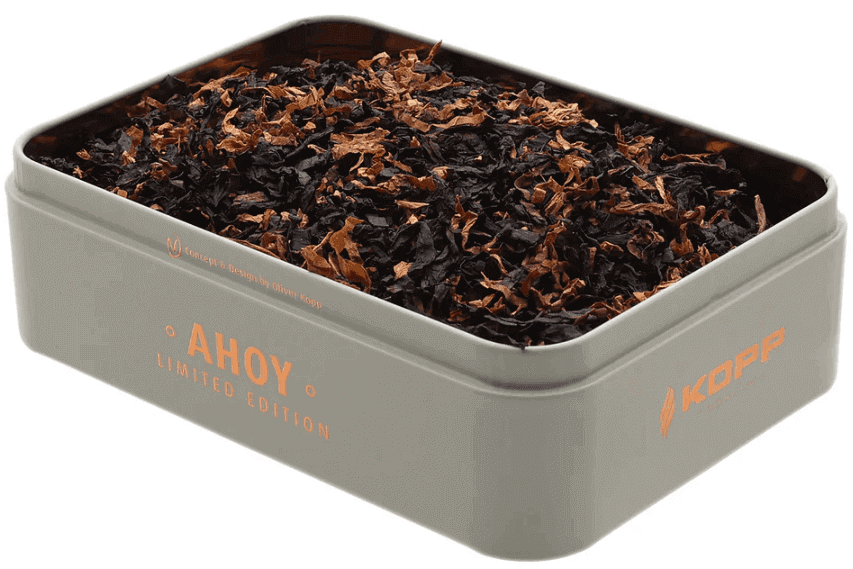
The ritual of selecting a tobacco for the evening pipe is a contemplative process, distinct from the quick utilitarianism of other habits, often involving a long, thoughtful pause in front of a shelf stacked with colorful tins and glass jars. Amidst the comforting reliability of the daily mixtures—those faithful blends that have tasted exactly the same for decades and serve as the backbone of our rotation—there sits a different category of tobacco that commands a unique sort of reverence, curiosity, and hesitation. These are the tins that often remain sealed for years, their labels boasting specific years of production, small batch numbers, or artistic designs that differ wildly from the standard industrial livery of the core lines. We handle them with a bit more care, shaking them gently to hear the moisture content of the ribbons inside or feeling the density of the flakes, knowing that the contents represent a fleeting moment in the blender’s art that can never be truly replicated once consumed. This hesitation to crack the seal stems from the heavy knowledge that once the vacuum is broken, the clock starts ticking on an experience that is, by definition, finite and irreplaceable. It raises a fascinating inquiry for both the novice and the veteran piper regarding what mechanics, philosophies, and agricultural realities actually strip a blend of its mass-market status and crown it as a true "Limited Edition."
The Agricultural Reality: When Nature Dictates Availability
To truly understand the soul of a limited edition pipe tobacco, one must first look away from the blending table and toward the field, because the primary definition of limitation is often written in the soil itself. Unlike synthetic products where consistency can be dialed in with chemical precision, pipe tobacco is an agricultural output subject to the chaotic whims of weather, pests, soil chemistry, and the shifting geopolitical landscape. The term "limited edition" is frequently a transparent admission by the manufacturer that nature has provided a bounty that is exceptional in quality but restricted in quantity.
The Tyranny of the Specific Harvest
In the world of standard production, consistency is the ultimate goal; blenders work tirelessly to mix various crops from different years and regions to ensure the "Standard Mixture" tastes the same in 2025 as it did in 2015. However, a limited edition often embraces the exact opposite philosophy: it seeks to highlight the idiosyncrasies of a specific harvest. Just as wine enthusiasts speak of a particularly good year for Bordeaux, tobacconists know that certain years yield Virginia crops with exceptionally high sugar content or Burleys with an unusually nutty depth.
When a manufacturer identifies a crop that is statistically small but qualitatively superior, they face a critical choice. They can dilute this incredible leaf into their massive stocks to slightly improve the average quality of their regular lines, or they can isolate it to showcase its unique character. If they choose to isolate it, the resulting blend is defined as "limited" by the physical weight of that harvest. Consider the following agricultural constraints that can define a release:
-
Yield limitations: If a specific ten-acre plot of land produces a crop with a unique oil content, and that yield is only 5,000 pounds, the production run is mathematically capped before it begins.
-
Weather anomalies: A season with higher-than-average rainfall might produce a leaf that is thinner but sweeter; this profile is unique to that year and cannot be engineered in a lab.
-
Soil rotation: Farmers often rotate crops, meaning a specific varietal grown in a specific field might not be planted again for another four or five years.
This is the most organic form of exclusivity, driven not by a marketing team’s desire to create hype, but by the earth’s refusal to standardize its bounty. The consumer is tasting a time capsule of a specific summer, with all its heat and rain captured in the cellular structure of the leaf.
The Scarcity of Rare and Heritage Varietals
Beyond the general quality of a harvest, there are specific varietals of tobacco that are geographically and methodologically limited. The most famous examples involve tobaccos that require labor-intensive processing in very specific regions of the world. There are types of fermented leaf from Louisiana, for instance, that are produced in such minuscule quantities—measured in barrels rather than tons—that they cannot possibly support a mass-market, global distribution line.
When a master blender manages to secure a few barrels of such a rare component, they often build a "Small Batch" release around it. The definition of "Limited Edition" here is a warning: the unique spice, stewed fruit quality, or floral orientation you taste in this bowl is reliant on a supply chain that hangs by a thread. Once those specific barrels are exhausted, the blend cannot be remade without fundamentally changing its character. This category often includes:
-
True St. James Perique: Authentic Perique from the specific triangle of soil in Louisiana is exceedingly rare; blends using high percentages of it are naturally limited.
-
Yenidje and Xanthi: Specific Oriental varietals that are prized for their aromatic qualities but are grown in smaller, more difficult-to-access regions compared to standard Turkish leaf.
-
Dark Fired Grades: High-grade Kentucky leaf that has been fired using specific hardwoods (like hickory or oak) that may not always be available in industrial quantities.
Thus, the limitation is defined by the bottleneck of traditional, often archaic, processing methods that refuse to be scaled up for modern industrial demands.
The Blender’s Art: Recipes as Singular Moments
While agriculture provides the paint, the blender is the artist, and sometimes the limitation is defined by a stroke of creative genius that is intentionally ephemeral. Blending pipe tobacco is akin to cooking a complex stew or formulating a perfume; it involves balancing base notes, middle notes, and top notes to create a harmonious whole. However, the artistry of a limited edition allows for risks that a core line product simply cannot take.
The "Happy Accident" and Experimental Batches
In the laboratories and mixing rooms of the world’s great tobacco houses, experimentation is constant. Blenders are perpetually combining different grades of leaf, testing different casing ratios, and playing with aging times. Occasionally, these experiments yield a result that is spectacular but fundamentally unrepeatable on a large scale. Perhaps it relied on a specific bale of Oriental leaf that was found in the back of the warehouse, or it utilized a casing flavor that has since been discontinued by the supplier.
These "happy accidents" often find their way to the market as limited releases. They are defined by their experimental nature. They allow the smoker to step into the test kitchen with the blender and experience a prototype that was too unique, too expensive, or too complex to become a catalog staple. In this context, "Limited Edition" implies a departure from the brand’s house style. It is an invitation to taste a deviation, a singular creative expression that stands apart from the company’s established flavor profile. The characteristics of these experimental batches often include:
-
Unusual Pairings: Combining Latakia with aromatics in ways that might alienate a traditional smoker but delight an adventurer.
-
High-Cost Components: Using a percentage of expensive leaf (like 40% Perique) that would make a standard $15 tin cost $30, which is only viable for a special release.
-
Complex Casings: Utilizing expensive liquors or natural extracts for toppings that are too volatile or costly for mass production.
The Complexity of Component Sourcing
A pipe tobacco blend is rarely a single thing; it is a marriage of Virginias, Burleys, Latakias, Periques, and Dark Fired Kentucky leaves, often topped with casings ranging from rum to vanilla to deer tongue. The supply chain for these disparate ingredients is incredibly complex. A blend might be perfectly standard in its tobacco base, but if it relies on a specific top-flavoring from a boutique flavor house that goes out of business, the blend becomes an instant limited commodity.
We have seen instances where a beloved blend is forced into "Limited" status or discontinuation simply because one minor component—perhaps a specific type of licorice extract or a particular vintage of rum used for the casing—is no longer available. Manufacturers might release the final run of the original recipe as a "Farewell Edition," defining the limitation by the impending extinction of the formula. This type of scarcity is bittersweet, as it signals not just a special release, but the end of an era for that particular flavor profile. The "limited" tag becomes a tombstone for a recipe that can no longer survive in the modern supply chain.
The Role of Time: Aging as a Production Constraint
Time is the one ingredient that cannot be synthesized, and it plays a massive role in defining the most prestigious limited edition pipe tobaccos. Unlike cigars, which are generally aged before they reach the consumer but are meant to be stable, pipe tobacco continues to live and evolve dynamically inside the tin. This biological reality creates a tier of limited editions defined strictly by patience.
The Pre-Tinning Maturation Process
Some limited editions are defined by the age of the leaf before it is even cut and blended. A manufacturer might sit on a stock of Virginia leaf for ten or fifteen years, allowing it to darken and develop a richness that young tobacco simply does not possess. Holding inventory for this long is an immense financial burden; it takes up warehouse space, requires climate control, and ties up capital that could be used elsewhere.
Therefore, when a blend is released stating it contains "2008 Vintage Leaf," the limitation is economic and temporal. The manufacturer cannot simply "make more" next month because the raw material requires a decade of patience. The price and the scarcity are reflections of that investment in time. These blends are often marketed to the connoisseur who understands that the mellow, hay-like sweetness of the smoke is a direct result of those years of dormancy. The distinction between "aged leaf" and "fresh leaf" is palatable:
-
Ammonia reduction: Aged leaf has off-gassed the harsh ammonia notes found in fresh tobacco, resulting in a smoother retrohale.
-
Sugar fermentation: The natural sugars in Virginia leaf darken and ferment, creating notes of dried fruit and molasses.
-
Integration: Different leaves stored together in bales begin to marry their aromas long before they are pressed.
The "Married" Mixture and Pressure Aging
Another technique that defines a limited run is the process of marrying the blend under pressure. Instead of mixing the tobaccos and immediately tinning them, some limited editions are pressed into cakes or plugs and left to rest for months or years. This allows the flavors to meld and unify in a way that fresh blending does not achieve.
However, this process creates a production bottleneck. If a factory only has a certain number of antique presses or a limited amount of space in their aging room, they can only produce a finite amount of this product per year. The limitation here is defined by physical capacity and the refusal to rush the chemistry of the leaf. The consumer is purchasing the result of a slow, inefficient process that prioritizes depth of flavor over speed of output, naturally restricting the number of tins that can reach the market.
The Manufacturing Bottleneck: Small Operations and Ancient Machinery
It is important to recognize that the pipe tobacco industry is relatively small compared to the cigar or cigarette industries. Many of the most revered blending houses are surprisingly small operations, sometimes consisting of just a handful of people and a few antique machines. The "limited" nature of a product is often a reflection of the sheer difficulty of making it.
The Constraints of Antique Equipment
Some of the machinery used to cut, press, and tin pipe tobacco dates back to the early 20th century. These machines are maintained by mechanics who are often as skilled as the blenders, as replacement parts simply do not exist. A "Limited Edition" is sometimes defined simply by the throughput of a specific machine.
For example, a specific type of "crumble cake," "rope," or "flake" might require a press that can only process twenty pounds of tobacco at a time and requires a three-day cycle under massive hydraulic pressure. The factory physically cannot produce more without buying more antique equipment that no longer exists. In this case, the limitation is not artificial; it is mechanical. The "Limited Edition" label is a transparent admission of the factory’s upper limit of production capability for that specific, labor-intensive style of cut. Key difficult cuts often reserved for limited runs include:
-
Spun Cut / Rope: Requires hand-spinning leaves into a rope, a nearly lost art that is incredibly time-consuming.
-
Plug: Solid blocks of tobacco that require weeks of pressing and must be cut by the consumer.
-
Flake: Slices of pressed tobacco that require careful handling to prevent crumbling before packaging.
The Hand-Blended Touch
While some blends are mixed in large tumbling drums that can handle hundreds of pounds at once, many limited editions are blended by hand. This involves a person physically weighing out the components and mixing them on a table to ensure the perfect distribution of the different leaves. This human element introduces a hard cap on production.
A master blender can only mix so much tobacco in a day without fatigue setting in and quality slipping. When a tin says "Hand Blended", it defines the limitation through human labor. The consumer is paying for the personal attention of the artisan, knowing that the batch size was dictated by how much that artisan could effectively manage. This intimacy between maker and consumer is a defining trait of the limited edition market; it suggests that a human set of eyes inspected the very ribbons you are now loading into your pipe.
The Seasonal Rhythm: Holiday and Annual Traditions
The pipe smoking world is deeply attuned to the seasons, and a significant portion of limited edition tobaccos are defined by the calendar. These are the releases that mark the passage of time, creating a rhythm to the smoker’s year. Unlike cigars, which are often smoked regardless of season, pipe smokers often segregate their rotation based on the weather, and manufacturers cater to this with precision.
The Winter Warmers and Christmas Blends
As the days grow shorter and the cold sets in, the industry sees a massive influx of "Holiday" or "Christmas" blends. These are almost invariably Aromatic mixtures, heavily cased with scents evocative of the season. What defines these as limited is not necessarily a scarcity of leaf, but a scarcity of relevance.
These blends are designed to be consumed by the fireplace during a specific window of time. Manufacturers produce a set number of tins based on projected demand for that season, and once they are gone, they are gone until next year’s iteration. The "Limited Edition" label here serves as a timestamp. Collectors often enjoy comparing the 2020 Christmas blend to the 2024 version, noting how the manufacturer tweaked the recipe to offer a variation on the festive theme. Common characteristics of these seasonal limitations include:
-
Warm Aromatics: Flavors of cinnamon, nutmeg, clove, rich chocolate, and baked goods.
-
Heavier Bases: Utilizing more Black Cavendish to provide a sweet, mellow smoke that pairs well with coffee or spirits.
-
Festive Packaging: Tins adorned with snow scenes, Santa Claus, or winter landscapes that make them collectable.
The Summer Solstice and Spring Flakes
Conversely, there are limited releases designed for the warmer months—often light, citrusy Virginia flakes or floral-topped mixtures meant to be smoked outdoors. These releases are often smaller in number than the winter heavyweights but are defined by the same seasonal logic. They are ephemeral by design, meant to capture the mood of a specific time of year. The limitation creates a sense of occasion; lighting up a bowl of a rare, summer-specific flake in the depths of winter can transport the smoker back to warmer days, triggering a powerful nostalgic response that standard blends rarely achieve.
The Psychology of the Cellar: Why We Chase the Rare
To fully define "Limited Edition" in the context of pipe tobacco, we must move beyond the factory and into the mind of the pipe smoker. The community has a unique culture of "cellaring"—storing sealed tins for years or decades to allow the tobacco to ferment and improve. This behavior fundamentally alters how limited releases are perceived and valued.
The "Unobtainium" Effect and FOMO
There is a distinct psychological thrill in the hunt. When a famous blender announces a surprise drop of a highly sought-after flake, the rush to acquire it is driven by the "Fear of Missing Out" (FOMO). This is not merely consumerism; it is a recognition that the best pipe tobaccos often get better with age. Buying a limited edition today is often seen as an investment in future pleasure.
Smokers know that a tin purchased now for $15 might be physically impossible to find in five years, or if found on the secondary market, might command five times the price. Therefore, the "Limited" label acts as a signal to the consumer: "Secure your future supply now." This mindset creates a self-fulfilling prophecy of scarcity. Even if the production run was 10,000 tins, if 5,000 smokers decide they each need two tins for the cellar, the stock evaporates in hours. The limitation is thus defined by the collective demand of the community as much as the supply from the manufacturer.
The Social Currency of the Cellar
In the digital age, where pipe smokers congregate on forums and social media, possessing a tin of a legendary limited release serves as social currency. It demonstrates dedication to the hobby, a willingness to wake up at odd hours for web drops, or deep connections with brick-and-mortar tobacconists.
The "Limited Edition" tobacco becomes a conversation piece. When a smoker posts a photo of a rare tin, they are not just showing off a product; they are signaling their participation in the deeper lore of the hobby. They are sharing a story of acquisition. This social aspect reinforces the definition of the tobacco as something special. If it were available at every corner store, it would lose its power to bind the community together through shared excitement and envy. The "Box Pass"—a tradition where a box of tobacco travels by mail between friends—often features these limited tins as the "crown jewels" that participants can sample but must replace with something of equal value.
Packaging and Presentation: The Visual Language of Rarity
While the leaf is paramount, the industry has developed a visual shorthand to define limited editions through packaging. The tin art of pipe tobacco is a beloved sub-genre of graphic design, and for limited releases, manufacturers often pull out all the stops to signal that the contents are elevated.
You see, standard production tins usually follow a strict template to ensure brand recognition on a crowded shelf. Limited editions, however, often break these rules. They might feature commissioned artwork from famous illustrators, use different tin shapes (such as the coveted "cutter top" tins), or utilize high-quality paper stocks and foil stamping.
Some limited runs are individually numbered, either by hand or by laser etching on the tin. Seeing "Tin #452 of 2000" provides a concrete definition of the limitation. It grounds the abstract concept of scarcity in a hard number. This numbering forces the consumer to visualize the end of the line. It serves as a certificate of authenticity, assuring the buyer that this is indeed a finite resource. Unique packaging elements often include:
-
Wax Seals: Dipping the tin in wax to ensure a perfect seal for long-term aging.
-
Special Shapes: Square or rectangular tins that stack differently in the cellar.
-
Narrative Inserts: Little cards or booklets inside the tin explaining the crop, the blend, and the story behind the release.
Because of this elevated packaging, the empty tin often retains value long after the tobacco has been smoked. Collectors display these limited edition tins in their dens or smoking rooms. The definition of the product expands from a consumable good to a permanent collectible. The "Limited Edition" status transforms the tin into a keepsake, a memento of the blend that once resided within. This focus on aesthetic presentation acknowledges that for the pipe smoker, the experience begins before the tin is even opened—it begins with the appreciation of the object itself.
The Gray Area: "Ghost" Blends and Regulatory Scarcity
There is a darker, more complex definition of "Limited Edition" that has emerged in recent years, driven by regulation and the consolidation of the tobacco industry. These are the "Ghost" blends—tobaccos that were once standard but have become limited by external forces.
The Impact of Regulations
As governments around the world tighten regulations on tobacco products, introducing new blends becomes increasingly difficult and expensive due to testing and registration requirements. This has created a phenomenon where manufacturers are hesitant to change recipes or introduce new permanent lines. Instead, they might release "Limited Editions" that fall under specific regulatory exemptions or "grandfathered" statuses.
Alternatively, a standard blend might become "de facto limited" because the manufacturer decides to stop exporting it to certain regions due to labeling laws. For a smoker in a specific country, a once-common blend becomes a rare treasure that must be hunted down. This defines limitation by jurisdiction. It highlights the fragility of the global market and adds a layer of geopolitical complexity to the simple act of buying a tin.
The Loss of Institutional Knowledge
When a legendary blender retires or a historic factory closes, the blends they produced often enter a limbo state. Even if another company buys the rights to the name and the recipes, there is often a consensus in the community that the "original" versions are now limited editions. This is a limitation defined by provenance.
Collectors will distinguish between the "Murray's era" version of a tin and the current production. The tobacco inside the older tin is defined as limited because the specific hands and specific ambient environment that created it are gone. It is a limitation based on the impossibility of time travel. No matter how closely the new owners follow the recipe, they cannot replicate the "ghost" of the old factory.
Is That Sensory Payoff Worth the Hype?
After dissecting the agricultural, manufacturing, and psychological definitions, one question remains: does the "Limited Edition" label actually translate to a better smoking experience? The answer lies in the nuance of the palate and the expectations of the smoker.
The Concentration of Flavor and Complexity
Because limited editions often use higher-grade leaf or more potent, expensive components (like generous amounts of real St. James Perique or high-grade Yenidje Oriental), they often possess a concentration of flavor that standard blends lack. They are often richer, more complex, and more dynamic.
A standard blend is designed to be an "all-day smoke"—pleasant, reliable, and not too challenging. A limited edition is often designed to be a "contemplative smoke." It might demand the smoker’s full attention to pick out the subtle notes of stewed fruit, leather, or exotic spices. The definition of the experience is one of intensity and engagement. It is not necessarily "better" for everyone—some may find it too strong or too complex—but it is distinctively "more" of everything. The tasting notes often reveal:
-
Transitions: The flavor profile shifts dramatically from the top of the bowl to the bottom (the "heel").
-
Cleanliness: A lack of chemical aftertaste or "bite" due to the high quality of the raw leaf.
-
Room Note: A distinct aroma that might be more pungent or more refined than standard aromatics.
The Evolution in the Bowl
A hallmark of many great limited editions is how they change as the bowl burns down. The complexity of the blending ensures that the flavor profile shifts. The first third of the bowl might be bright and grassy, the second third deepening into toasted nuts and bread, and the final third offering a crescendo of earth and spice.
This journey is the true definition of the value proposition. The smoker is not just burning leaves; they are experiencing a narrative arc constructed by the blender. The limited nature of the tobacco allows the blender to take risks with this narrative that they wouldn't take with a mass-market product, offering a sensory experience that is surprising and memorable.
A Brief Guide for the Curious Who are Navigating the Pipe Tobacco Marketplace
For the uninitiated, the world of limited edition pipe tobacco can initially resemble a secret society with its own language, unwritten rules, and hidden handshakes. The transition from buying a standard pouch at a convenience store to hunting down small-batch tins of rare Virginia flake is a journey that requires patience, research, and a bit of strategic cunning. It is not merely about having the funds to purchase; it is about knowing where to look, when to act, and how to distinguish a genuine treasure from a marketing ploy.
Mastering the Information Ecosystem
The first hurdle in navigating this market is simply knowing that a product exists before it sells out. In the digital age, limited releases often vanish within minutes of being posted online. Therefore, the successful collector must curate their information stream effectively. relying on serendipity is a guaranteed way to miss out.
-
The Newsletter Strategy: Most major online tobacconists and blending houses operate email newsletters. These are not spam; in the pipe world, they are the primary alert system. Savvy smokers create a dedicated email folder specifically for these alerts to ensure they don't get buried under work emails or promotions.
-
Forum Intelligence: The global pipe community congregates on specialized internet forums. These boards often have "What's New" or "Market Watch" threads where enthusiasts alert each other to drops in real-time. engaging with these communities provides an early warning system that is often faster than official announcements.
-
Social Media Algorithms: Blenders often tease upcoming projects on social media platforms long before they hit the shelves. Following the specific master blenders (rather than just the corporate brand accounts) can provide behind-the-scenes clues about what crops are currently fermenting and when they might be ready for release.
Decoding the Tin: A Deep Dive into Semiotics
Once you have the tin in hand (or on your screen), how do you validate its "limited" nature? Marketing copy can be flowery, but the technical details on the label are where the truth lies. You must learn to read the "code" of the manufacturer to understand exactly what you are buying.
The Hierarchy of Specificity
The golden rule of limited editions is: Specificity equals Authenticity. A label that simply says "Rare Tobaccos" is marketing. A label that provides hard data is a document of agricultural reality. Look for the following indicators of a genuine limited run:
-
Harvest Dates: Does the tin specify "2018 Crop"? This indicates that once the leaf from that year is gone, the blend cannot be reproduced.
-
Varietal Origins: Does it list the specific region? "Oriental Leaf" is generic; "Basma leaf from the Xanthi region of Greece" is specific and verifiable.
-
Batch and Tin Numbers: A label stating "Batch 2 of 5" or "Tin 450/1000" offers a mathematical guarantee of scarcity. It tells you exactly where your tin sits in the production lineage.
-
Component Ratios: Some limited editions will break down the blend percentage (e.g., "40% Perique, 60% Red Virginia"). This transparency is often a hallmark of a blender who is proud of the expensive components they used.
The "Rule of Three" Acquisition Strategy
When a consumer finally finds a limited edition they want, the immediate question is: "How much should I buy?" This is a source of great anxiety. Buy too little, and you regret it when you fall in love with the blend and can't get more. Buy too much, and you are hoarding product you might not enjoy.
Many veteran pipe smokers adhere to the "Rule of Three" to manage this dilemma:
-
One to Smoke Now: This tin is cracked open immediately. It is for assessing the blend, understanding its profile, and enjoying the instant gratification of the purchase.
-
One to Cellar: This tin is placed in storage for the long haul (3-5 years). This allows the consumer to experience how the blend evolves with age, which is often the primary point of high-end limited editions.
-
One to Trade/Gift: The third tin is insurance. If the blend becomes legendary, this tin becomes a valuable asset that can be traded with other smokers for blends you missed out on. If the blend doesn't suit your palate, it remains a pristine, sealed gift for a friend who might love it.
Share:
Adjusting Your 'Burn Time' When Smoking a Tobacco Pipe: What You Need to Know
Everything You Need to Know About 'Reserve' Cigars Heading into 2026