
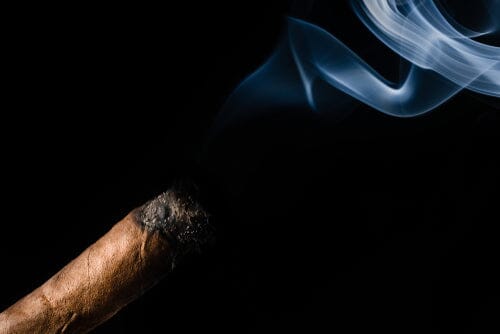
There's a unique and quiet magic to setting aside a portion of your day for a premium cigar. It’s a deliberate pause, a conscious decision to slow down in a world that relentlessly demands we speed up. You settle into a comfortable chair, select your cigar, prepare the cut, and apply the flame, watching as the foot begins to glow. This ritual isn't just about flavor; it's about an engagement with time itself. The cigar becomes a companion for the next 30, 60, or even 120 minutes. But what if that time doesn't match your expectations? What if the experience feels rushed, or conversely, what if it demands more time than you have? This is where the true aficionado separates from the casual smoker: in understanding the "burn time" and, more importantly, in knowing how to gently conduct its tempo. This isn't about setting a stopwatch; it's about curating an experience, ensuring every moment is as blissful and relaxed as intended.
The Timeless Craft: A Refresher on the Cigar's Journey
Before we can hope to control a cigar's burn, we must first respect the incredible journey it took to get to our hands. A cigar is not a simple product; it's an agricultural and artisanal marvel, a time capsule of soil, sun, and human skill. At its most basic, a cigar is a bundle of dried, fermented, and aged tobacco leaves, rolled together to be smoked. But this simple definition belies a process that can take years, involving dozens of hands and a level of expertise passed down through generations.
The journey begins in the rich soils of countries like Cuba, the Dominican Republic, Nicaragua, Honduras, and Ecuador. The terroir—the unique combination of soil, climate, and geography—is everything. Tobacco seeds, almost as fine as dust, are nurtured in greenhouses before being transplanted to the fields. The plants are meticulously cared for, and the farmer must decide whether to grow them in direct sunlight (sun-grown), which produces thick, oily, strong leaves, or under the cheesecloth-like "tapados" (shade-grown), which results in silky, delicate leaves perfect for wrappers.
Harvesting is a painstaking process called "priming", where leaves are picked individually from the bottom of the plant upwards, a few at a time. Each "priming" or level of the plant has a different characteristic:
-
Volado: The bottom leaves, which get the least sun. They are mild in flavor but are essential for their excellent burning properties.
-
Seco: The middle leaves, which offer much of the aroma and milder flavor.
-
Ligero: The top leaves, which are exposed to the most intense sun. They are thick, oily, rich in flavor, and slow-burning.
After harvesting, the leaves are taken to curing barns (casas de tabaco). Here, they are sewn onto lathes and hung to dry for weeks, slowly turning from vibrant green to rich shades of yellow, red, and brown as they lose moisture and chlorophyll. Once cured, the real magic begins: fermentation. The leaves are stacked in large piles called "burros" or "pilones." The immense pressure and residual moisture cause the leaves to heat up from within, triggering a fermentation process that can last for months or even years. This process releases ammonia and other harsh compounds, smoothing the tobacco and developing its deep, complex flavors.
Once fermented and aged, the leaves are ready for the torcedor (cigar roller). This artisan must expertly combine the three core components of a cigar:
-
The Filler (El Relleno): This is the "engine" of the cigar, making up the bulk of its blend and providing the primary flavor and strength. In premium, handmade cigars, this is "long-filler," meaning whole leaves are artfully bunched together. The blender's skill is in combining different primings (Volado, Seco, Ligero) to create a specific flavor profile and ensure good combustion.
-
The Binder (El Capote): This is a durable, often less-pretty leaf that is wrapped around the filler bunch. Its job is purely structural: to hold the filler leaves together and give the cigar its shape.
-
The Wrapper (La Capa): This is the beautiful, outermost leaf. It's the most expensive and delicate part of the cigar, contributing a significant portion of the flavor (some say up to 60%) and the entirety of the visual appeal. Wrappers come in a spectrum of colors, from a pale Connecticut Shade to a dark, oily Maduro.
This roll of tobacco then takes one of two primary forms. Parejos are the classic, straight-sided cigars, such as the Robusto (short and stout), the Toro (a slightly longer, thicker standard), the Churchill (long and stately), and the Corona. Figurados are any cigars with an irregular shape, such as a Torpedo or Belicoso (which tapers to a point at the head) or a Perfecto (which is tapered at both ends).
Finally, we distinguish between premium (handmade) cigars and machine-made cigars. Handmade cigars use long-filler tobacco and are crafted one by one by a skilled roller. Machine-made cigars, often found in convenience stores, are made by a machine using "short-filler" (chopped tobacco leaves) and a "homogenized" binder made of tobacco pulp and vegetable gum, allowing for mass production and a much lower price point. These two categories of cigars behave, burn, and taste in fundamentally different ways.
Beyond the Clock: What is 'Burn Time' Really?
In the simplest terms, a cigar's "burn time" is the total duration from the moment you properly light the foot to the moment you decide to let it go out (or it reaches the "nub"). For a small Petit Corona, this might be 30 minutes. For a thick, long Double Corona or a "Gordo" size, this could easily be two hours or more. On the surface, it's just a number. But to the aficionado, burn time is a vital sign, a key metric that reveals volumes about the cigar's construction, its blend, and, most importantly, the smoker's own technique.
Burn time is not just a passive feature; it's an active, dynamic result. A specific Robusto might be intended by its blender to be a 60-minute experience. This intention is based on the assumption of a certain humidity, a proper light, and a measured puffing cadence. If a smoker races through that same Robusto in 30 minutes, they haven't just "finished it fast"; they have, in all likelihood, overheated the tobacco, completely destroying the nuanced flavors the blender worked so hard to create. Instead of notes of cedar, leather, or cream, they likely tasted harshness, bitterness, and "char."
Conversely, a burn time that is too long—where the cigar constantly goes out, requiring frequent relights—is also a sign of a problem. This often points to the cigar being over-humidified (too wet) or the smoker being too tentative, letting the ember die.
Therefore, "burn time" is not a fixed number on a spec sheet. It's the result of the interaction between the cigar's physical properties and the smoker's actions. It is the duration of the optimal experience. When a cigar is burning correctly, it is burning "cool." This cool combustion allows the complex oils in the tobacco leaves to vaporize gently, delivering the full spectrum of intended flavors to your palate. The perfect burn time, then, is however long it takes to smoke the cigar while keeping it in that "sweet spot" of cool, flavorful combustion. Understanding this concept is the first step toward learning how to control it.
The Architects of the Ash: Factors That Dictate Your Smoke
Why does one cigar last an hour and another, seemingly similar one, last only forty minutes? The burn rate is not an accident. It is a complex equation written by the farmer, the blender, the roller, the shopkeeper, and ultimately, the smoker. Dozens of variables are at play, but they can be grouped into a few key categories. Mastering your burn time means first understanding these architects of the ash.
The Blueprint: Cigar Size and Shape (Vitola)
This is the most obvious set of factors. The physical dimensions of the cigar, known as its vitola, provide the raw fuel for the fire:
-
Length: This is simple, linear math. A 7-inch Churchill has significantly more tobacco to burn through than a 5-inch Robusto. All other factors being equal, a longer cigar will always have a longer burn time. You are, quite literally, adding more "road" for the fire to travel.
-
Ring Gauge (Thickness): This is a more complex and crucial factor. The ring gauge is measured in 64ths of an inch (so a 64-ring gauge is 1 inch thick). One might assume a thicker cigar burns faster because there's "more room," but the opposite is true. A thicker cigar, like a 60-ring gauge "Gordo," requires the ember to spread across a much wider diameter with each puff. It takes more energy and time for the burn line to progress. This larger "coal" or "cherry" also tends to be more stable and self-insulating, meaning it can often stay lit for longer periods between puffs. A thin cigar, like a 38-ring gauge Panetela, has a very small, concentrated burn line that can progress more quickly and is less stable, often requiring more frequent puffs to stay lit.
The Soul of the Leaf: Tobacco Blend and Construction
This is the invisible architecture of the burn. What's inside the cigar and how it was put together is arguably more important than its size:
-
Filler Type (Long vs. Short): This is a night-and-day difference. Long-filler leaves (used in premium cigars) are whole leaves that run the entire length of the cigar. They create complex, layered pathways for air to travel, which promotes a slow, even, and cool burn. Short-filler (used in machine-mades) is chopped tobacco, like the contents of a cigarette. The thousands of air pockets between the small bits of leaf act like kindling, allowing oxygen to penetrate easily. This results in a burn that is dramatically faster, hotter, and often harsher.
-
The Power Trio (Ligero, Seco, Volado): As we covered, these different primings have different combustion properties. A blender uses them like a chef uses ingredients:
-
Ligero is thick, oily, and packed with flavor. It is very slow-burning and combusts with difficulty. A cigar blend with a high percentage of Ligero will be a very strong, full-flavored, and long-lasting smoke.
-
Volado is thin and mild. Its primary contribution to the blend is not flavor but combustibility. It lights easily and burns quickly, acting as the "kindling" that helps keep the richer, slower-burning Ligero and Seco leaves lit.
-
Seco is the middle ground, offering aroma and moderate combustion. A blender must balance these perfectly. Too much Ligero, and the cigar won't stay lit (it will "tunnel," where the Volado core burns out, leaving the outside unburnt). Too much Volado, and the cigar will burn hot, fast, and taste like paper.
-
The Roll's Density: This is the torcedor's signature. How tightly did they bunch the filler leaves? A tightly packed (or "over-filled") cigar will have very little airflow. This creates a "plugged" cigar, which is difficult to draw from. It will burn extremely slowly and will constantly go out, demanding constant relights and ruining the experience. A loosely packed cigar is the opposite. It has too much airflow, allowing an excess of oxygen to flood the cherry. This will cause the cigar to burn very fast and unpleasantly hot. The "perfect" roll has a "Goldilocks" draw—firm, with just a slight, springy give.
The Keeper of the Flame: Humidity and Storage
This is, without a doubt, the most significant factor that you control. Tobacco is hygroscopic, meaning it will absorb and release moisture to equalize with its surrounding environment. The "sweet spot" for storing premium cigars is a moving target but generally falls between 65% and 70% relative humidity (RH).
-
Too Wet (High RH, e.g., 72%+): When a cigar is over-humidified, the tobacco leaves are saturated with water. Water is the enemy of fire. A "wet" cigar will be hard to light, requiring an excessive amount of flame, which can char the tobacco and impart a butane taste. Once lit, it will struggle to stay lit. The burn will be slow and laborious, often requiring constant relights. This also causes burn problems like tunneling (the inner, more combustible Volado burns while the damp, thick Ligero wrapper refuses to). The smoke will be "dull," "soggy," and the flavors muted, as the oils struggle to vaporize.
-
Too Dry (Low RH, e.g., 62%-): When a cigar loses its essential moisture, it also loses its essential oils, which are the source of flavor and aroma. The leaves become brittle. A dry cigar will light almost instantly, and it will burn like a piece of paper in a bonfire. The burn will be exceptionally fast, hot, and erratic. This scorching-hot burn flash-vaporizes what little oil is left, destroying all nuance and replacing it with a singular, acrid, bitter, and harsh taste.
-
The "Goldilocks Zone" (65-69% RH): This range is popular for a reason. The tobacco has enough moisture to carry its oils, combust slowly and coolly, and remain pliable, but not so much moisture that it impedes the burn.
The Human Element: Your Puffing Cadence
If humidity is the cigar's "potential energy," your puffing cadence is the "kinetic energy" you apply. You are the bellows of the furnace. How often and how hard you puff is the single most important in-the-moment factor influencing burn time:
-
Puffing Too Fast (The Sprinter): Many new smokers puff on a cigar like a cigarette, taking a drag every 15-20 seconds. This is a fatal error for flavor. Each puff introduces a blast of oxygen, "stoking" the fire. Puffing too frequently sends the temperature of the cherry skyrocketing. This hot, rapid burn is the same as a "dry" cigar—it incinerates the tobacco, creating a harsh, bitter taste and dramatically shortening the burn time.
-
Puffing Too Slow (The Wanderer): The opposite error. The popular "one puff per minute" rule is a good guideline, but not a gospel. If you wait too long between puffs (perhaps 90 seconds or 2 minutes), the ember's temperature drops too low. The delicate "burn cone" inside the cigar extinguishes. This forces a relight, which introduces the taste of char and lighter fluid. While this technically extends the "total time" the cigar is in your hand, it's not a quality burn.
-
Puffing Depth (Sipping vs. Gulping): You don't "pull" or "drag" a cigar; you "sip" or "draw" from it. A hard, deep pull draws a large volume of air, superheating the core. A gentle, shallow sip draws just enough air to keep the cherry at an optimal, steady glow.
The World Around You: Environmental Factors
Lastly, you must account for your surroundings:
-
Wind: This is the arch-nemesis of a slow burn. Wind is, in effect, a constant, powerful puff. It forces a massive amount of oxygen onto the ember, causing it to burn incredibly hot and fast. It will almost always cause an uneven burn (called canoeing, where one side burns much faster than the other) and can easily cut your expected burn time in half while ruining the flavor.
-
Ambient Humidity & Temperature: Smoking a perfectly humidified cigar in the arid 30% humidity of a desert will cause it to actively dry out as you smoke, speeding up the burn. Conversely, smoking on a muggy, 90% humidity evening can make the wrapper damp and hard to keep lit.
Conducting the Tempo: How to Adjust Your Burn Time
Now that we understand the "why," we can explore the "how." Adjusting your burn time is the final step in mastering your cigar experience. It's about making small, deliberate corrections to keep the cigar in its optimal flavor-delivery window. This knowledge is beneficial for several key reasons.
The "Why" of It: Benefits of Taking Control
-
Flavor Exploration: This is the number one reason. A slow, cool burn is a flavorful burn. It allows you to unlock the complex, subtle notes of cedar, cocoa, espresso, leather, or sweet spice that the blender intended. A hot, fast burn tastes of one thing: harsh smoke. By slowing down, you are maximizing the flavor.
-
The Ritual and Relaxation: The goal of a cigar is often to enter a chilled-out, relaxed state. Fighting with a cigar that's burning too fast (hot) or too slow (going out) is stressful. It pulls you out of the moment. Mastering the burn makes the entire process seamless and part of the relaxation, not a distraction from it.
-
Time Management: Life is full of interruptions. You may have planned for a 90-minute Toro, but something comes up and you only have 60. Knowing how to carefully speed up the smoke without ruining it is a practical skill. Conversely, learning to stretch a 45-minute Robusto into a 60-minute moment of bliss is a form of luxury.
-
Economic Sense: Premium cigars are an investment in a moment of pleasure. Rushing through one and destroying its flavor is, frankly, a waste of money. By controlling the burn, you are ensuring you get the full, high-quality experience you paid for.
The Lento: Mastering the Art of the Slow Smoke (Premium Cigars)
This is the most common goal. Your cigar is burning hot, harsh, and fast. You need to slow it down:
-
The Cadence Correction (The #1 Tool): The instant you perceive any harshness, bitterness, or excessive heat on the draw, your cigar is "shouting" at you that you are puffing too fast. Your first and most powerful action is to put the cigar down. Let it rest in the ashtray. Wait a full 60, 90, or even 120 seconds. This allows the cherry to cool down, moving it from "raging furnace" back to "smoldering ember." This single change will have the most profound effect.
-
The Gentle Sip: When you do pick it back up, change how you puff. Consciously take a much lighter, gentler, and more shallow draw. Think of just "sipping" the smoke, not "pulling" it. This introduces less oxygen and keeps the temperature low.
-
The Wind Block: This is non-negotiable. If you are in even a slight breeze, move. Get behind a wall, go indoors, or cup your hand around the foot of the cigar (though this is tiresome). You cannot slow down a burn if the wind is actively speeding it up.
-
The Humidity Nudge (A Long-Term Fix): If you find that all of your cigars, regardless of brand or your puffing cadence, are burning fast and hot, the problem is your storage. You are likely storing them too dry. If you use 65% RH Boveda packs, try switching to 69%. If you use 69%, perhaps your hygrometer is wrong and they are drying out. This is a "future-fix" that will solve the problem for all subsequent cigars.
-
The Strategic Purge: If the cigar tastes "off," "sour," or "gassy" (a sign of tar and ammonia buildup, often from puffing too hard), you can perform a "purge." Gently blow out through the cigar for 2-3 seconds. You will see stale smoke exit from the lit end. This action pushes out those stale, hot gases, cools the core, and can "reset" the flavor profile, allowing you to resume with a slower cadence. Be careful: Do not blow too hard, as you can crack the wrapper or dislodge the cherry.
The Allegro: How to (Carefully) Speed Up a Smoke (Premium Cigars)
This is a more delicate operation. You need to increase the burn rate, usually because the cigar is too "wet" and keeps going out, or because you are simply running short on time:
-
The "Dry-Boxing" Solution (The Best Pre-Smoke Fix): This is the best method for a cigar that is burning too slowly because it's over-humidified. If you know your humidor runs high (e.g., 72% RH+), or a cigar just "feels" a bit damp, take it out of the humidor 4 to 24 hours before you plan to smoke it. Let it sit in a dry, empty (and ideally Spanish cedar) cigar box, or simply on a desk in a room with stable humidity. This "dry-boxing" allows the outer wrapper and binder to shed excess moisture, making them far more combustible without drying out the core filler. The cigar will light easier, stay lit, and burn more reliably.
-
The Cadence Increase (The In-Smoke Fix): Instead of one puff every minute, shorten the interval to one puff every 45 seconds. This will gently increase the core temperature and keep the ember stable.
-
The "Double Puff": This is a more active stoking method. Instead of one long, gentle draw, take two or three very small, quick, sipping puffs. This (puff-puff-puff) action acts like a small bellows, injecting oxygen to build up the heat without drawing that heat deep into the cigar, which would make it bitter.
-
The Proactive Relight: If a cigar is truly struggling, don't try to save it with frantic, hot puffing. You'll just make it taste terrible. Instead, let it go out. Gently knock the loose ash off the end. Then, perform a full, proper relight: gently toast the foot to get rid of the char, and then apply the flame to relight it as if it were new. A clean, proper relight is always preferable to a "survival puff" that ruins the flavor.
The Machine-Made Conundrum: A Different Set of Rules
It's critical to understand that machine-made cigars are a different animal. They are designed to burn, and to burn quickly:
-
Slowing Them Down: Your only tool here is pacing. Because they are made of short-filler (chopped tobacco), they want to burn hot. They are incredibly sensitive to over-puffing. The "one puff per minute" rule, which is a guideline for premium cigars, is much more of a necessity for machine-mades. Take one puff, and then immediately set it down. Waiting as long as possible between puffs is the only way to keep the temperature low and avoid the immediate, harsh, ashy taste that comes from overheating them. Humidity has very little positive effect; they are not typically meant for humidors and can just become soggy.
-
Speeding Them Up: This is almost never a problem. They are built for speed. If a machine-made cigar is not burning, it is almost certainly because it got wet (e.g., dropped in a puddle, left in the rain) and is beyond saving, or it has a major construction flaw.
The Final Ash: Finding Your Perfect Rhythm
Ultimately, the mastery of a cigar's burn time is not a science governed by stopwatches, but an art guided by feeling. It is a conversation between you and the tobacco. The cigar will tell you exactly what it needs through its flavor and the heat of its smoke; the harshness is its signal to slow down, while a dwindling ember is its request for more attention. Your journey as an aficionado is complete when you learn to listen and respond to these subtle cues. Mastering the elements of time, from the moisture in the air to the cadence of your own breath, transforms a simple smoke into a personal ritual. It's this deep, interactive engagement that elevates the experience from a habit into a true, chilled-out moment of euphoria, perfectly paced to your own rhythm.
Share:
Can the Weight of a Cigar Actually Change Prior to Smoking It?
What to Do About Pipe Tobacco Tin Rusting?