
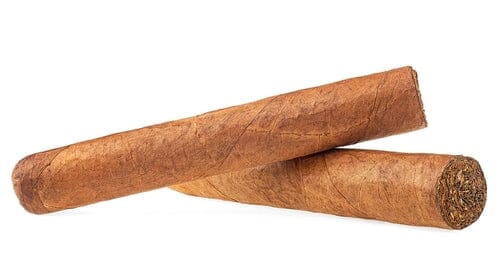
Imagine a perfectly crafted cigar, resting silently in the cedar-lined humidor. It appears as a static, unchanging object of art, a small, hand-rolled sculpture, a promise of a future moment of relaxation and complex flavor. To the casual observer, it is a finished product, its physical properties set in stone from the moment it was boxed at the factory. We tend to think of weight as a constant, a simple fact. You weigh a cigar when you get it, and that’s that. But is that truly the case? Is that stogie in your humidor the exact same physical object, down to the gram, that it was a month ago? This question pulls at a fascinating thread, revealing that a cigar is far from an inert object. It is a deeply agricultural and organic product, one that interacts with its environment in a constant, subtle dance. The idea that its most basic property—its weight—could be in flux before a flame ever touches it seems counterintuitive, yet it’s the key to understanding its very nature, its "aliveness", and the entire science of proper cigar care.
The Soul of the Leaf: Deconstructing the Cigar
Before we can tackle the physics of its weight, we must first appreciate what a cigar truly is. It is not merely "rolled-up tobacco". It is a meticulously constructed item, a blend of different leaves chosen for specific purposes, each contributing to a whole far greater than the sum of its parts. This is especially true for premium, hand-rolled cigars, which stand in stark contrast to their machine-made counterparts.
More Than Just Tobacco is the Power of Terroir
At its heart, every premium cigar is an agricultural masterpiece. It begins as a seed in fertile soil, cultivated in specific, renowned regions like the Vuelta Abajo in Cuba, the Jalapa Valley in Nicaragua, the Cibao Valley in the Dominican Republic, or the rich volcanic soils of Honduras and Ecuador. The tobacco plant, Nicotiana tabacum, is a sensitive and demanding crop. The final character of its leaves is dictated by the terroir—a French term, famously used in winemaking, that encompasses the unique combination of soil, climate, sunlight, and even the generational human knowledge of the farmers.
This agricultural origin is the first clue to its changeable nature. Unlike a piece of plastic or metal, a cigar is composed of dried, fermented, and aged plant matter. This organic composition means it is inherently porous and, as we will see, responsive to its surroundings. The terroir doesn't just influence flavor; it influences the physical density of the leaf. Soil with high mineral content, like the famous magnesium-rich red soil of Cuba, can produce leaves that not only taste different but have a different physical structure and burn characteristic (often leading to a stronger, whiter ash). The intense sunlight of Nicaragua's Estelí region produces thicker, oilier, and thus heavier leaves than the more cloud-covered, mountainous regions of Ecuador, which are famous for their thin, delicate wrapper leaves.
The Anatomy of a Hand-Rolled Marvel
A premium cigar is often described as having three core components. Understanding these is essential, as each part contributes differently to the cigar's initial weight and its potential to change. This is the classic "trinity" of cigar construction:
-
The Filler (El Relleno): This is the "engine" of the cigar. It makes up the vast majority of the cigar’s bulk and is responsible for the primary flavor profile and strength. The filler is not just a random stuffing of leaves; it's a carefully chosen blend of whole leaves, or tripa larga (long-filler). A torcedor (master roller) will combine different types of leaves to achieve a specific experience:
-
Ligero: These are the leaves from the very top of the tobacco plant. Receiving the most direct, intense sunlight, these leaves become the plant's photosynthesis powerhouses. They are visibly thick, dark, oily, and have a strong, prominent central vein. Ligero leaves are powerful, spicy, and slow-burning. They are also, unequivocally, the heaviest and densest leaves, contributing significantly to a cigar's weight and body. A cigar blended to be "full-power" will have a high percentage of ligero and will be noticeably heavier than its mild-bodied counterparts.
-
Seco: From the middle of the plant, seco leaves are more shaded by the ligero leaves above. They are thinner, lighter in color (a paler brown), and have less oil. They are prized for their aroma and are the primary source of a cigar's complex, nuanced aromatics. While they add bulk, their individual weight is moderate.
-
Volado: From the bottom of the plant, these leaves get the least sun and are very thin, papery, and mild in flavor. Their primary role isn't flavor but combustibility. Volado leaves have excellent burning properties and ensure the cigar stays lit and burns evenly. They are the lightest of the three filler components.
The torcedor bunches these leaves together. A cigar with a high percentage of heavy, oily ligero leaves will inherently weigh more than a milder cigar of the exact same dimensions that relies on seco and volado:
-
The Binder (El Capote): This is the unsung hero of the cigar. The binder is a tough, durable leaf that is wrapped around the filler bunch to hold it together and give the cigar its basic shape. Binders are chosen for their structural integrity—their elasticity and toughness—more than their flavor, though they certainly contribute. A common binder leaf like a Connecticut Broadleaf is thick and rugged, adding a defined layer of weight and structure. A good binder is essential for the cigar's construction, ensuring the filler bunch is compacted properly before the delicate wrapper is applied.
-
The Wrapper (La Capa): This is the outermost leaf, the "paint job" of the cigar. The wrapper is the most delicate, beautiful, and often most expensive component, sometimes accounting for over 50% of the cigar's total cost. It must be pristine, with minimal veins and a silky texture. The wrapper is a massive contributor to the cigar's flavor and aroma. Wrappers come in a "rainbow" of shades and types, each with a different physical weight:
-
Connecticut Shade: Grown under cheesecloth tents (tapados), these leaves are protected from direct sun, resulting in a thin, silky, delicate, and very light-weight leaf.
-
Cameroon: Grown in Africa, this wrapper is known for its "toothy" (bumpy) texture. It's also quite delicate and thin, contributing less to the overall weight.
-
Corojo: A classic, sun-grown Cuban-seed leaf, it's known for its reddish-brown color, robust flavor, and good oil content, giving it a moderate weight.
-
Habano: Another sun-grown, Cuban-seed variety, it's typically darker and spicier than Corojo, with a bit more oil and corresponding mass.
-
Maduro (e.g., Connecticut Broadleaf, San Andrés): These are not a single leaf type but a process. These wrappers undergo a much longer, more intense fermentation, turning them dark (from Maduro, "ripe") to black (Oscuro). This process caramelizes sugars and brings oils to the surface, resulting in a thick, rugged, oily, and heavy wrapper that can add significant weight to the final cigar.
The Machine-Made Counterpart
Machine-made cigars are a different breed entirely. They are built for cost-effectiveness, consistency, and mass production, and their construction reflects this:
-
Filler: Instead of meticulously bunched whole leaves, machine-made cigars typically use "short-filler" (tripa corta). This is chopped-up tobacco, often the "scraps" and leaf pieces left over from premium cigar production. This filler is measured out by the machine by volume or weight, ensuring a consistent amount every time.
-
Binder & Wrapper: These are often not whole leaves at all. They are made from "homogenized" or "reconstituted" tobacco. This is a paper-like product created by mixing tobacco dust, stems, and other particles with water and a cellulose-based glue. This "slurry" is then pressed flat on a large belt, dried, and rolled up like a massive spool of paper. This "tobacco paper" is then cut to precise, unvarying shapes to be used as binders and wrappers.
This industrial construction means the initial weight of a machine-made cigar is incredibly consistent from one to the next. However, the use of additives and processed "paper" also changes how it interacts with the environment, making it less "alive" than its premium cousin.
From Seed to Cellar: The Journey of a Premium Cigar
The story of a cigar's weight begins long before it's rolled. The process from farm to humidor is a long, patient journey of transformation, and at almost every step, the primary battle is with moisture and weight.
The Agricultural Art
In the fields, a tobacco plant is mostly water. The leaves are heavy, green, and pliable. The journey to a smokeable product is a journey of curing, or controlled dehydration.
After being "primed" (harvested leaf by leaf, from the bottom up, as each section matures), the leaves are taken to a casa de tabaco, or curing barn. Here, they are sewn onto wooden lathes (cujes) and hung from the rafters. Over a period of 45-60 days, the leaf transforms. This is a slow, enzymatic "death" of the leaf. The chlorophyll breaks down, changing the color from green to vibrant yellow and finally to a rich brown. During this process, the leaf loses an enormous amount of its initial weight—up to 85%—as water evaporates. This is the single largest weight change the tobacco will ever experience. What's left behind are the starches (which will convert to sugars), oils, and resins that will define its flavor. The goal is not just to dry the leaf, but to do so slowly enough that these chemical changes can occur, locking in the potential for flavor.
The Patience of Fermentation
After curing, the leaves are still not ready. They are rough, "raw," and high in ammonia, smelling harsh and unpleasant. They must be fermented. The leaves are sorted, moistened (here we go, adding weight back!), and then stacked into enormous piles called pilones, which can weigh thousands of pounds.
These pilones are fascinating. The immense weight of the stack, combined with the added moisture, generates heat. The pile begins to "cook" itself from the inside out. This is a controlled fermentation where natural microbes on the leaves begin to break down the organic compounds. This process releases ammonia and other impurities, smooths out the flavors, and marries the oils. Workers constantly monitor the temperature with probes. When a pilón reaches a specific temperature (e.g., 115°F), the entire pile is broken down, leaf by leaf, and rebuilt, moving the cooler outer leaves to the new, hotter center. This process can be repeated two, three, or even five times over many months, or even years for dark Maduro leaves.
Each fermentation cycle changes the leaf. It gets darker, silkier, and more refined. And with each re-stacking, moisture is lost to heat and evaporation. The leaf becomes lighter and more stable. This long, patient process is essential in defining the leaf's final stable dry weight—the weight of the leaf matter itself, minus the water.
The Art of the Torcedor
Once the leaves are fully cured, fermented, and aged (sometimes for years), they arrive at the rolling factory. Here, the torcedor takes over. Their skill is paramount in determining the cigar's final weight and density.
The roller first bunches the filler. There are several methods, each affecting the final density:
-
Entubar: Each filler leaf is individually rolled into its own small tube or "scroll." These tubes are then bunched together. This method is prized for creating a perfect, multi-channel draw, but it is also very time-consuming. It allows the roller to precisely pack the cigar, controlling its density.
-
Accordion: The leaves are folded in on themselves, like the bellows of an accordion. This also creates excellent airflow and is a very common technique.
-
Book: The leaves are simply stacked on top of each other and then folded over, like closing a book. This is the fastest method but runs the highest risk of creating a "plug" or uneven density if not done carefully.
This is critical: two cigars with the exact same dimensions (e.g., a 5x50 Robusto) can have different weights based entirely on the roller's hands. A roller who bunches the filler too tightly will create a "hard" cigar (often called "over-packed"). This cigar will be heavy for its size, contain more leaf matter, and may have a difficult draw. A roller who is too loose will create a soft, "under-filled" cigar that is light for its size and will burn too hot and fast. The goal of a master roller is perfect consistency, creating a bunch with just the right amount of "give" and a weight that is consistent with the vitola (the cigar's shape and size) they are rolling. Many modern factories now use a "draw machine" to quality-check this. The cigar is placed in a device that measures the air resistance, which is a direct proxy for its density.
The Aging Room
After the wrapper is applied, the finished cigars are not yet ready. They are moved to a large, climate-controlled aging room, often lined with Spanish cedar. Here, they will "sleep" for anywhere from 30 days to several months. This "marrying" process allows the distinct flavors of the filler, binder, and wrapper to meld. More importantly for our topic, it allows the cigar's moisture content to stabilize one last time before it is sorted, banded, and boxed for shipping. The factory's aging room is the cigar's final "baseline" for weight and humidity before it begins its journey to the wider world. The Spanish cedar itself is hygroscopic and helps to buffer the humidity, absorbing excess moisture and releasing it slowly, keeping the environment stable.
A Spectrum of Smokes: Navigating the Types
When we discuss a cigar's weight, we must be specific. The "type" of cigar dictates its starting point. This is determined by its vitola and the blend of tobaccos within.
The Big Divide: Parejos vs. Figurados
Cigars are broadly grouped into two families:
-
Parejos (Straight-Sided): This is the classic cigar shape. They are straight-sided cylinders with a rounded "head" (the part you cut) and an open "foot" (the part you light). This category includes the most common sizes, and their weight is a relatively straightforward function of their length and diameter.
-
Corona: A classic benchmark size, often around 5.5 inches by a 42-ring gauge (42/64ths of an inch in diameter). Once the most popular size in the world.
-
Robusto: A shorter, fatter cigar, typically 5 inches by a 50-ring gauge. A Robusto will almost always weigh more than a Corona due to its significantly larger diameter, which packs in much more filler leaf. Its popularity exploded because it delivers a full-flavor experience in a shorter smoking time.
-
Toro: A popular modern size, often 6 inches by a 50 or 52-ring gauge. It's essentially a longer Robusto and, thus, heavier, offering a long, cool smoke.
-
Churchill: A long, stately cigar, traditionally 7 inches by a 47-ring gauge, named for the famous statesman. Its length and size mean it contains a significant amount of tobacco.
-
Gordo: A modern trend, these are very thick cigars, often 6 inches by a 60-ring gauge. These are some of the heaviest cigars on the market, containing a massive amount of tobacco. Their size is controversial, as some purists feel the massive volume of filler completely overwhelms the flavor contribution of the wrapper.
-
Figurados (Shaped): These are any cigars that are not straight-sided. Their unconventional shapes can make their weight and density trickier to manage, and they require immense skill from the torcedor.
-
Torpedo: Features a straight body but a pointed, tapered head. This shape theoretically concentrates the smoke, delivering a more intense flavor.
-
Belicoso: Similar to a Torpedo, but the taper is shorter and more abrupt.
-
Perfecto: Tapered at both ends, with a bulge in the middle. This classic shape is difficult to roll and light. Its density is inherently variable, starting very compressed at the tip, opening up in the wide "belly," and then compressing again.
-
Culebra: An exotic cigar made of three thin panatelas (long, thin cigars) braided together and tied with a ribbon. The three are unbraided and smoked individually.
The shape of a figurado impacts more than just aesthetics; it impacts density. The tapered ends are, by necessity, more tightly compressed than the fatter middle, creating areas of different density (and thus, weight distribution) within the same cigar.
The Wrapper's Rainbow
As mentioned, the wrapper leaf has a weight of its own. The processing of this leaf can change its mass. A Connecticut Shade wrapper (Claro) is grown under cloth, cured quickly, and handled delicately. It is thin and light. A Maduro (Spanish for "ripe") wrapper is the opposite. It is often a ligero leaf, stalk-cut and cured slowly. It then undergoes a much longer and more intense fermentation process. This extended "cooking" breaks down more of the leaf's internal structure, caramelizes the sugars, and creates a dark, oily, and sweet profile. This process fundamentally changes the leaf, and a thick, oily Maduro wrapper will add a noticeable amount of weight to a cigar compared to a Claro wrapper on an otherwise identical blend.
Tipping the Scales: What Defines a Cigar’s Starting Weight?
So, we have a finished cigar, sitting in a box at the factory. What determines its precise weight at this exact moment? It’s a combination of several key factors.
The Blueprint - Vitola and Ring Gauge
This is the most obvious factor. Weight is a function of volume and density. The vitola (shape) and ring gauge (diameter) define the cigar's volume. A cigar that is longer or fatter simply contains more tobacco and will be heavier.
The impact of ring gauge is often underestimated. Because volume increases exponentially with the radius, a small jump in ring gauge adds a lot of weight. A 6x50 Toro doesn't just have a little more tobacco than a 6x42 Corona—it has significantly more. A 6x60 "Gordo" has a truly massive volume of filler leaf compared to its thinner cousins, making it a heavyweight by default.
The Density Dilemma - The Roller's Hand
As discussed, the torcedor's skill is the second pillar of initial weight. A cigar's "draw" (how easily air passes through it) is a direct result of its density. A cigar that is over-packed is "heavy for its size." It contains more tobacco leaf (more mass) compressed into the same volume. This cigar will absolutely weigh more than a properly rolled cigar of the same vitola from the same factory.
The Tobacco's Origin and Type
The blend itself is the third factor. A cigar's recipe dictates its weight. As we know, ligero leaves from the top of the plant are thicker, oilier, and heavier than the thin, papery volado leaves from the bottom. Therefore, a "full-bodied" cigar that is marketed as a "powerhouse" blend will likely contain a high percentage of ligero in its filler. This cigar will be measurably heavier than a "mild" cigar of the exact same 5x50 Robusto dimensions that is blended using primarily seco and volado. The leaf itself has a different starting density, and that translates directly to the final product.
The Unspoken Factor - Vintage and Age
Here's a more advanced concept: a very old, "vintage" cigar (one that has been aged for 10, 20, or 30 years) may have a different stable "dry weight" than its modern counterpart. Over these long decades, a slow, continuous chemical process occurs. Extremely volatile oils and other compounds can very slowly outgas and dissipate, even in a perfect humidor. This is a microscopic, almost immeasurable change from year to year, but over a
lifetime, a vintage cigar from 1980 may be infinitesimally lighter in base mass (not counting water) than the same cigar rolled today. This is the cigar equivalent of a well-aged wine "breathing" through its cork for decades.
The Great Moisture Debate
We have now established the starting weight of a cigar. But the title of this article asks if that weight can change before smoking.
The answer is an unequivocal, resounding YES.
A premium cigar is not a static, inert object. It is a bundle of dried, porous, organic plant matter. And like any organic product—a piece of wood, a sponge, a leather-bound book—it is hygroscopic.
The Science of Hygroscopy
"Hygroscopic" is a scientific term for a material that has the ability to attract, absorb, and hold water molecules from its surrounding environment. A premium cigar is, in essence, a very expensive and delicately flavored sponge.
The tobacco leaves within are full of microscopic pores and capillaries. These structures are what remains of the plant's vascular system. This porous nature is exactly why a cigar can be smoked—air can pass through it. But this same property means water vapor (humidity) can pass through it as well, in both directions.
A cigar will always try to reach a state of equilibrium with its surroundings. This means it will either absorb moisture from the air or release its own moisture into the air until its internal moisture content matches the ambient relative humidity (RH) of its environment.
This absorption or release of water is a physical transfer of mass. Water has weight ($H_2O$). When a cigar absorbs water vapor, its mass increases. It literally gets heavier. When it releases water vapor, its mass decreases. It gets lighter.
The Humidor's Role Acting a Balancing Act
This is the entire purpose of a humidor. A humidor is a storage container (a box, a cabinet, or a room) designed to maintain a stable relative humidity, typically between 65% and 72% RH. This stable environment allows the cigar to reach its ideal equilibrium and stay there.
The famous "70/70 rule" (70% RH and 70°F) is a classic guideline, but it's not a hard-and-fast rule. In fact, many modern connoisseurs prefer a lower RH, such as 65% or 69%, finding that it provides a better burn and clearer flavors. The key takeaway is that the chosen RH directly dictates the cigar's final water weight. A cigar stored at 72% RH will be measurably heavier (as it holds more water mass) than the exact same cigar stored at 65% RH.
Let's trace the journey. A cigar is boxed at the factory in Nicaragua, where the aging room was, say, 70% RH. It is then shipped in a non-refrigerated container. It sits on a loading dock, travels across an ocean, and sits in a warehouse before finally arriving at your local cigar shop. During this journey, it has likely been exposed to a wide range of temperature and humidity conditions. It has almost certainly lost moisture and, therefore, lost weight.
When you buy that cigar and place it in your properly maintained 70% RH humidor, the "magic" begins. The cigar is "drier" than its new environment. The air inside the humidor has more water vapor than the air trapped inside the cigar's leaves. Over the next few days and weeks, the cigar will slowly absorb that water vapor. Its oils will stabilize, its pliability will return, and it will gain weight.
Going the Other Direction with "Dry Boxing"
This process also works in reverse. Sometimes, a cigar enthusiast will intentionally "dry box" a cigar. This means taking a cigar from a high-humidity humidor (say, 70-72% RH) and placing it in an empty, un-humidified wooden box (like an old cigar box) for 12-24 hours before smoking.
The air in the room is almost always drier than the humidor (e.g., 40-50% RH). The cigar is now "wetter" than its environment. It will immediately begin to release its moisture into the ambient air. It will lose water mass and become lighter. Enthusiasts do this to improve the burn characteristics of a cigar they find a bit too "wet," which can be heavy, hard to keep lit, and produce less smoke. It's a way of fine-tuning the weight (and thus, moisture content) for a perfect smoke.
The Great Divide: A Point-by-Point Weight Analysis
To provide the clearest possible answer, here is an in-depth chart that explicitly breaks down all the factors of weight—before, during, and after smoking—and contrasts premium cigars with their machine-made counterparts.
|
Weight Factor |
Premium Cigars (Hand-Rolled) |
Machine-Made Cigars |
|---|---|---|
|
1. Other Factors Impacting Weight PRIOR to Smoking |
Highly Variable. The "starting weight" is influenced by: • The Blend: A high % of heavy Ligero leaf makes the cigar heavier. • The Wrapper: A thick, oily Maduro or Broadleaf wrapper adds more weight than a thin Connecticut Shade wrapper. • The Roller's Hand: A roller who packs the filler leaves tighter (an "over-packed" cigar) creates a denser, heavier product than a roller with a lighter touch. • The Vitola: A fatter, longer cigar (like a 6x60 Gordo) has exponentially more tobacco mass than a thin cigar (like a 5.5x42 Corona). |
Extremely Consistent. The "starting weight" is factory-set: • The Blend: Uses "short-filler" (chopped tobacco) that is precisely measured by weight or volume by the machine. • The Wrapper/Binder: Uses "reconstituted tobacco paper," which is manufactured to a uniform thickness and weight, then cut to an exact size. • Machine Calibration: The "roller" is a machine calibrated to a specific density. Every cigar is packed with identical compression. • The Vitola: The dimensions are the only major variable, but they are machine-cut and perfectly uniform. |
|
2. How & Why Weight Changes PRIOR to Smoking |
Highly Dynamic & Intentional. To break this down: •Why: The cigar is 100% organic, porous, and hygroscopic (it's a "sponge"). It is designed to be stored in a humidor and to "breathe." • How (Gaining Weight): When placed in a humidor (e.g., 70% RH), a dry cigar will absorb water vapor from the air. This adds water mass to the leaves, making the cigar physically heavier. • How (Losing Weight): When placed in a dry room (e.g., 40% RH), the cigar releases its internal moisture into the air. This removes water mass, making the cigar physically lighter. This is the entire principle behind "dry boxing". |
Highly Static & Resistant. To break this down: • Why: The cigar is designed to resist change for mass-market retail and long-term storage without a humidor. • How (Resisting Loss): Many contain propylene glycol (PG), a chemical humectant that aggressively retains moisture and prevents the cigar from drying out. This "locks in" the factory water weight. • How (Resisting Gain): They are almost always sealed in cellophane. This plastic wrapper acts as a significant vapor barrier, dramatically slowing down any moisture transfer in or out. • Result: A machine-made cigar's weight is far more stable and will change very slowly compared to a premium cigar. |
|
3. How & Why Weight Changes ONCE IT IS SMOKED |
Total & Irreversible Chemical Change. To break this down: • Why: Combustion. The fire chemically converts the solid organic mass of the tobacco leaves. • How: The cigar's mass (e.g., 20 grams) is transformed into:
• Result: The weight disappears. The 20-gram cigar becomes a ~2-gram pile of light, flaky ash. |
Total & Irreversible Chemical Change. To break this down: • Why: Combustion, same as the premium cigar. • How: The process is identical, but the materials are different. The fire consumes the short-filler tobacco and the reconstituted binder/wrapper, which contains cellulose-based glues. • Result: The weight loss is also total and permanent. The physics of mass-to-energy conversion is the same. The only difference may be the ash, which is often darker and holds together more rigidly due to the non-tobacco binders being burned. |
Weight in Flux: Real-World Scenarios
This constant, invisible ebb and flow of moisture mass is happening all the time, particularly with premium cigars. Hence, there are some common scenarios where a cigar's weight is actively changing.
Scenario #1: From the Factory to Your Door
When you order a box of cigars online, it ships from a large, climate-controlled warehouse. But during its 3-day journey in a delivery truck, it is exposed to the elements. If you order in the dead of winter, the air in the truck cabin and cargo hold is incredibly dry. The cigars will arrive "crispy," brittle, and underweight. They must be rested in your humidor to re-acclimate and regain their proper moisture and weight. If you order in the middle of a humid summer, they may arrive feeling "damp," spongy, and overweight, having absorbed moisture from the air in transit.
Scenario #2: The "Sick" Cigar
An all-too-common beginner's mistake is to over-humidify. Using too many humidification packs or a poorly calibrated system can push a humidor's RH up to 75%, 80%, or even higher. The cigars inside will do what they are programmed to do: they will absorb, and absorb, and absorb. They will become swollen, spongy to the touch, and feel heavy in the hand. This is a cigar that has gained a significant amount of water weight. It is "sick," and it will be un-smokeable. It will be plugged, won't stay lit, and the wrapper may even split as the expanding filler bursts it from the inside.
Scenario #3: The "Crispy" Cigar
The opposite is a cigar left out of a humidor. In a typical air-conditioned home (around 40-50% RH), a premium cigar will quickly "bleed" moisture. Within a day or two, it will feel light and brittle. Its wrappers may crackle. It has lost a significant percentage of its mass in the form of water. This loss of moisture also means its essential oils—the source of all its flavor—will begin to evaporate, permanently damaging the experience.
Scenario #4: The "New Box" Acclimation
You just received a brand-new, factory-sealed box of cigars you ordered. You open it, and the cigars feel a bit firm, and you might even smell a faint, sharp scent of ammonia. This is a classic sign that the cigars are "young" and have just come from their long shipping journey. They are almost certainly underweight from a moisture perspective. The temptation is to smoke one right away ("Rest Off The Truck"). The reality is that these cigars need to be placed in your humidor for weeks, or even months. During this "acclimation" period, they will slowly absorb moisture, gaining weight and stabilizing. The ammonia smell (a remnant of fermentation) will dissipate, and the flavors will meld. Patience here is key, allowing the cigar to reach its ideal weight and humidity.
Scenario #5: The Seasonal Humidor Struggle
Your humidor was perfect all summer, holding a steady 69% RH. Now it's winter, the furnace is on, and the air in your house is as dry as a desert. Suddenly, you're "re-seasoning" your humidor every month, and your humidification packs are drying out in weeks instead of months. This is because the humidor itself is in a constant battle with the exterior environment. The dry winter air is actively pulling moisture out of the wooden box, and the box is pulling moisture from your cigars. Your cigars are in a constant state of losing weight (moisture), and your humidifier is working overtime to replace it. The opposite happens in a humid summer, where the cigars may absorb too much ambient moisture and become overweight and "spongy."
Scenario #6: The Traveler's Dilemma
You're going on a weekend trip and put three of your best cigars in a plastic, foam-lined travel humidor with a tiny humidification disc. When you arrive at your destination and open the case, the cigars feel damp and a bit puffy. What happened? The small, non-porous plastic case creates a "microclimate" that can be very volatile. The small humidifier can easily over-saturate the tiny air volume, and the cigars—being the only hygroscopic things in the box—will rapidly absorb all that excess moisture, gaining weight and becoming "over-humidified" in just a day or two. This is why many experts recommend a simple wooden "finger" case for short trips, as the wood buffers the humidity rather than trapping it.
The Final Weigh-In: A Moment of Reflection
A cigar is not a commodity. It is not a static, finished good like a brick or a coin, with a weight that is fixed and final. It is a living piece of agriculture, a product of soil, sun, and immense patience, an organic bundle of leaves that breathes with its environment. Its identity is tied to the water it holds. Understanding that its weight is not a fixed number, but a dynamic variable, is to understand the very soul of the product. This realization transforms the act of storage from a chore into a ritual. You are not just "keeping your cigars fresh"; you are acting as their final custodian, actively managing their physical mass and internal equilibrium. This delicate balance, this unseen "breathing" in the darkness of the humidor, is the silent preparation for that perfect moment of bliss, ensuring the cigar you finally choose to light is at its absolute peak.
Share:
A Cigar Smoking Question: Could Cigars Containing Numerous Flavors Go Stale and Lose Their Flavor at a Quicker Rate?
Adjusting Your 'Burn Time' When Smoking a Cigar: What You Need to Know